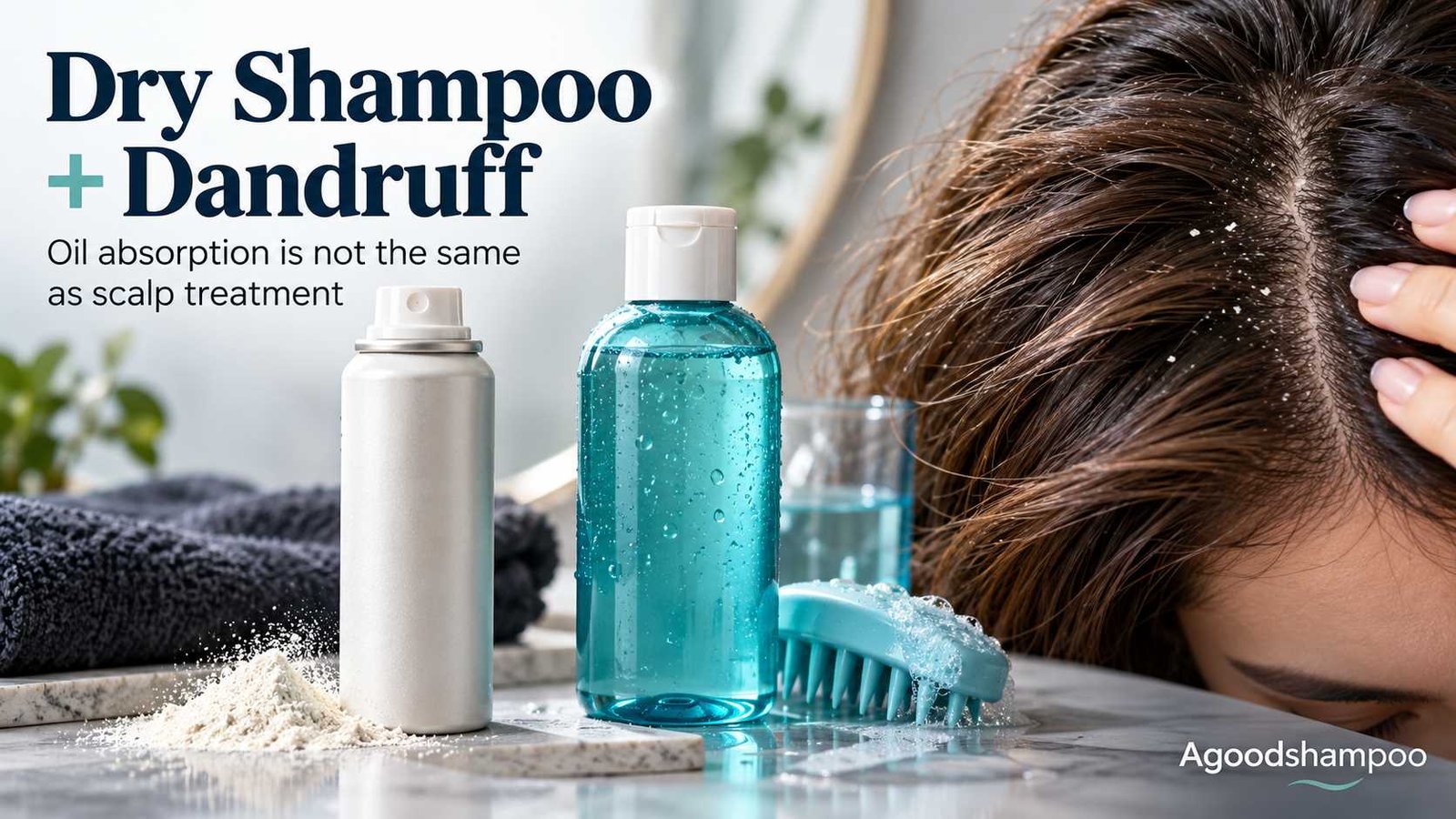
 Dry shampoo can make greasy roots look fresher, but it does not wash dandruff from your scalp or work like a medicated dandruff shampoo. The American Academy of Dermatology says dry shampoo absorbs oil rather than cleansing the hair, and dermatologists recommend washing with shampoo and water after roughly one or two dry-shampoo uses instead of repeatedly layering more product.
That distinction matters if you’re searching for dry shampoo for dandruff. Occasional dry shampoo can still have a place in your routine, but using it instead of proper scalp washing may allow oil, dead skin, microorganisms and product residue to remain on the scalp. If dandruff is the problem, a suitable rinse-out shampoo is usually the more useful tool.
Is Dry Shampoo Good for Dandruff?
Ordinary dry shampoo is not a dandruff treatment.
Most dry shampoos use powders or starch-like materials to absorb some of the oil around the roots. This can reduce the greasy appearance of hair and make it feel fresher between washes. What dry shampoo does not do is rinse oil, dead skin and product residue away with water.
The American Academy of Dermatology makes this difference particularly clear: dry shampoo absorbs oil, while regular shampoo and water actually cleanse the hair and scalp.
That means a product can make oily, flaky roots look better temporarily without addressing why the scalp is flaking.
Dandruff is more complicated than simply having a dirty scalp. Mayo Clinic describes it as a common scalp condition associated with factors including irritated or oily skin, dry skin, sensitivity to hair-care products and Malassezia, a type of yeast normally found on adult scalps.
So if your goal is controlling dandruff rather than hiding oily roots for another day, dry shampoo should be treated as a styling convenience, not your main scalp-care product.
For a closer look at medicated options, our guide to zinc pyrithione shampoo for dandruff explains how a true dandruff shampoo differs from ordinary cleansing products.
Why Dry Shampoo Can Sometimes Make a Flaky Scalp Worse
Dry shampoo does not automatically cause dandruff, and occasional use isn’t a problem for everyone. The bigger concern is what happens when it repeatedly replaces washing.
Dry shampoo particles remain in the hair and around the scalp until they are removed. At the same time, the scalp continues producing sebum and shedding skin cells. Styling products may add another layer.
The AAD notes that shampooing with water removes dead skin cells, oil, microorganisms and accumulated dry shampoo. Using too much dry shampoo can also leave hair feeling dry, stiff or gritty and may irritate the scalp.
If your scalp is already itchy or flaky, that buildup can make it harder to work out what is actually causing the problem.
A practical routine is simple:
- Apply dry shampoo only to oily areas rather than coating the whole scalp.
- Use the smallest amount needed.
- Continue regular washing with shampoo and water instead of repeatedly adding more dry shampoo.
If one dry shampoo repeatedly causes burning, tenderness, marked itching or increased flaking, stop using it. Fragrance and other formula components can also bother sensitive scalps, so switching products may make more sense than assuming you need even more dry shampoo.
Dandruff and Dry Scalp Need Different Shampoo Strategies
One of the biggest mistakes is treating every flake as dandruff.
A dry scalp and dandruff can both produce itching and visible flakes, and appearance alone may not always tell you which one you have. The AAD explains that scalp dryness occurs when the skin loses too much water and may be aggravated by hair-care products that strip natural oils or by cold, low-humidity weather.
The shampoo choice can therefore be very different.
The AAD advises that dandruff can often improve with dandruff shampoo, whereas uncomplicated dry scalp may improve by switching to a gentle, non-medicated shampoo.
That is why searching for a good dandruff shampoo for dry scalp needs some caution. A stronger medicated formula isn’t automatically the right answer simply because flakes are visible.
If your scalp feels tight and dry after cleansing and you’re using strong or highly fragranced products, a gentler shampoo may deserve consideration. If you have recurring itching and dandruff-type scaling, an actual dandruff shampoo may be more appropriate.
Our guide to dry scalp versus dandruff care covers some of the practical differences in more detail.
What Works Better Than Dry Shampoo for Dandruff
If you genuinely have dandruff, rinse-out dandruff shampoos have a much stronger treatment rationale than ordinary dry shampoo.
The American Academy of Dermatology lists several ingredients used in dandruff shampoos, including ketoconazole, selenium sulfide, salicylic acid, sulfur, coal tar and zinc pyrithione. Availability and permitted uses can vary by country, so the current product label matters.
These ingredients don’t all work in the same way. That is another reason to judge the complete product rather than assuming every bottle labeled dandruff shampoo is interchangeable.
| Ingredient type | Main role in dandruff care |
|---|---|
| Ketoconazole | Antifungal ingredient used to reduce Malassezia activity |
| Selenium sulfide | Helps control dandruff and seborrheic dermatitis through antifungal and scalp-scaling effects |
| Salicylic acid | Helps loosen and remove scalp scale |
| Coal tar | Slows excessive skin-cell turnover and reduces scaling |
| Zinc pyrithione | Anti-dandruff ingredient used in markets and product categories where permitted |
Research also gives medicated shampoo a different evidence base from dry shampoo. In an older randomized study involving 331 eligible participants with severe dandruff or seborrheic dermatitis, dandruff severity improved by 73% with 2% ketoconazole shampoo and 67% with 1% zinc pyrithione shampoo after four weeks. The study tested these specific rinse-out medicated shampoos, not dry shampoo, and should not be read as a guarantee for every current product.
More recent randomized research in 64 adults with moderate-to-severe scalp seborrheic dermatitis also found improvement with both selenium disulfide and ketoconazole shampoos over four weeks. Again, that evidence concerns medicated rinse-out treatments, not aerosol or powder dry shampoo.
Whichever dandruff shampoo you choose, follow its actual directions. Some formulas need several minutes of scalp contact before rinsing rather than being washed off immediately.
Our Selsun Blue dandruff shampoo guide explains selenium sulfide-based dandruff care in more detail.
Dandruff in Curly Hair Needs Scalp Treatment Without Over-Drying Curls
Curly and coily hair creates a practical dilemma. You need to treat the scalp, but frequent cleansing or repeated medicated shampoo through the full length of the hair may leave curls feeling dry.
The solution isn’t necessarily to replace washes with dry shampoo.
The AAD advises people with coarse, naturally curly or coily hair to wash when needed and says dandruff shampoo may be used about once a week if tolerated. It also recommends concentrating dandruff shampoo on the scalp because dandruff-fighting ingredients can dry the hair lengths.
A sensible routine looks like this:
- Apply dandruff shampoo primarily to the scalp.
- Follow the product’s required contact time.
- Rinse thoroughly.
- Use your normal shampoo or conditioner as needed for the hair lengths.
- Keep conditioner focused where your curls need moisture.
This separates two different jobs: treating the scalp and protecting the hair fiber.
If you have oily roots but dry curls or ends, our guide to choosing shampoo for an oily scalp and dry hair explains why one product doesn’t always need to solve both problems.
When Dry Shampoo Still Makes Sense If You Have Dandruff
Having dandruff doesn’t mean you can never use dry shampoo.
An occasional application can be useful when your roots look oily between proper washes, especially if washing immediately isn’t practical. The important part is not letting it become your dandruff-management strategy.
Think of dry shampoo as a temporary appearance product. Use it sparingly on oily areas, then return to your normal cleansing and dandruff-treatment routine.
You may want to skip it during an active flare if your scalp is already very itchy, tender or irritated. Adding another fragranced or powder-based product to an uncomfortable scalp can make it harder to identify what is aggravating the skin.
Mayo Clinic also advises using fewer styling products when managing dandruff because styling products can accumulate on the scalp and contribute to oiliness.
Treat the Dandruff, Use Dry Shampoo Only as the Backup
Dry shampoo for dandruff makes sense only if you understand its limited job. It can absorb excess oil and improve how the roots look between washes, but it does not replace cleansing with shampoo and water and should not be treated as an anti-dandruff medication.
If you have genuine dandruff, a suitable rinse-out dandruff shampoo is the more logical starting point. If your flakes come mainly from a dry, irritated scalp, a gentler non-medicated cleanser may be more appropriate instead.
For curly or coily hair, target dandruff treatment at the scalp while protecting the lengths with appropriate conditioning.
And if flaking remains severe, keeps returning despite appropriate dandruff shampoo, becomes painful or markedly inflamed, or is accompanied by other unusual scalp changes, get it assessed rather than continuing to experiment with more products. Mayo Clinic and the AAD both recommend professional evaluation when dandruff does not improve with appropriate home treatment.

Michael Chen focuses on the science behind shampoos and hair-care ingredients. He explains how cleansing agents, silicones, proteins, and other formula components work, separating useful evidence from marketing claims to help readers better understand the products they use.