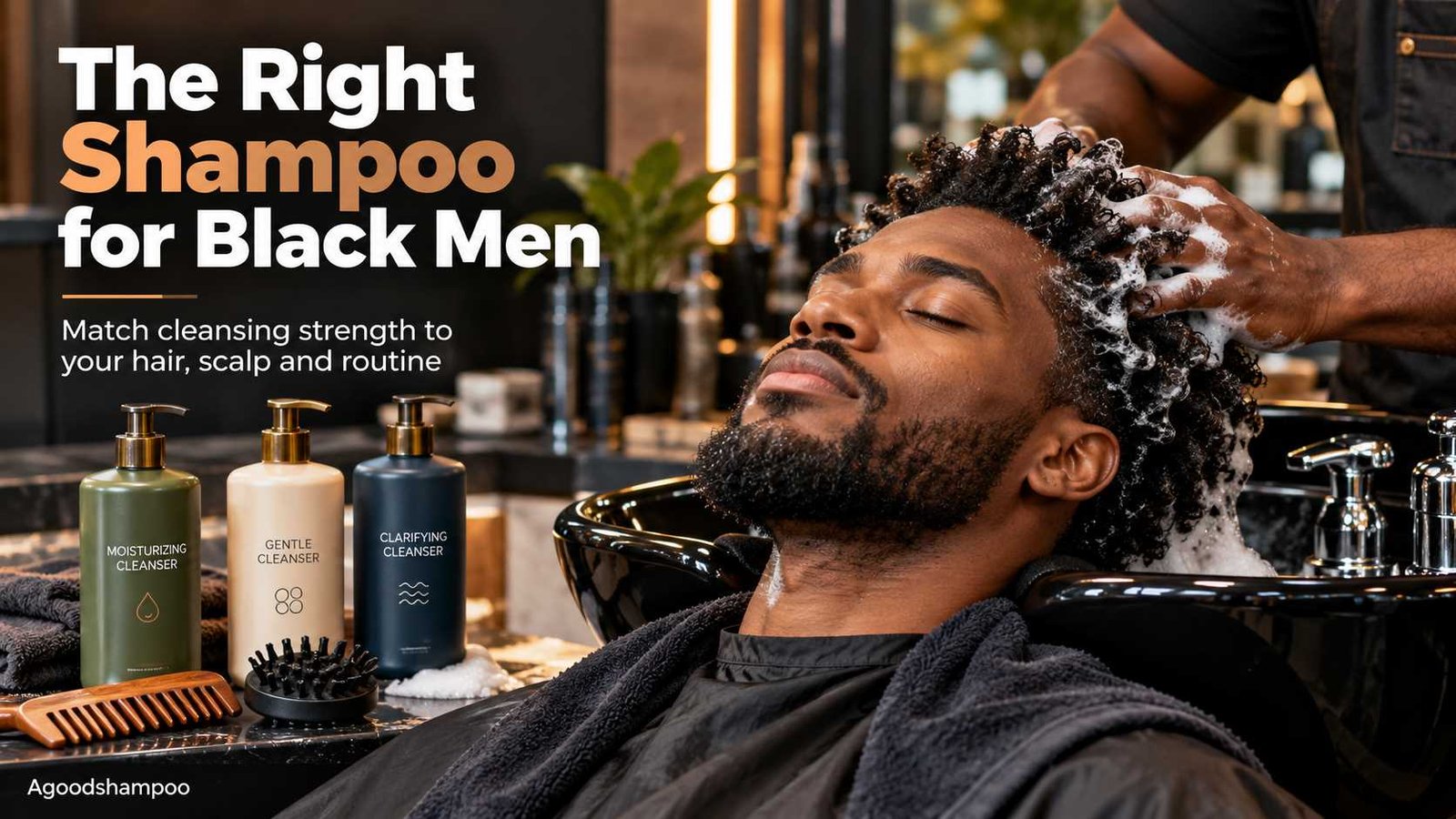
 A good hair shampoo for African American men should clean the scalp without repeatedly leaving the hair rough, tangled or overly dry. That sounds simple, but the right choice depends on more than being Black. A man with a close fade and an oily scalp may need something very different from someone with longer Type 4 coils, waves, locs or hair that regularly carries pomade and styling cream.
There also isn’t one correct washing schedule for everyone. The American Academy of Dermatology recommends washing Black hair about once a week or every other week as a general starting point, partly to control product buildup without encouraging unnecessary dryness. Your scalp, hairstyle, exercise habits and product use can justify washing more or less often.
The useful question, then, isn’t simply Which shampoo is made for African American men? It’s What level of cleansing does your scalp need, and how much conditioning does your hair need afterward?
What Makes a Good Shampoo for African American Men?
Many Black men have curly or coily hair, but curl pattern is only one part of the decision. Hair length, porosity, damage, chemical treatments, scalp oiliness, dandruff, exercise and styling products all change what works.
A useful everyday shampoo should do three things well: remove sweat, excess oil and styling residue; rinse away without leaving obvious buildup of its own; and leave the hair manageable enough that conditioning can restore softness without a struggle.
For dry curls and coils, that often means avoiding a cleanser that feels excessively stripping every time you wash. It does not mean every sulfate is automatically bad or that every sulfate-free shampoo is automatically mild. Cleansing performance comes from the entire surfactant system, not one word on the front label.
That distinction matters because ingredients marketed as sulfate-free can still cleanse quite strongly. Sodium C14-16 olefin sulfonate, for example, appears in current curl-focused shampoos from both Dove and OGX.
If your main concern is natural curls or coils, our deeper guide to choosing shampoo for African American natural hair looks more closely at natural-hair routines.
Match Your Shampoo to Your Hair and Scalp
Think about the problem you want the shampoo to solve before looking at buzzwords such as natural, strengthening, hydrating or men’s formula.
| Your situation | Shampoo type to consider | What matters most |
|---|---|---|
| Dry curls or coils | Moisturizing or conditioning shampoo | Effective cleansing without persistent roughness |
| Short fade or waves | Regular cleanser matched to scalp oiliness | Clean scalp without unnecessary residue |
| Heavy pomade, gel or butter use | Occasional clarifying shampoo | Removing accumulated styling residue |
| Sweaty or oily scalp | More effective regular cleanser | Scalp cleanliness and comfortable wash frequency |
| Sensitive or easily irritated scalp | Simple, well-tolerated formula | Fragrance and ingredient tolerance |
| Dry shampoo between washes | Oil-absorbing refresher | Temporary refresh, not replacement cleansing |
A man with a short fade may be able to tolerate stronger or more frequent cleansing because there is less hair length to become dry and tangled. Longer coils have more surface area and can be more vulnerable to friction and breakage, so conditioning becomes increasingly important.
The American Academy of Dermatology specifically recommends using conditioner whenever Black hair is washed, with extra attention to the ends because they are the oldest and most fragile part of the strand.
If you’re building a complete routine rather than selecting shampoo alone, see our guide to choosing shampoo and conditioner for men.
Moisturizing, Clarifying and Dry Shampoos Do Different Jobs
A moisturizing shampoo is usually the logical starting point when curls or coils regularly feel dry after washing. Look beyond oils pictured on the bottle. What matters is how the finished formula cleanses and conditions your hair.
A clarifying shampoo has a different purpose. It is useful when pomade, wax, gel, heavy leave-ins, oils or other styling products gradually leave the scalp and hair feeling coated. Clarifying every wash may be unnecessary for dry hair, but never clarifying can also become a problem when you use substantial styling products.
Your hair often tells you when the balance is wrong. If it feels coated even after washing, products stop spreading normally or the scalp does not feel clean, an occasional deeper cleanse may make sense.
Dry shampoo is different again. It can absorb some scalp oil and extend the appearance of freshness between wash days, but it does not provide the same removal of sweat, debris and accumulated product that comes from washing with water and cleanser.
Men with braids, longer styles or routines where frequent wet washing is inconvenient may find it useful occasionally. For product options and residue considerations, see our guide to dry shampoo for African American hair.
Are Baby Shampoo, Dove and OGX Good for Black Men’s Hair?
These searches sound like yes-or-no questions, but shampoo brands usually make formulas with very different cleansing systems. The product matters more than the logo.
Is Baby Shampoo Good for African American Hair?
Baby shampoo can be mild, but that doesn’t automatically make it the best shampoo for an adult Black man’s routine.
For example, the current U.S. Johnson’s Baby Shampoo is pH balanced and made without added sulfates. Its cleanser system includes cocamidopropyl betaine, decyl glucoside, sodium cocoyl isethionate and sodium methyl cocoyl taurate.
That’s a legitimate gentle-cleansing formula, but it was designed around babies’ hair and skin needs. A Black man using pomade, wave products, heavy oils or styling creams may find that a baby shampoo doesn’t always provide the level of cleansing he wants.
So baby shampoo isn’t inherently bad for African American hair. It simply shouldn’t be treated as automatically superior because the word baby implies gentleness.
Is Dove Shampoo Good for African American Hair?
Some Dove shampoos can suit curly or coily hair, but the answer depends on the exact formula.
Dove’s current Damage Therapy Amino Curl Repair Shampoo is specifically positioned for curly and coily hair. The ingredient list includes sodium C14-16 olefin sulfonate and cocamidopropyl betaine as major cleansing ingredients, plus glycerin, several amino acids, panthenol and jojoba oil. Dove markets the product as sulfate-free and silicone-free.
Here’s the useful distinction: sulfate-free does not necessarily mean extremely mild. Sodium C14-16 olefin sulfonate isn’t an SLS or SLES sulfate surfactant, but it is still an effective cleanser. A man with substantial buildup might appreciate that. Someone whose hair consistently feels stripped after shampooing may prefer a different cleansing system.
Judge the result on your own scalp and hair rather than deciding based only on the sulfate-free label.
Is OGX Shampoo Good for African American Hair?
OGX also needs to be judged formula by formula.
The current OGX Coconut Curls Shampoo lists sodium C14-16 olefin sulfonate and cocamidopropyl betaine high in the ingredient list, alongside coconut oil, honey extract, conditioning polymers and glycerin. OGX markets it for curly hair and describes it as made with sulfate-free surfactants.
OGX Argan Oil of Morocco Shampoo uses a noticeably different cleansing system. Its current ingredient list starts with sodium methyl cocoyl taurate, decyl glucoside and cocamidopropyl betaine, followed by argan oil and conditioning ingredients.
Those two products illustrate why asking whether OGX is good for African American hair is too broad. The formulas are different, and your hair may respond differently to each.
Our dedicated OGX shampoo guide for African American hair explores the brand in more detail.
How Often Should Black Men Shampoo?
Once a week or every other week is a reasonable starting point for many people with Black hair, based on American Academy of Dermatology guidance, but it isn’t a rule you need to obey regardless of your scalp.
A man who works out heavily, wears very short hair or has an oily scalp may need more frequent cleansing. Someone with longer, dry coils may prefer less frequent shampooing combined with regular conditioning.
Dandruff changes the calculation too. The AAD notes that people with coarse, curly or coily hair can use dandruff shampoo when needed, often around once weekly, and suggests concentrating medicated dandruff shampoo on the scalp because treatment ingredients can dry the hair.
Persistent itching, painful inflammation, open sores, sudden shedding or significant thinning should not simply be treated by switching cosmetic shampoo. Those problems deserve assessment by a dermatologist or another qualified healthcare professional.
Which Shampoo Type Makes the Most Sense for Your Hair?
For most African American men with dry curls or coils, a good starting point is a shampoo that cleans effectively without making the hair consistently rough, brittle or difficult to detangle, followed by conditioner after washing.
If you use heavy pomades, gels, creams or oils, keep a stronger clarifying cleanser available for occasional buildup rather than assuming your everyday shampoo has to do everything. If you have a short fade and an oily scalp, you may care more about reliable scalp cleansing than intensive conditioning. And if your scalp has dandruff, choose a genuine dandruff treatment according to its instructions instead of expecting a moisturizing cosmetic shampoo to treat the condition.
The best shampoo isn’t defined by the words men, Black hair, natural or sulfate-free on the bottle. It’s the formula that matches your scalp condition, hair texture, styling routine and actual cleansing needs while leaving your hair in a condition you can comfortably maintain.

Marlena Stell makes everyday hair care easier to understand. From choosing a shampoo to managing common hair concerns, she breaks down confusing product claims and practical routines into straightforward advice that helps readers find what works for their needs.