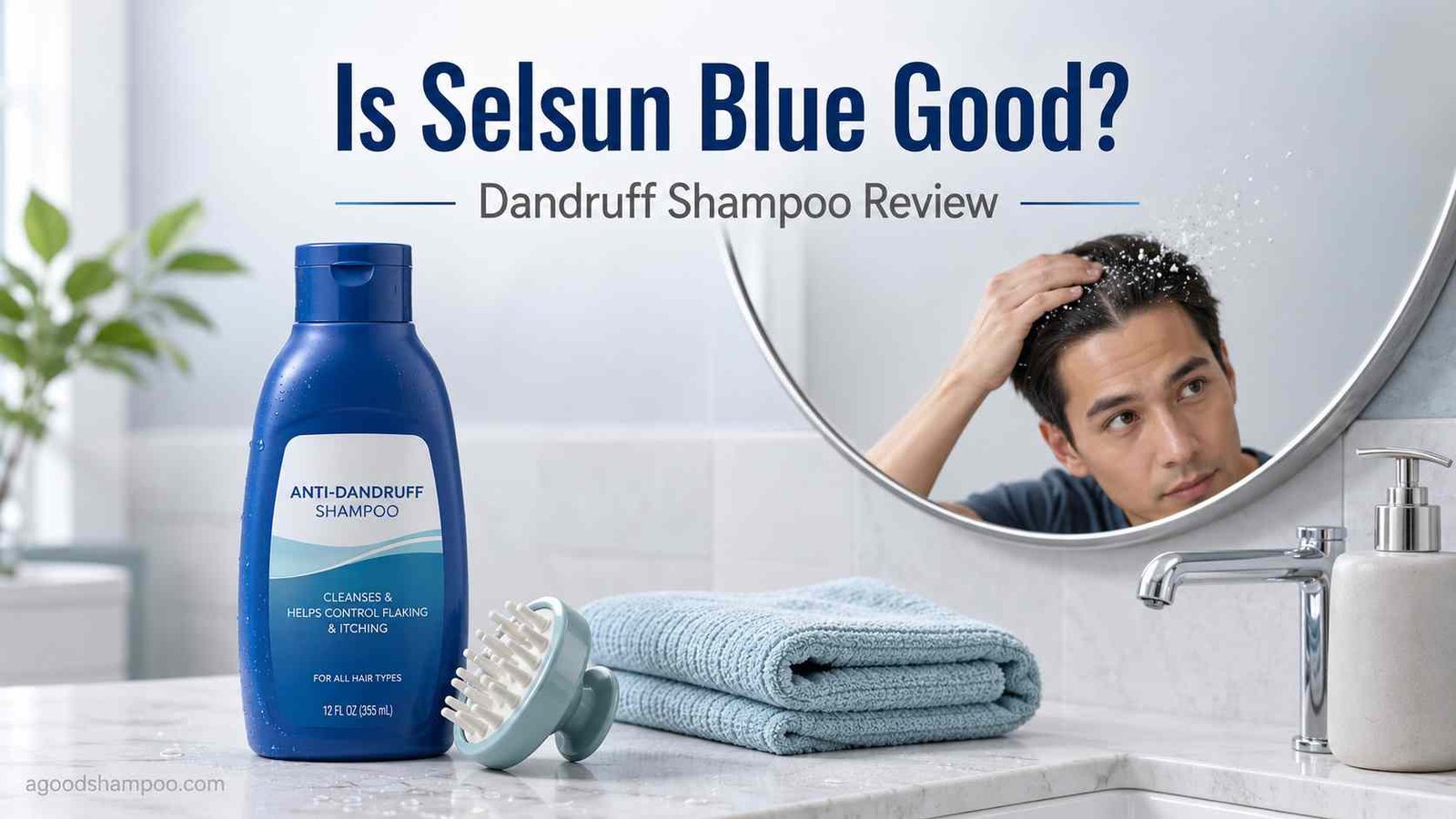
Yes, Selsun Blue is a good dandruff shampoo, especially if your flakes come with an oily scalp, itching, greasy buildup, or stubborn dandruff that keeps coming back after normal shampoo.
The main reason is simple. Many Selsun Blue formulas use selenium sulfide, an anti-dandruff ingredient that helps control the yeast linked with dandruff and slows down flaky scalp buildup. The official Selsun Blue Medicated Antidandruff Shampoo lists 1% selenium sulfide as its active ingredient and describes it as a maximum-strength dandruff relief option.
But here’s the thing nobody likes to say out loud.
Selsun Blue can work really well, but it is not the cutest, softest, most “spa-like” shampoo in the shower. It has a medicated feel. Some people love it because it gets the job done. Some people dislike it because it can feel strong, drying, or not gentle enough for their hair type.
So the better answer is this.
Selsun Blue is good for real dandruff, oily flakes, itchy scalp, and seborrheic dermatitis-type scalp issues. It may not be the best daily shampoo for dry, curly, color-treated, or already fragile hair unless you use it carefully.
Why dandruff happens in the first place
Dandruff is not always just “dry scalp.” That little mistake causes so many bad hair routines.
A dry scalp can flake, yes. But classic dandruff often comes from a mix of scalp oil, irritation, and a yeast called Malassezia. This yeast naturally lives on the scalp. When it gets too active, or your scalp reacts badly to it, you may see flakes, itch, redness, and greasy buildup.
The American Academy of Dermatology says dandruff shampoos can treat mild to moderate seborrheic dermatitis on the scalp, and for some people, that may be enough treatment.
That is why a regular “moisturizing shampoo” may not fix real dandruff. You can wash your hair, feel clean for one day, then boom, flakes again.
A good dandruff shampoo needs active ingredients that work on the scalp problem, not just the hair strands.
What makes Selsun Blue different?
Selsun Blue is known for selenium sulfide.
That ingredient matters because it helps fight dandruff in two big ways. It helps reduce the yeast activity linked with flakes, and it can also help slow the over-shedding of scalp skin cells.
Mayo Clinic lists selenium sulfide, ketoconazole, zinc pyrithione, salicylic acid, and coal tar as common dandruff shampoo ingredients.
So Selsun Blue sits in the stronger medicated shampoo group. It is not just a “nice-smelling shampoo with anti-dandruff written on the bottle.”
That is good news if you have stubborn flakes.
But it also means you should respect it. Don’t use it like a random daily shampoo unless the bottle says that works for your formula and your scalp handles it well.
Quick Fact
A 2024 review on 2.5% selenium sulfide shampoo found it effective for dandruff symptoms such as itching, oiliness, and greasiness.
Selsun Blue’s common over-the-counter U.S. medicated formula uses 1% selenium sulfide, while some prescription or international formulas may use different strengths. Always check your own bottle.
Does Selsun Blue actually help with dandruff?
Yes, Selsun Blue can actually help with dandruff.
It works best when your dandruff looks like this:
Flakes come back fast after washing.
Your scalp feels oily, itchy, or waxy.
You see yellowish or greasy flakes, not only tiny dry white dust.
Your dandruff gets worse when you skip washing.
Your scalp feels irritated, but not wounded or infected.
That type of dandruff often responds better to medicated shampoos than soft beauty shampoos.
Clinical research also supports selenium sulfide as a useful dandruff ingredient. A randomized trial found both ketoconazole 2% shampoo and selenium sulfide 2.5% shampoo effective for moderate to severe dandruff.
Now, does that mean Selsun Blue clears everyone’s flakes forever?
No. Dandruff tends to come back because the scalp conditions that cause it can come back. Many people need maintenance use once or twice a week after flakes improve.
Annoying? Yes.
Normal? Also yes.
How long does it take for Selsun Blue to remove dandruff?
Most people should give Selsun Blue around 2 to 4 weeks of steady use before judging it.
Some people notice less itch after a few washes. Flakes may take longer because the scalp needs time to calm down and shed old buildup.
The brand’s moisturizing formula page says the shampoo should stay on the scalp for about two minutes so the selenium sulfide can settle onto the scalp properly.
That contact time matters.
A lot of people make this mistake. They rub dandruff shampoo in, rinse it out in ten seconds, then say it didn’t work. Medicated shampoo needs time on the scalp. Not forever. Just long enough to do something.
A simple routine can look like this:
Use Selsun Blue two or three times a week at first.
Massage it onto the scalp, not just the hair.
Leave it on for about two minutes, or follow your bottle directions.
Rinse very well.
Use conditioner on the mid-lengths and ends, not heavy conditioner on the scalp.
Once flakes calm down, use it once weekly or as needed for maintenance.
If your scalp gets more red, sore, or irritated, stop and consider another option.
Is Selsun Blue better than Head and Shoulders?
Sometimes, yes. Sometimes, no.
Selsun Blue is often better for oily, stubborn, itchy dandruff because selenium sulfide can feel stronger for many people. Head and Shoulders is often easier for regular use because many of its formulas feel more cosmetic and hair-friendly, depending on the exact version.
But comparing the two brands is tricky because both brands have different formulas. Some Head and Shoulders products use zinc pyrithione in certain markets, while some stronger versions use selenium sulfide. Mayo Clinic lists both pyrithione zinc and selenium sulfide as common anti-dandruff options.
Here is the honest comparison.
Selsun Blue may be better if your dandruff is heavy, oily, itchy, or keeps returning.
Head and Shoulders may be better if your dandruff is mild and you want something easier for frequent washing.
Nizoral or ketoconazole may be better if you suspect stronger fungal-related dandruff or seborrheic dermatitis and selenium sulfide has not helped enough.
Salicylic acid shampoos may be better if thick buildup is the main issue.
Coal tar shampoos may help some stubborn scaling, but they can smell strong and may not suit everyone.
So no, there is not one winner for every scalp.
Your scalp chooses the winner. Not the advertisement.
Which is the no. 1 shampoo for dandruff?
There is no true “No. 1 dandruff shampoo” for every person.
That sounds boring, but it is the truth.
The best dandruff shampoo depends on what your scalp needs.
If your scalp is oily and itchy, Selsun Blue can be a strong choice.
If your dandruff is mild, a zinc pyrithione shampoo may be enough.
If your flakes are stubborn, ketoconazole may work better for some people.
If your scalp has thick scale, salicylic acid can help loosen buildup.
If you have redness, pain, bleeding, hair loss patches, or crusting, you need a dermatologist instead of trying five shampoos at home.
The American Academy of Dermatology recommends looking for active ingredients like zinc pyrithione, salicylic acid, sulfur, selenium sulfide, ketoconazole, or coal tar, and trying another active ingredient if one shampoo does not work.
That advice is practical because dandruff treatment is often trial and adjustment.
Ingredient breakdown
Selenium sulfide
This is the star ingredient in many Selsun Blue medicated formulas. It helps reduce dandruff-linked yeast activity and scalp flaking. Good for oily, itchy, stubborn dandruff.
Menthol
Some Selsun Blue formulas include menthol. It gives a cooling feel. Nice if your scalp feels itchy, but it may bother very sensitive skin.
Surfactants
These are cleansing ingredients. They remove oil, sweat, and buildup. Helpful for greasy dandruff, but they can feel drying if your hair is already brittle.
Dimethicone or conditioning agents
Some formulas include conditioning ingredients to make hair feel smoother. Still, medicated dandruff shampoos are usually more scalp-focused than beauty-focused.
Who should use Selsun Blue?
Selsun Blue makes the most sense for you if your main issue is scalp dandruff, not just dry hair.
You may like it if:
Your scalp gets oily fast.
You have visible flakes on shirts or pillowcases.
Your scalp itches between washes.
You tried regular shampoo and it did nothing.
You want an affordable medicated option.
You need something stronger than a gentle cosmetic dandruff shampoo.
This is where Selsun Blue shines.
It is not trying to be fancy. It is trying to handle flakes.
Who may not love Selsun Blue?
Selsun Blue may not be your favorite if your hair is very dry, bleached, curly, fragile, or color-treated.
Why?
Because medicated dandruff shampoos focus on the scalp first. Your hair lengths may feel rougher if you use too much product through the whole head.
If you have curls or coils, do not scrub Selsun Blue all over your ends like a regular shampoo. Put it on the scalp. Let the lather move through the hair when you rinse. Then use a good conditioner.
If your hair is color-treated, check the bottle and be careful. Some dandruff shampoos can affect color vibrancy or make colored hair feel drier.
If your scalp burns easily or reacts to strong shampoos, patch test first.
The right way to use Selsun Blue
Here’s the small routine that makes a big difference.
Wet your hair fully.
Shake the bottle if the label says to.
Apply the shampoo to your scalp.
Massage gently with fingertips.
Do not scratch with nails.
Leave it on for the time listed on your bottle. Many Selsun Blue instructions mention about two minutes for proper scalp contact.
Rinse very well.
Condition your ends.
Wash your hands after use.
Keep it away from eyes.
Use it consistently for a few weeks before deciding.
The boring details matter here. Dandruff shampoo fails when people rush it, use it once, or only apply it to the hair instead of the scalp.
What Research Says
Dandruff and seborrheic dermatitis are connected with scalp oil, Malassezia yeast, inflammation, and skin barrier changes. A major review in Journal of Clinical and Investigative Dermatology describes dandruff and seborrheic dermatitis as common scalp conditions linked with flaking, itching, and irritation.
Another review notes that selenium sulfide is believed to control dandruff mainly through its anti-Malassezia effect.
That is why Selsun Blue can feel more useful than a normal shampoo when dandruff is truly the problem.
Can Selsun Blue make dandruff worse?
It can feel that way for some people, especially if they use it too often or their scalp is not dealing with dandruff in the first place.
For example, if your flakes come from dryness, eczema, psoriasis, allergy, harsh hair products, or over-washing, Selsun Blue might not solve the root issue. It may even make the scalp feel drier.
Also, if you scrub hard because you’re angry at your flakes, your scalp may get more irritated.
Been there. The “I will destroy this dandruff today” shower mood is real.
But your scalp is skin. It does not like punishment.
Use gentle pressure. Give the active ingredient time. Then rinse.
Selsun Blue for oily scalp
This is one of the best use cases.
If your roots get greasy quickly and dandruff shows up as oily flakes, Selsun Blue may help a lot. Selenium sulfide can help control dandruff symptoms linked with oiliness and greasiness. The 2024 selenium sulfide review found improvement in related symptoms like itching, oiliness, and greasiness.
For oily scalp, use it as a treatment shampoo, not a hair perfume shampoo. You are treating the scalp environment.
Selsun Blue for dry scalp
This is where you need to slow down.
Dry scalp and dandruff can look similar, but they are not always the same.
Dry scalp flakes are often small, white, and powdery. The scalp may feel tight after washing. The hair may feel dry too.
Dandruff flakes are often larger, oilier, and linked with itch or scalp buildup.
If your scalp is truly dry, Selsun Blue may feel too strong. You may do better with a gentle moisturizing shampoo, fewer washes, less hot water, and a soothing scalp routine.
But if you have dry hair with oily dandruff at the roots, you can still use Selsun Blue on the scalp and protect the hair lengths with conditioner.
Selsun Blue for curly hair
Selsun Blue can help curly hair with dandruff, but the routine matters.
Curly hair often gets dry faster because natural oils do not move down the hair shaft as easily. A strong medicated shampoo can make curls feel rough if you use it all over the hair.
Try this instead.
Apply Selsun Blue only to the scalp.
Use it once or twice a week at first.
Condition well.
Use a leave-in conditioner if your curls feel dry.
Do not use heavy oils on the scalp if dandruff gets worse with grease.
Oil on a dandruff-prone scalp can be tricky. Some people use oils and feel fine. Others feed the greasy buildup cycle and get more flakes.
Watch your own scalp.
Selsun Blue for hair loss worries
Selsun Blue is not a hair growth shampoo.
But dandruff and seborrheic dermatitis can make the scalp itchy and inflamed. When you scratch a lot, shed more, or irritate the scalp, hair can look worse. Controlling dandruff may help the scalp feel calmer.
Still, if you have real hair loss, thinning patches, sudden shedding, scalp pain, or bald spots, do not blame only dandruff. See a dermatologist. Hair loss can come from hormones, stress, iron deficiency, thyroid issues, alopecia, medication, or scalp disease.
Selsun Blue may help flakes. It should not be your full hair loss plan.
Best Selsun Blue choice by scalp type
For oily, stubborn dandruff, choose a selenium sulfide medicated formula.
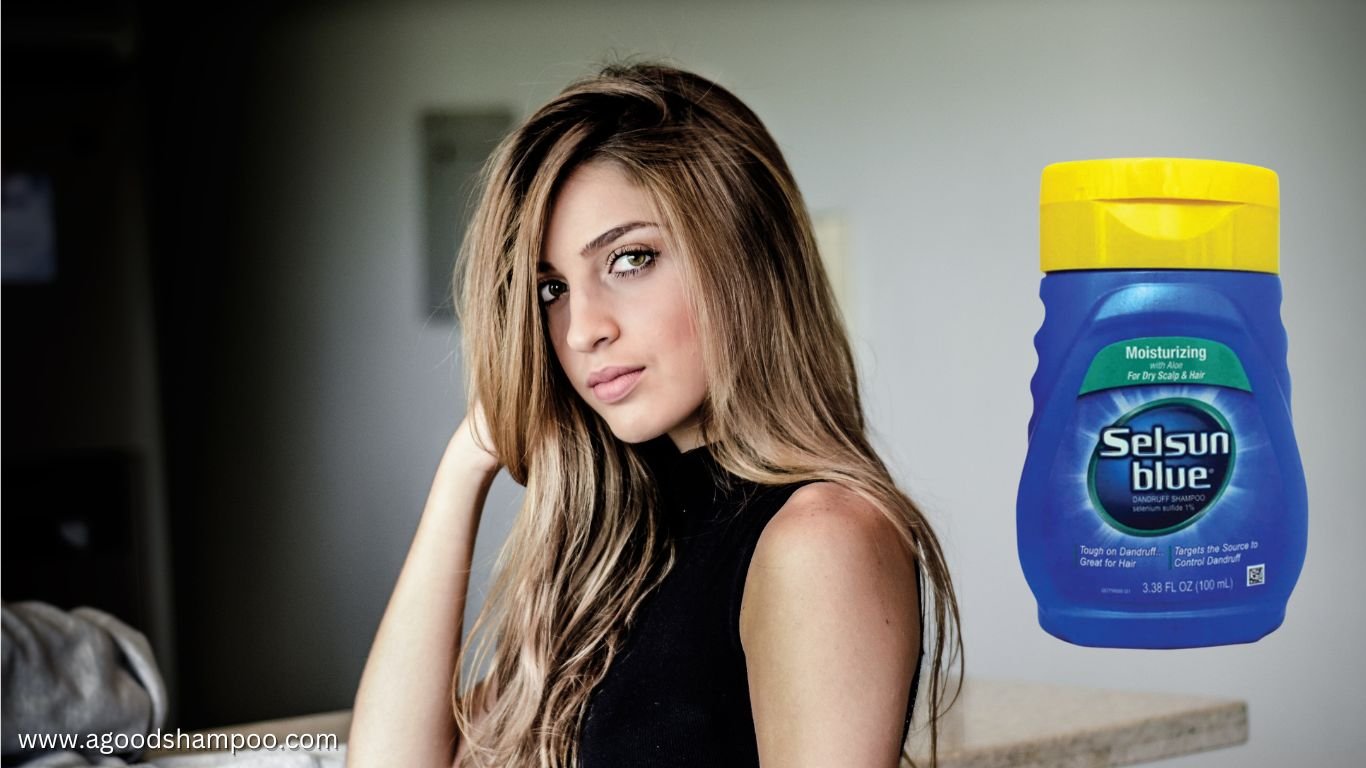
For dandruff with dry-feeling hair, choose a moisturizing Selsun Blue formula if available.
For mild flakes, you may not need the strongest version. A gentler anti-dandruff shampoo might be enough.
For sensitive scalp, start slowly and avoid formulas with strong cooling or fragrance if those bother you.
For color-treated hair, read the label carefully and use less often.
For curly hair, scalp only, conditioner always.
Common mistakes people make with Selsun Blue
The first mistake is using it once and expecting magic.
The second mistake is rinsing it out too fast.
The third mistake is rubbing it through the hair ends instead of focusing on the scalp.
The fourth mistake is using it daily when the scalp does not need that much.
The fifth mistake is quitting as soon as flakes improve. Many people need maintenance use because dandruff can return.
The sixth mistake is treating every flake like dandruff. Psoriasis, eczema, product allergy, fungal infection, and dry scalp can all look flaky.
Should you use Selsun Blue every day?
Most people should not need Selsun Blue every day.
Use it according to your bottle directions. Many people use medicated dandruff shampoo two or three times weekly at first, then reduce once symptoms improve.
If your scalp needs daily dandruff control, or flakes return the next day no matter what, it may be time for a dermatologist. You may need prescription treatment or a better diagnosis.
Side effects to watch for
Selsun Blue can cause dryness, irritation, oiliness changes, or scalp sensitivity in some people.
Stop using it and get medical advice if you notice burning, swelling, rash, severe redness, open sores, or worsening irritation.
Also, keep it out of your eyes. Medicated shampoos are not gentle eye products. That sting is not character building. It is just awful.
Final verdict
Selsun Blue is a good dandruff shampoo if your dandruff is oily, itchy, stubborn, or linked with seborrheic dermatitis-type scalp symptoms.
Its strength comes from selenium sulfide, a well-known anti-dandruff ingredient supported by dermatology guidance and clinical research. It can work better than mild dandruff shampoos for some people, especially when flakes keep coming back.
But it is not perfect for everyone.
If your scalp is dry, sensitive, color-treated, or your hair is curly and fragile, use it carefully. Treat the scalp, protect the hair, and do not overuse it.
My honest take as Michael Chen would be this.
Selsun Blue is not the prettiest shampoo in the bathroom, but it earns its spot when dandruff gets serious. Use it correctly for a few weeks, watch how your scalp reacts, and switch active ingredients if it does not help.
FAQs
Does Selsun Blue actually help with dandruff?
Yes. Selsun Blue can help dandruff because many formulas use selenium sulfide, an ingredient that helps control dandruff-linked yeast and flaking. It works best for oily, itchy, stubborn dandruff.
Which is the no. 1 shampoo for dandruff?
There is no single No. 1 dandruff shampoo for everyone. Selsun Blue is strong for oily flakes, Head and Shoulders can be good for mild dandruff, ketoconazole can help stubborn cases, and salicylic acid can help thick buildup.
Is Selsun Blue better than Head and Shoulders?
Selsun Blue may be better for stubborn, oily, itchy dandruff. Head and Shoulders may feel better for regular use or mild flakes. It depends on the formula and your scalp.
How long does it take for Selsun Blue to remove dandruff?
Many people need 2 to 4 weeks of regular use. Some notice less itch sooner. Leave it on the scalp as directed, because medicated shampoo needs contact time.
Can I use Selsun Blue on curly hair?
Yes, but focus it on the scalp only and condition well after rinsing. Curly hair can get dry from medicated shampoos, so avoid rubbing it through your ends.
Is Selsun Blue good for dry scalp?
Only if the flakes are true dandruff. If your scalp is simply dry and tight, Selsun Blue may feel too strong. A gentle moisturizing shampoo may work better.
Can Selsun Blue help itchy scalp?
Yes, it can help if the itch comes from dandruff or seborrheic dermatitis. If the itch comes from allergy, eczema, lice, infection, or irritation, it may not be enough.

Michael Chen focuses on the science behind shampoos and hair-care ingredients. He explains how cleansing agents, silicones, proteins, and other formula components work, separating useful evidence from marketing claims to help readers better understand the products they use.