 If you want your hair to look straighter after washing, choose a smoothing or anti-frizz shampoo, not a shampoo that promises to permanently straighten your natural texture.
A good smoothing shampoo can reduce puffiness, improve slip, make frizzy hair easier to control, and prepare it for blow-drying or flat-ironing. What it cannot do is permanently turn curly or wavy hair straight simply by being massaged on and rinsed off.
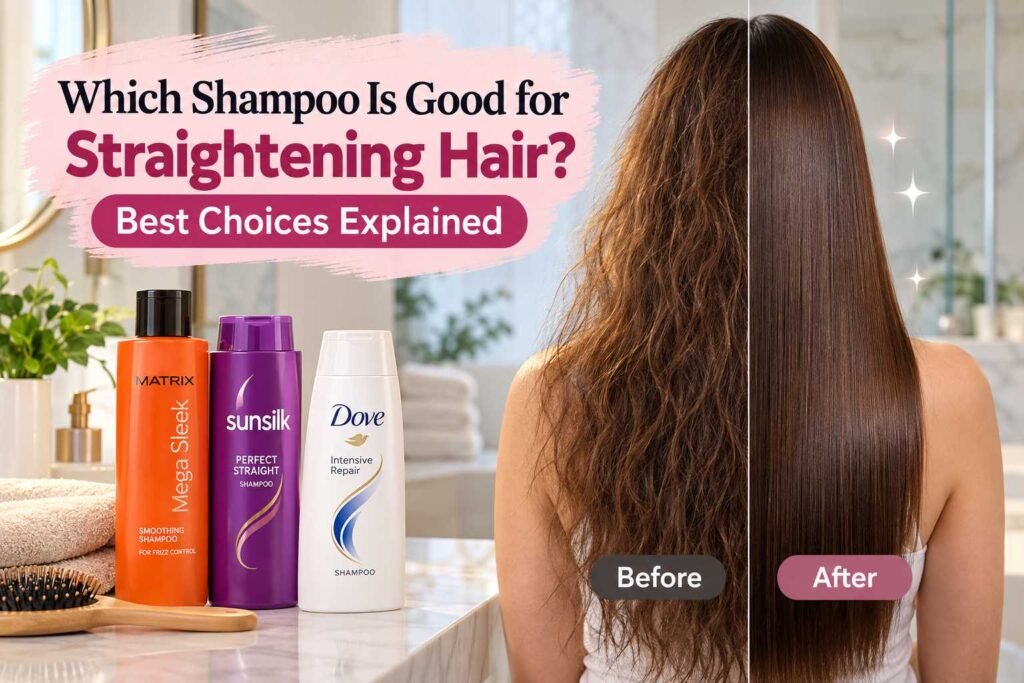
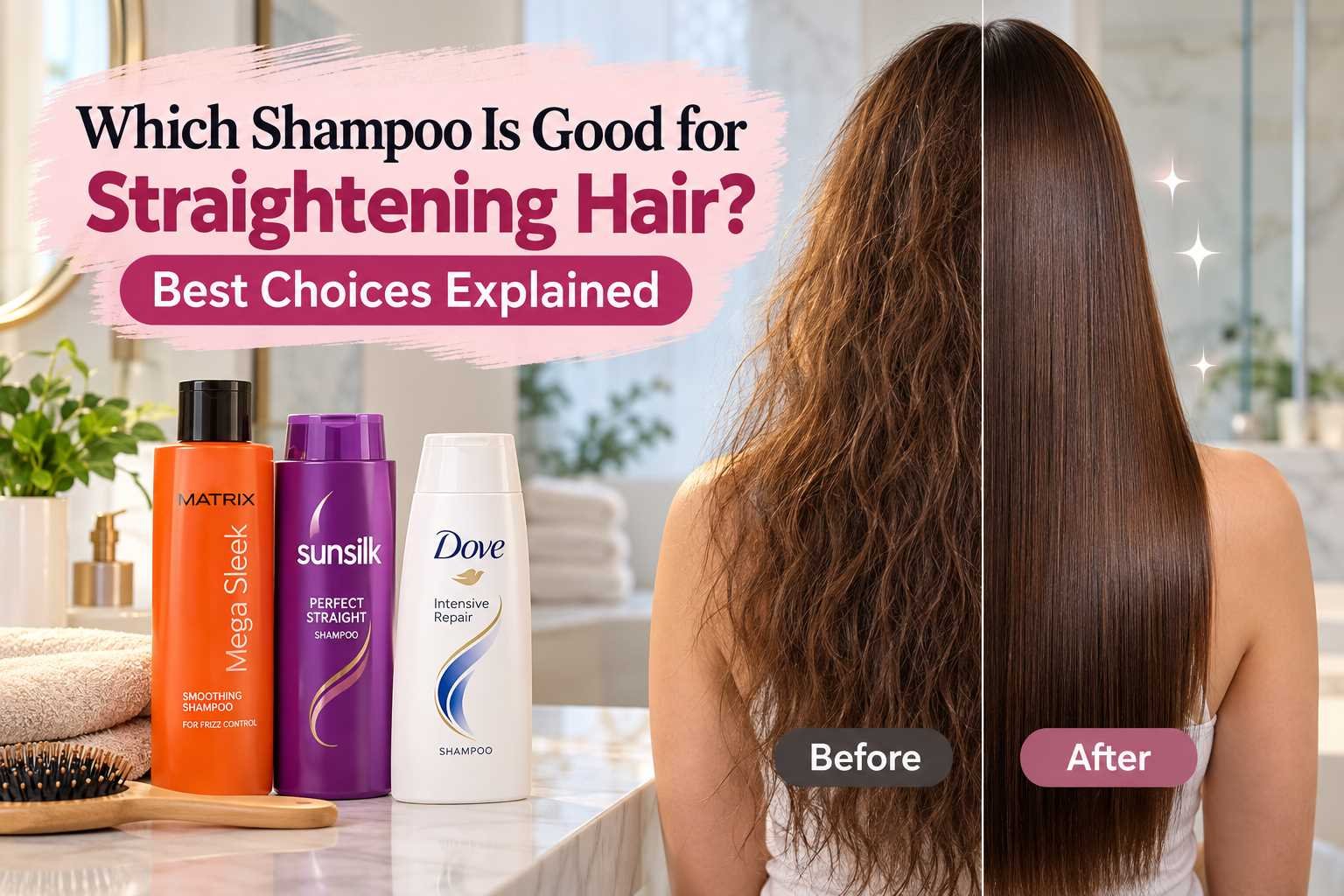
For coarse, unruly or humidity-prone hair, Matrix Mega Sleek Smoothing Shampoo is one of the more relevant current options because Matrix specifically positions it for frizz control and humidity protection. Its formula also contains glycerin, conditioning polymers, oleic acid and jojoba oil alongside its cleansing system.
If your hair has already been professionally straightened or keratin-treated, the decision changes. Your priority becomes maintaining the treatment and avoiding unnecessary dryness rather than trying to straighten the hair again with shampoo.
Which Shampoo Is Good for Straightening Hair?
The best shampoo for straightening hair is usually one that makes the hair smoother, less frizzy and easier to style, rather than one marketed as if shampoo itself changes the structure of the hair.
What should you look for?
A useful straightening-support shampoo usually combines effective cleansing with enough conditioning to prevent the hair from feeling rough after washing. Depending on the formula, that conditioning may come from ingredients such as glycerin, conditioning polymers, silicones, oils or fatty ingredients that improve slip and reduce the rough feeling of the hair surface.
This matters because hair that feels rough, dry and swollen by humidity is harder to style into a sleek shape. Hair that is smoother and easier to detangle generally behaves better when you use a brush and blow dryer.
There is still an important distinction.
Smoothing is not the same as straightening.
A shampoo may:
- reduce visible frizz
- improve softness and slip
- make hair easier to detangle
- reduce a puffy appearance
- help hair respond better to blow-drying
- make already straight or mildly wavy hair look sleeker
It cannot permanently change naturally curly or wavy hair into straight hair.
That difference should guide your purchase.
The Best Shampoo Depends on Why Your Hair Won’t Stay Straight
Two people can both say, My hair won’t stay straight, while having completely different problems.
One may have coarse hair that expands in humidity. Another may have fine hair that becomes greasy and limp when a smoothing shampoo is too rich. Someone else may have chemically straightened hair that now needs gentle maintenance.
Choosing by the problem gives you a much better chance of finding the right shampoo.
| Hair situation | What to prioritize | Main concern |
|---|---|---|
| Frizzy, humidity-prone hair | Smoothing and conditioning formula | Puffiness and loss of sleekness |
| Dry or coarse hair | Moisture plus good slip | Roughness and tangling |
| Fine hair | Lightweight smoothing | Heavy formulas can flatten hair |
| Damaged hair | Conditioning and reduced friction | Breakage from heat and processing |
| Keratin-treated hair | Treatment-compatible cleansing | Preserving the treated finish |
| Naturally curly hair | Moisture and realistic expectations | Shampoo alone will not straighten curls |
Frizzy or humidity-prone hair
Frizz is often the problem people are actually trying to solve when they search for a straightening shampoo.
If this describes you, look for products positioned around smoothing, anti-frizz performance and humidity control.
Matrix Mega Sleek is a clear example. The current Matrix product page describes the shampoo as intended for frizz-prone hair and humidity protection. Its present ingredient list includes several cleansing agents, glycerin, hydroxypropyl guar hydroxypropyltrimonium chloride, Polyquaternium-7, oleic acid and jojoba oil.
That doesn’t mean those individual ingredients prove the shampoo will straighten hair. The useful point is that the whole formula has been designed around cleansing plus smoothing and conditioning.
If thick frizz is your main problem rather than curl pattern itself, our guide to choosing a shampoo for thick frizzy hair covers that problem in more detail. shampoo for thick frizzy hair
Dry, coarse or damaged hair
Dry hair can become harder to straighten because damaged or rough lengths don’t glide easily through a brush. They may also look frizzy even after you use heat.
Here, choosing the strongest-cleansing shampoo is usually not the goal. You need adequate cleansing without leaving the lengths feeling stripped.
Conditioner becomes especially important.
Think of shampoo as preparation. The conditioner, leave-in product and heat protectant often do more of the heavy lifting when it comes to detangling, reducing friction and helping damaged hair tolerate styling.
Repeated heat can also contribute to damage. The American Academy of Dermatology recommends allowing hair to partially air-dry before styling when possible and advises using flat irons on dry hair at low or medium heat rather than repeatedly exposing hair to high temperatures.
Fine hair that gets weighed down easily
Fine hair needs a different strategy.
A very rich smoothing formula may make coarse hair feel controlled but leave fine hair looking flat or greasy. If your strands are fine, prioritize lightweight smoothing over the heaviest oils and creams.
The goal is enough conditioning to reduce flyaways without creating a coated appearance.
If your hair is already naturally straight and you mainly want better softness, movement and manageability, our guide to shampoos for straight hair is the more relevant next step. shampoos for straight hair
Keratin-treated or chemically straightened hair
Already-treated hair belongs in a separate category.
Once a professional smoothing or straightening service has changed the way your hair behaves, the shampoo is no longer responsible for creating the straight result. Its job is to clean the scalp and hair without making the treated lengths unnecessarily rough or difficult to manage.
Treatment instructions vary, so the salon or product manufacturer’s aftercare directions should take priority over generic internet rules.
You can also see our dedicated guide to choosing shampoo after a keratin treatment for more detailed aftercare considerations. shampoo after a keratin treatment
Shampoos Worth Considering for a Straighter, Smoother Finish
There isn’t one universally best straightening shampoo. The better question is which formula fits the hair you have.
Matrix Mega Sleek Smoothing Shampoo for frizz-prone hair
Best for: Coarse, unruly or humidity-prone hair.
Matrix currently describes Mega Sleek as a smoothing shampoo for all types of frizz-prone hair, with an emphasis on humidity protection.
Its ingredient list shows that this is not simply an oil shampoo. The formula contains Sodium C14-16 Olefin Sulfonate as a primary cleanser, along with Cocamidopropyl Betaine and Sodium Lauroyl Sarcosinate. It also includes glycerin, conditioning polymers, oleic acid and jojoba oil.
That makes it most logical for someone whose biggest obstacle to a straight finish is frizz or unruly texture.
Main limitation: It is still shampoo, not a chemical straightener. Naturally curly hair will remain curly unless it is changed through styling or a professional treatment.
Sunsilk Perfect Straight for a budget straight-hair routine
Sunsilk’s Pakistan site continues to present a Perfect Straight range for people who want straighter-looking, more manageable hair. The brand describes the range using its Straight-Lock marketing language and recommends shampoo, conditioner and careful combing as part of the routine.
That positioning makes Sunsilk Perfect Straight a reasonable budget-oriented option where the range is available.
There is an important qualification: manufacturer wording such as Straight-Lock should be treated as a brand claim, not evidence that a rinse-off shampoo permanently restructures naturally curly hair.
Use it with realistic expectations. It may help with smoothness and manageability, particularly when paired with conditioner, but the final straight appearance still depends heavily on your natural texture and styling method.
What about Dove shampoo?
People also frequently ask which Dove shampoo is good when they want softer, smoother hair.
There isn’t one Dove shampoo that should automatically be labeled the best straightening shampoo. The better approach is to select a Dove formula for your actual problem: damage, dryness, frizz or lightweight cleansing.
AGoodShampoo already has a separate guide to choosing Dove shampoo by hair need, which is more useful than forcing Dove into a straightening category it may not specifically belong to. guide to choosing Dove shampoo by hair need
What a Straightening Shampoo Actually Does to Hair
Hair above the scalp is a fiber. Shampoo mainly cleans the scalp and hair surface, while conditioning ingredients can change how that fiber feels and behaves temporarily.
A smoothing formula may reduce friction between strands. Hair can then feel softer, detangle more easily and lie flatter rather than separating into a fuzzy or puffy surface.
That cosmetic change can be significant.
If mildly wavy hair becomes less frizzy and easier to brush while drying, it may look noticeably straighter. But its basic natural pattern has not necessarily changed.
This is where marketing can confuse people.
Words such as straightening shampoo, smooth, sleek, keratin, anti-frizz and straight-lock may sound as if they describe the same effect. They don’t.
A useful way to think about them is:
Shampoo prepares the hair. Conditioner improves slip. Styling creates much of the temporary straight finish. Professional chemical or smoothing treatments can produce a more substantial and longer-lasting change.
That’s also why an Ayurvedic shampoo or beer shampoo shouldn’t automatically be chosen for straightening just because it makes other hair claims.
For example, a beer shampoo may be designed around cleansing, body or shine rather than frizz control. If you’re curious about that category, see our guide explaining what beer shampoo actually does for hair. what beer shampoo actually does for hair
The full formula matters more than the category name.
Shampoo, Blow-Drying or Professional Straightening: Which Do You Actually Need?
If you want visibly straighter hair, identifying the result you expect is more useful than buying a bottle labeled straight.
| Method | What it can realistically do | How long it lasts |
|---|---|---|
| Smoothing shampoo and conditioner | Reduce frizz and improve manageability | Until subsequent washing and environmental changes |
| Blow-dryer and brush | Temporarily reshape hair as it dries | Usually until moisture, washing or humidity changes it |
| Flat iron | Creates a stronger temporary straight finish | Until washing or moisture disrupts it |
| Professional smoothing treatment | May reduce frizz and loosen texture | Depends on the treatment |
| Chemical straightening/relaxing | Alters hair structure more substantially | Treated hair remains changed while new growth retains its natural texture |
Shampoo plus a good hair dryer for temporary straightening
Searching for the best hair dryer for straightening hair is actually a logical next step.
For many people, the shampoo does not create the straight look. It creates a manageable starting point. The dryer, brush, tension and drying direction then shape the hair.
A concentrator nozzle can help direct airflow down a section of hair rather than blowing it in every direction. A suitable brush can add tension while the hair dries.
Heat still needs to be controlled.
The American Academy of Dermatology advises reducing blow-drying frequency when possible and allowing hair to partially air-dry before styling. It also warns that excessive heat can damage hair.
So the best routine is not maximum heat. It is enough heat and tension to create the finish while limiting unnecessary exposure.
Salon treatment for frizzy hair without fully straightening it
Some people don’t actually want pin-straight hair. They want less frizz while preserving some natural movement.
That is where a professional smoothing consultation can make more sense than a permanent straightening service.
Ask specifically what the treatment is designed to do:
Does it reduce frizz?
Does it loosen curl?
Does it permanently straighten the treated section?
How long does it typically last?
What aftercare is required?
Most importantly, ask what product is being applied.
Professional hair straightening treatments need more safety questions
Professional smoothing and straightening services are not simply stronger shampoo.
The U.S. Food and Drug Administration warns that some hair smoothing products contain or release formaldehyde when heated. The agency specifically tells consumers to look for the terms formaldehyde, formalin and methylene glycol, and notes that not all smoothing products contain formaldehyde.
The FDA also reports that formaldehyde in air above 0.1 parts per million can cause serious irritation of the eyes, nose and lungs.
That doesn’t mean every keratin or smoothing service is unsafe or uses the same chemistry. It means you should not choose a treatment solely because the salon promises frizz-free or straight hair.
Ask the stylist what product will be used, whether you can review the ingredient information or Safety Data Sheet, whether it contains or releases formaldehyde, and how the salon controls ventilation. These are questions the FDA itself recommends consumers ask.
If Your Hair Has Already Been Keratin-Treated or Straightened
Don’t buy another straightening shampoo expecting it to intensify the salon result.
Instead, protect the condition of the treated hair.
Use the aftercare instructions supplied for your particular treatment. Keep the lengths conditioned, avoid unnecessary repeated high heat, and pay attention to how the hair responds after washing.
If a shampoo leaves the treated lengths rough, tangled or difficult to style, it may not be the right match even if the label says smoothing.
Likewise, don’t assume sulfate-free automatically means better. Cleansing strength depends on the entire surfactant system and formula, not one label claim.
The same is true of silicones. A silicone-containing formula can be useful for some people because silicone ingredients may improve slip and cosmetic smoothness. Silicone-free does not automatically mean healthier, just as silicone-containing does not automatically mean heavy or damaging.
For treated hair, compatibility and how the full routine performs matter more than beauty buzzwords.
Choose Smoother Hair, Not a Shampoo That Promises the Impossible
So, which shampoo is good for straightening hair?
For coarse, frizzy or humidity-prone hair, Matrix Mega Sleek is one of the clearest current choices because it is specifically formulated and marketed around smoothing and frizz control.
For people who want an accessible straight-hair range in markets where it is sold, Sunsilk Perfect Straight is another option, but its straightening language should be understood as cosmetic positioning rather than proof of permanent structural straightening.
For fine hair, choose a lighter smoothing formula that won’t overwhelm the strands.
For dry or damaged hair, make conditioning and heat protection just as important as the shampoo itself.
For keratin-treated or chemically straightened hair, follow treatment-specific aftercare rather than buying a shampoo because the word straight appears on the bottle.
And if your real goal is to change naturally curly or wavy hair into consistently straight hair, shampoo alone is the wrong tool. A controlled blow-dry or flat-iron routine can create temporary straightness, while professional treatments can create longer-lasting changes but deserve a proper discussion about chemistry, maintenance and safety.
A shampoo should make the next step easier.
It should not need an impossible promise to be useful.

Carolina Herrera writes about color-treated, damaged, and chemically processed hair. She focuses on understanding breakage, choosing suitable shampoos, and making sense of repair claims. Her goal is to help readers care for their hair with realistic expectations and informed product choices.