 Beer shampoo sounds a little funny the first time you hear it.
A shampoo made with beer? For hair? Really?
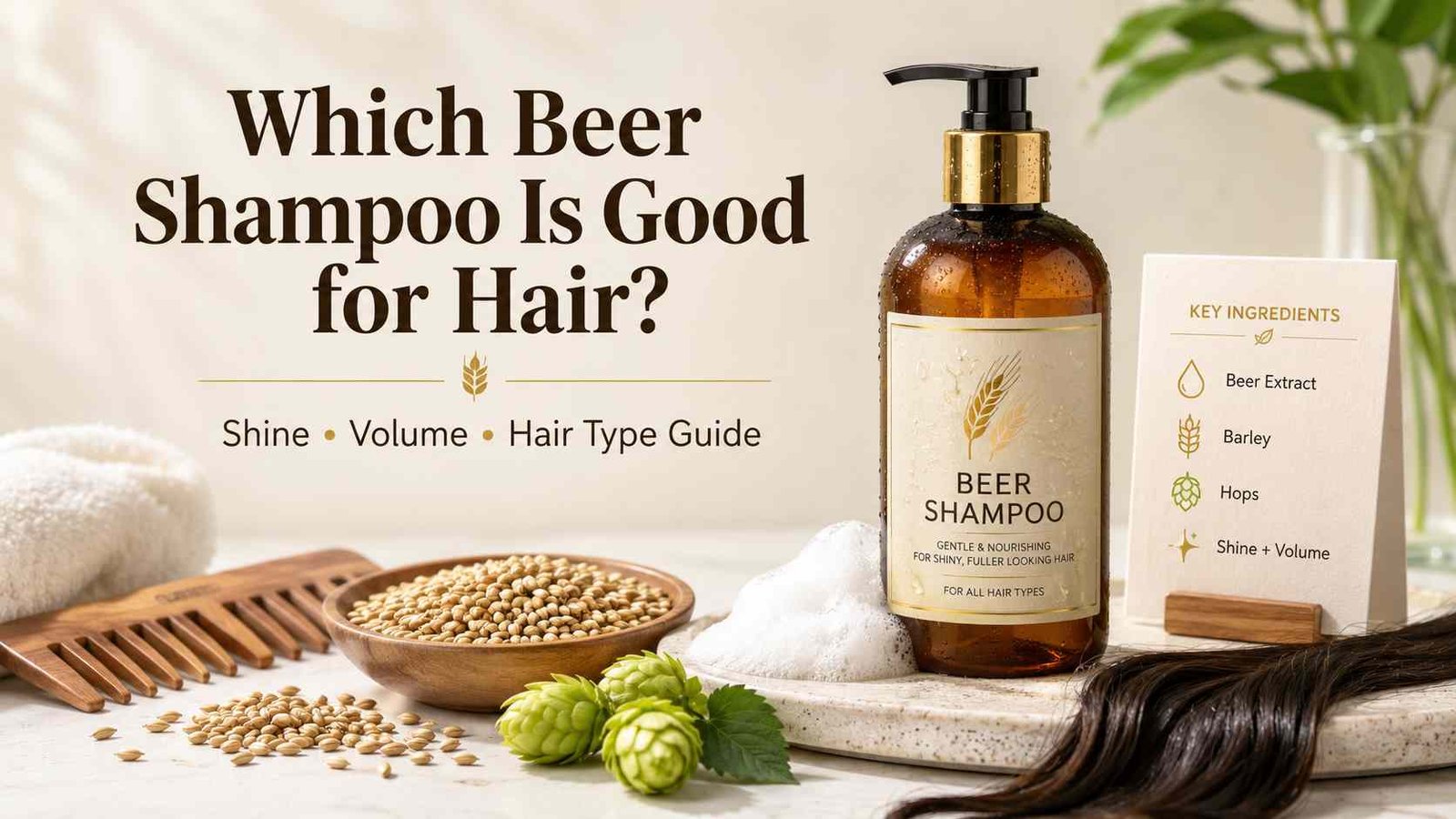
I get it. It sounds like one of those beauty tricks someone’s cousin tried once and then swore by forever. But beer shampoo is not just a random bathroom experiment anymore. Many brands now use beer, barley, hops, protein, glycerin, ceramides, and conditioning agents in shampoo formulas made for shine, softness, volume, and smoother hair.
Here’s the honest answer.
A good beer shampoo for hair is one that cleans well, adds softness, gives light bounce, and does not leave your scalp dry or itchy. For most people, Park Avenue Beer Shampoo is the easiest beer shampoo to find in USA and South Asia, while BRÖÖ Craft Beer Shampoo is a better premium pick for people who want a cleaner, sulfate-free style formula.
But the best beer shampoo for you depends on your hair type.
Thin, flat hair needs a light beer shampoo.
Dry hair needs beer shampoo with extra moisture.
Oily hair needs stronger cleansing.
Curly hair needs caution because many beer shampoos can feel drying if they contain stronger surfactants.
So no, beer shampoo is not magic.
But when the formula is right, it can make hair feel cleaner, fuller, and shinier.
What beer shampoo actually does to hair
Beer shampoo usually uses beer extract, malt, barley, hops, yeast-based nutrients, or beer-inspired ingredients. Real beer is made from ingredients like malted barley, hops, water, and yeast, and these are the parts beauty brands love to talk about.
Now, does pouring beer on your head repair damaged hair forever?
No. Please don’t expect shampoo to act like a salon bonding treatment.
Hair is dead fiber once it grows out of the scalp. A shampoo can clean it, coat it, smooth it, reduce roughness, and make it look better. But it cannot truly heal split ends. That part matters because a lot of beer shampoo marketing gets a little too excited.
What beer shampoo can do:
It can remove oil and buildup.
It can make flat hair feel lighter.
It can add temporary shine.
It can make hair feel fuller after washing.
It can help rough hair feel smoother if the formula includes conditioning ingredients.
What beer shampoo cannot do:
It cannot regrow hair on bald areas.
It cannot permanently repair split ends.
It cannot cure dandruff unless it has real anti-dandruff actives.
It cannot suit every scalp.
A good shampoo depends more on the full formula than the word beer on the bottle.
Which beer shampoo is best for hair?
For most readers in USA and nearby markets, Park Avenue Beer Shampoo is the most practical choice because it is widely available, affordable, and made in several variants for damaged, shiny, bouncy, or oily hair.
For readers in the USA, UK, Canada, Australia, or UAE who can find imported products, BRÖÖ Craft Beer Shampoo is a strong premium choice, especially for dry or color-treated hair. Retail listings describe BRÖÖ as made with all-malt, freshly hopped craft beer, and its moisturizing version includes shea butter for dry and damaged hair.
Here’s the simple breakdown.
| Hair need | Best beer shampoo type | Why it fits |
|---|---|---|
| Flat hair | Volumizing beer shampoo | Adds light bounce without too much heaviness |
| Oily scalp | Beer shampoo with stronger cleansing | Removes grease and sweat better |
| Dry hair | Beer shampoo with glycerin, shea butter, oils, or conditioners | Helps reduce rough feeling |
| Damaged hair | Beer shampoo with ceramides, proteins, or conditioning agents | Smooths the surface and helps hair feel stronger |
| Curly hair | Sulfate-free beer shampoo if available | Less chance of dryness and frizz |
| Sensitive scalp | Fragrance-light, gentle formula | Less chance of itching |
If you ask me to pick one easy option, I would say:
Best common choice: Park Avenue Beer Shampoo
Best premium choice: BRÖÖ Craft Beer Moisturizing Shampoo
Best for curls: Only choose a beer shampoo if it is moisturizing and gentle
Best for oily hair: Park Avenue Beer Shampoo for oily hair, if available
Best for dry hair: BRÖÖ Moisturizing or any beer shampoo with shea butter, glycerin, or conditioning agents
Why Park Avenue Beer Shampoo is so popular
Park Avenue Beer Shampoo became popular because it feels different from regular shampoo. It has a strong grooming-style identity, smells fresh, foams well, and usually makes hair feel very clean.
Ingredient listings for Park Avenue Beer Shampoo show cleansing ingredients such as sodium laureth sulfate, cocamidopropyl betaine, beer, glycerin, conditioning polymers, ceramide 2, and ceramide 3.
That tells us something important.
This is not just beer in a bottle.
It is a normal cleansing shampoo with beer added into the formula, plus ingredients that help with slip, softness, and a smoother feel. Sodium laureth sulfate cleans oil and dirt. Cocamidopropyl betaine helps foam and mildness. Glycerin supports moisture feel. Ceramides and conditioning agents may help the hair surface feel smoother.
Quick fact
A 2015 review on hair cosmetics explains that shampoos clean mainly through surfactants, which remove sebum, dirt, sweat, and product buildup from hair and scalp.
So when your hair feels fresh after beer shampoo, the surfactants do the heavy lifting. Beer ingredients may add some softness and shine, but cleansing comes from the shampoo base.
Is beer shampoo good for hair growth?
This is where I need to be very honest.
Beer shampoo may make hair look fuller, but that does not mean it grows new hair.
Some beer shampoos include B vitamins, proteins, barley, hops, or caffeine claims. These sound exciting. But shampoo touches the scalp for maybe one or two minutes, then you rinse it away. That short contact time limits how much it can change real hair growth.
If your hair is falling due to stress, low iron, thyroid issues, hormones, genetics, dandruff, tight hairstyles, or illness, beer shampoo will not fix the root cause.
Medical reviews also note that shampoo ingredients alone are unlikely to cause permanent hair loss, though harsh or drying ingredients may increase breakage in some people.
So yes, beer shampoo can make hair feel thicker for a day.
But no, it is not a real hair loss treatment.
Which beer is best for hair?
People ask this a lot, and the answer is simple.
Do not use drinking beer as your main hair care product. Use a proper beer shampoo instead.
Why?
Because drinking beer has alcohol, smell, stickiness, sugar residue, and uneven pH. It may leave hair rough or weird if you use it often. Also, not every beer has the same ingredients or strength.
Beer is usually made with malted barley, hops, yeast, and water. These ingredients sound hair-friendly in marketing because barley and yeast can contain proteins and B vitamins. But your hair does not need a random beer rinse as much as it needs a balanced shampoo and conditioner.
If you still want the beer effect, choose a product made for hair.
A shampoo formula controls cleansing strength, fragrance, thickness, preservation, pH, and rinse feel. A bottle of beer does not.
What types of hair is beer shampoo good for?
Beer shampoo works best for these hair types.
Flat and limp hair
This is probably the best match.
If your hair gets greasy quickly and falls flat by evening, beer shampoo can make it feel lighter and bouncier. It removes oil well, and many beer shampoos give that fresh, airy feeling.
Just don’t overuse it. If your hair starts feeling straw-like, use it less often.
Oily scalp
Beer shampoo can work well for oily scalps because many formulas cleanse strongly. If your scalp feels greasy after one day, a beer shampoo may help your roots feel cleaner.
Use it two or three times a week first.
Daily use can work for some people, but not for everyone.
Normal hair
Normal hair usually handles beer shampoo well. You may enjoy the clean feel, shine, and fresh scent.
Still, use conditioner on the ends. Shampoo is for the scalp. Conditioner is for the lengths.
Damaged hair
This one is tricky.
Some beer shampoos are marketed for damaged hair. Park Avenue’s damaged hair version includes beer and conditioning ingredients, and product pages list ingredients such as glycerin, ceramide 2, and ceramide 3.
That can help hair feel smoother.
But if your hair is bleached, chemically straightened, heat damaged, or very brittle, beer shampoo alone is not enough. You need conditioner, leave-in cream, and maybe a weekly mask.
Damaged hair gets thirsty fast.
A beer shampoo can clean it, but it cannot replace repair care.
Curly hair
Curly hair needs the most caution.
Curls are often dry because scalp oil takes longer to travel down bends and coils. If a beer shampoo has strong sulfates or too much fragrance, curls may feel dry, frizzy, or rough.
Curly hair can use beer shampoo only if:
The formula is moisturizing.
You use conditioner every time.
You do not wash too often.
Your curls do not feel stiff afterward.
If your curls already feel dry, choose a sulfate-free moisturizing shampoo instead of a strong beer shampoo.
Ingredient breakdown
A beer shampoo is only as good as its formula. Here’s what to look for.
| Ingredient | What it does | Good or bad |
|---|---|---|
| Beer, barley, malt, hops | Adds marketing value, light protein feel, shine claims | Good, but not magic |
| Sodium laureth sulfate | Strong cleanser and foam maker | Good for oily hair, may dry some hair |
| Cocamidopropyl betaine | Helps foam and mildness | Usually good |
| Glycerin | Helps hair feel softer | Good for dry hair |
| Ceramides | Help smooth and support the hair surface | Good for damaged hair feel |
| Shea butter | Adds softness and moisture feel | Good for dry hair |
| Fragrance | Makes shampoo smell nice | Can bother sensitive scalps |
| Heavy silicone | Adds slip and shine | Good for frizz, may build up on some hair |
Research on shampoo pH also matters. One study found that lower pH shampoos may reduce frizz because they create less negative static electricity on the hair fiber surface.
That means a good beer shampoo should not just smell nice. It should also leave the hair cuticle feeling smooth, not swollen or rough.
Is beer shampoo safe for daily use?
It depends on your scalp and the formula.
If your hair is very oily, you may use beer shampoo often. If your hair is dry, curly, colored, or damaged, daily use may be too much.
Start like this:
Use beer shampoo twice a week.
Watch your scalp.
Check the ends of your hair.
If your hair feels clean and soft, continue.
If your hair feels dry, tight, itchy, or rough, reduce use.
One more thing. Always condition the ends. A lot of people blame shampoo when the real problem is that they never use conditioner.
Beer shampoo for men and women
Beer shampoo often gets marketed toward men because of the beer idea. But hair does not care about gender.
Hair cares about:
Scalp oil
Hair texture
Damage level
Wash routine
Weather
Styling habits
A woman with oily, straight hair may love beer shampoo.
A man with dry curls may hate it.
A teen with greasy roots may find it perfect.
Someone with scalp eczema may feel itchy from fragrance.
So don’t buy it because the bottle looks masculine or trendy. Buy it because the formula fits your hair.
How to use beer shampoo the right way
Most people use too much shampoo.
You do not need a palm full. You need enough to clean the scalp.
Here’s the better way.
Wet your hair fully.
Apply shampoo to the scalp, not the ends.
Massage gently for one minute.
Let the foam move through the lengths while rinsing.
Do not scrub the ends like laundry.
Use conditioner from mid-length to ends.
Rinse well.
Dry with a soft towel.
If your scalp is oily, shampoo twice only when needed. The first wash removes oil. The second wash foams more. But if your hair is dry, one wash is enough.
Who should avoid beer shampoo?
Beer shampoo may not suit you if you have:
Very dry curls
Bleached hair that snaps easily
Scalp itching after fragrance
Eczema or sensitive scalp
Fresh keratin treatment
Very frizzy hair that hates strong cleansers
Hair color that fades quickly
A review of hair cosmetics explains that shampoos and conditioners work through a mix of cleansing and conditioning ingredients, so the same product can feel great on one person and drying on another.
That’s why reviews are helpful, but your own hair test matters more.
Does beer shampoo have side effects?
Possible side effects are usually mild, but they can happen.
Your hair may feel dry.
Your scalp may itch.
Your color may fade faster if the shampoo is too strong.
Your curls may lose softness.
Your ends may feel rough if you skip conditioner.
This does not mean beer shampoo is dangerous. It means it may not match your hair.
If you notice itching, burning, redness, flakes, or sudden shedding, stop using it and switch to a gentle shampoo. If the problem continues, speak with a dermatologist.
Park Avenue Beer Shampoo vs BRÖÖ Craft Beer Shampoo
Both are beer shampoos, but they feel like different products.
Park Avenue is more common in South Asia. It is easy to find, budget-friendly, foamy, and good for people who like a very clean scalp feel. Ingredient databases list cleansing agents, beer, glycerin, ceramides, and conditioning agents in one Park Avenue Beer Shampoo variant.
BRÖÖ is more of a premium clean-beauty style beer shampoo. Retail information describes it as using all-malt, freshly hopped craft beer, with moisturizing versions made for dry, damaged, and color-treated hair.
My practical view:
Choose Park Avenue if you want easy availability and a fresh clean feel.
Choose BRÖÖ if you want a gentler premium option and can find it.
Choose neither if your scalp reacts badly to fragrance or your curls need rich moisture.
So, which beer shampoo is good for hair?
Here’s the final answer without the drama.
Park Avenue Beer Shampoo is a good choice for oily, normal, flat, and dull hair, especially if you live in USA or South Asia and want something easy to find. BRÖÖ Craft Beer Moisturizing Shampoo is a better pick for dry or color-treated hair if you want a more premium imported option.
For curly, bleached, or very dry hair, beer shampoo can be risky unless the formula is gentle and moisturizing.
The best beer shampoo is not the one with the loudest label.
It is the one that cleans your scalp without making your hair feel like dry grass afterward.
A small personal rule I like:
If your hair feels clean at the roots and soft at the ends, the shampoo works.
If your roots feel tight and your ends feel crispy, your hair is begging you to stop.

Michael Chen focuses on the science behind shampoos and hair-care ingredients. He explains how cleansing agents, silicones, proteins, and other formula components work, separating useful evidence from marketing claims to help readers better understand the products they use.