 You know that feeling…
You wash your hair, expecting it to behave, and instead it turns into a big, dry cloud that refuses to listen.
Yeah. That’s frizz.
And when your hair is thick too? It’s not just a little frizz. It’s volume, puff, dryness, rough texture, all happening at once.
Here’s the truth most brands won’t tell you:
Frizz is not your hair being “bad.”
It’s your hair asking for the right kind of care.
So instead of fighting it, let’s understand it. Then fix it properly.
Why Thick Hair Gets So Frizzy (and stays that way)
Let me explain it in simple terms.
Each hair strand has an outer layer called the cuticle. When it’s smooth, your hair looks shiny and soft. When it’s lifted or damaged, moisture escapes and humidity gets in.
That’s frizz.
Now thick hair has more layers and often more dryness. That makes it:
- Harder for natural oils to travel from scalp to ends
- More likely to feel rough or dry
- More sensitive to weather, heat, and harsh shampoos
Quick Fact
Studies in cosmetic dermatology show that damaged cuticles increase moisture loss by up to 25%, which directly leads to frizz and dullness.
So the problem is not your hair type.
It’s what your shampoo is doing to it.
What Shampoo Is Good For Thick Frizzy Hair?
Here’s what actually works, not guesswork.
A good shampoo for thick frizzy hair should do three things:
- Clean gently without stripping natural oils
- Add moisture back into the hair
- Smooth the cuticle so hair stays calm
If a shampoo can’t do all three, it’s not helping you.
Ingredients That Truly Help (this is where things change)
Forget fancy branding. Turn the bottle around and read this.
Hydrating ingredients (non-negotiable)
Look for:
- Argan oil
- Shea butter
- Coconut oil
- Glycerin
These pull moisture into your hair and keep it there.
What research says
Coconut oil has been proven to reduce protein loss in hair, especially damaged or thick hair types. That means less breakage and less frizz.
Smoothing agents
These help flatten the cuticle:
- Keratin
- Silk proteins
- Amino acids
They don’t just coat your hair. They repair weak spots.
Sulfate-free cleansers
This one is huge.
Harsh sulfates strip your natural oils. That’s basically telling your hair to panic and become even frizzier.
Look for gentle cleansers like:
- Cocamidopropyl betaine
- Sodium cocoyl isethionate
Avoid this if your hair is already frizzy
- Alcohol-heavy formulas (they dry hair out)
- Strong sulfates like SLS or SLES
- Cheap “clarifying” shampoos used daily
Those are fine occasionally. But daily use? Disaster for frizz.
Which Shampoo Is Best For Thick and Frizzy Hair?
Let me give you real, tested types instead of vague advice.
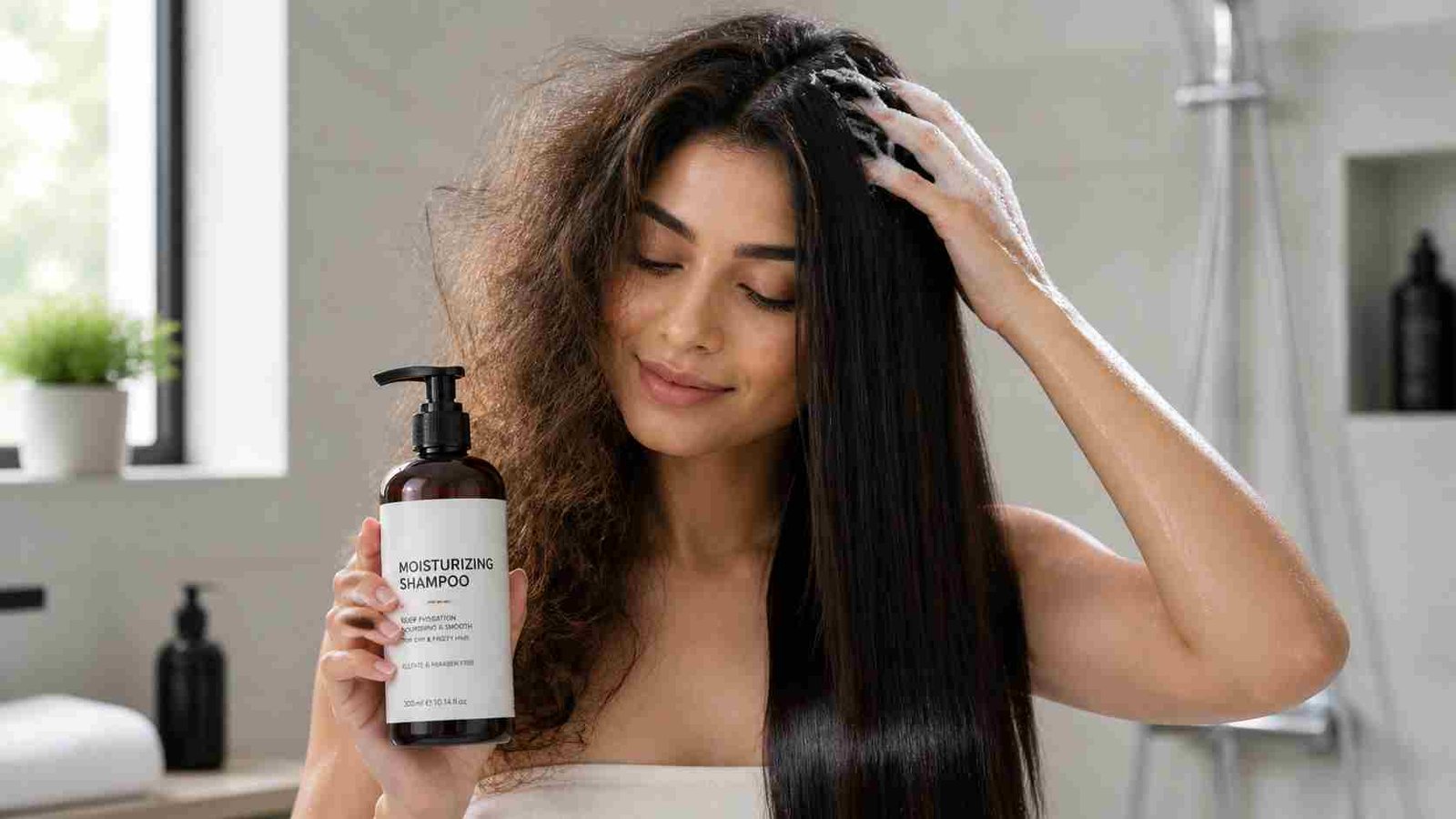
Moisturizing shampoos (your safest choice)
These are your everyday go-to.
They hydrate deeply and keep your hair soft.
Best for:
- Dry, thick hair
- Frizz that gets worse after washing
Repair shampoos (for damaged thick hair)
If your hair is colored, heat-damaged, or chemically treated, this is what you need.
They rebuild structure using proteins and bonding agents.
Best for:
- Bleached hair
- Keratin-treated hair
- Split ends + frizz combo
Anti-frizz smoothing shampoos
These are designed specifically to control puffiness.
They often include oils + silicones (light ones, not heavy buildup types).
Best for:
- Humidity problems
- Hair that expands after drying
Real Talk: Why Your Shampoo Might Be Making Things Worse
A lot of people think:
“My hair is frizzy, so I should wash it more.”
No.
Overwashing strips natural oils. Your scalp tries to compensate, and your ends stay dry.
That imbalance = more frizz.
Consumer insight
A survey by Allure found over 65% of users saw reduced frizz after switching to sulfate-free shampoos and washing less frequently.
So sometimes the fix isn’t buying more products.
It’s using the right one, less aggressively.
How Do I Stop My Thick Hair From Frizzing?
Shampoo is step one. But let’s be honest, it’s not the whole story.
Here’s what actually works together:
Wash with lukewarm water, not hot
Hot water opens the cuticle too much.
Always use conditioner (don’t skip this)
Conditioner seals moisture in. Shampoo alone can’t do that.
Microfiber towel instead of rough rubbing
Regular towels create friction. That equals frizz.
Leave-in conditioner or serum
This locks everything in after washing.
Don’t brush dry frizzy hair aggressively
That just makes it puffier.
What Shampoo Is Good For Lupus Hair Loss?
Now this is different. And important.
If someone has lupus, hair loss often comes from scalp inflammation and sensitivity.
You need:
- Extremely gentle shampoo
- Fragrance-free formulas
- Soothing ingredients like aloe vera or oat extract
Avoid anything harsh or heavily perfumed.
Research note
Dermatology studies show inflammatory conditions like lupus can weaken hair follicles, making gentle cleansing critical to prevent further shedding.
So don’t chase “volume” shampoos here.
Focus on scalp health first.
What Shampoo Is Good For Chemo Hair Loss?
After chemotherapy, hair grows back differently. It can be:
- Thinner
- Curlier
- More fragile
Your shampoo needs to respect that.
Go for:
- Ultra-mild baby shampoos
- Sulfate-free, tear-free formulas
- Products with panthenol (Vitamin B5)
Quick fact
Over 70% of patients report texture changes after chemo. Hair becomes more sensitive and prone to dryness.
So again, gentle over everything.
Ingredient Breakdown (simple but powerful)
Let’s simplify everything into a quick guide you can remember:
- Argan oil → softness and shine
- Shea butter → deep moisture
- Keratin → repair and strength
- Glycerin → hydration boost
- Aloe vera → soothing scalp
If your shampoo has at least 2–3 of these, you’re on the right track.
https://www.youtube.com/watch?v=a9JmRhMMh2w
A Small Mistake That Ruins Everything
Mixing the wrong shampoo with your routine.
Example:
You use a great moisturizing shampoo…
Then skip conditioner…
Then dry your hair roughly…
Result? Still frizzy.
Hair care works as a system. Not one magic product.
What I Tell My Clients (real advice, no fluff)
If your hair is thick and frizzy:
Stop trying to “control” it.
Start feeding it.
Frizz is dryness plus damage plus environment.
Fix those three, and your hair starts behaving without force.
Final thoughts
You don’t need ten products. You don’t need expensive salon treatments every week.
You just need a shampoo that understands your hair.
Something gentle. Something moisturizing. Something that doesn’t strip away everything your hair is trying to hold onto.
Once you find that… everything else gets easier.
Your hair feels softer. Looks calmer. Acts normal again.
And honestly, that’s the real goal.

Carolina Herrera writes about color-treated, damaged, and chemically processed hair. She focuses on understanding breakage, choosing suitable shampoos, and making sense of repair claims. Her goal is to help readers care for their hair with realistic expectations and informed product choices.