 Choosing a shampoo for hair fall and hair growth starts with one question: why is the hair falling in the first place?
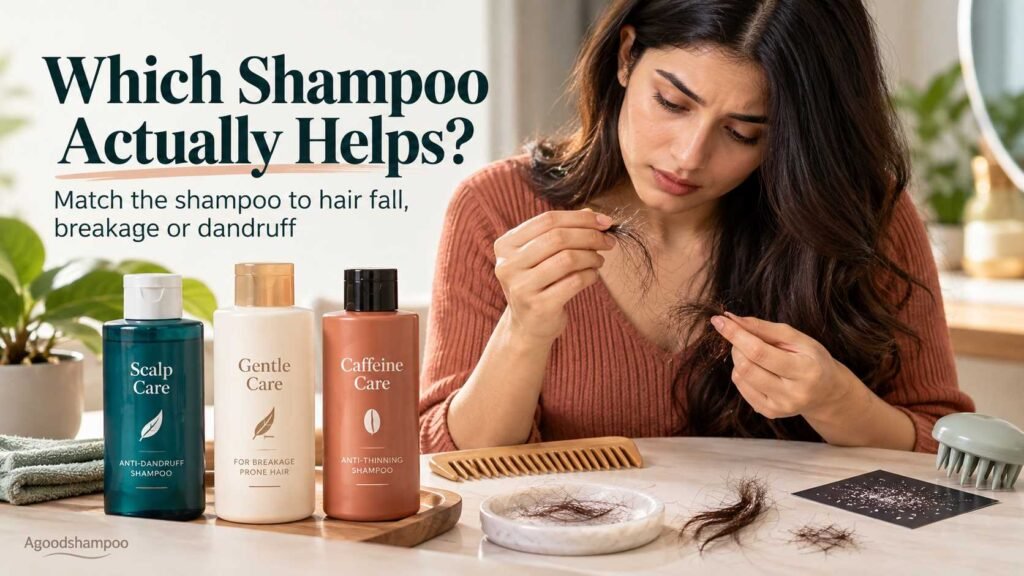
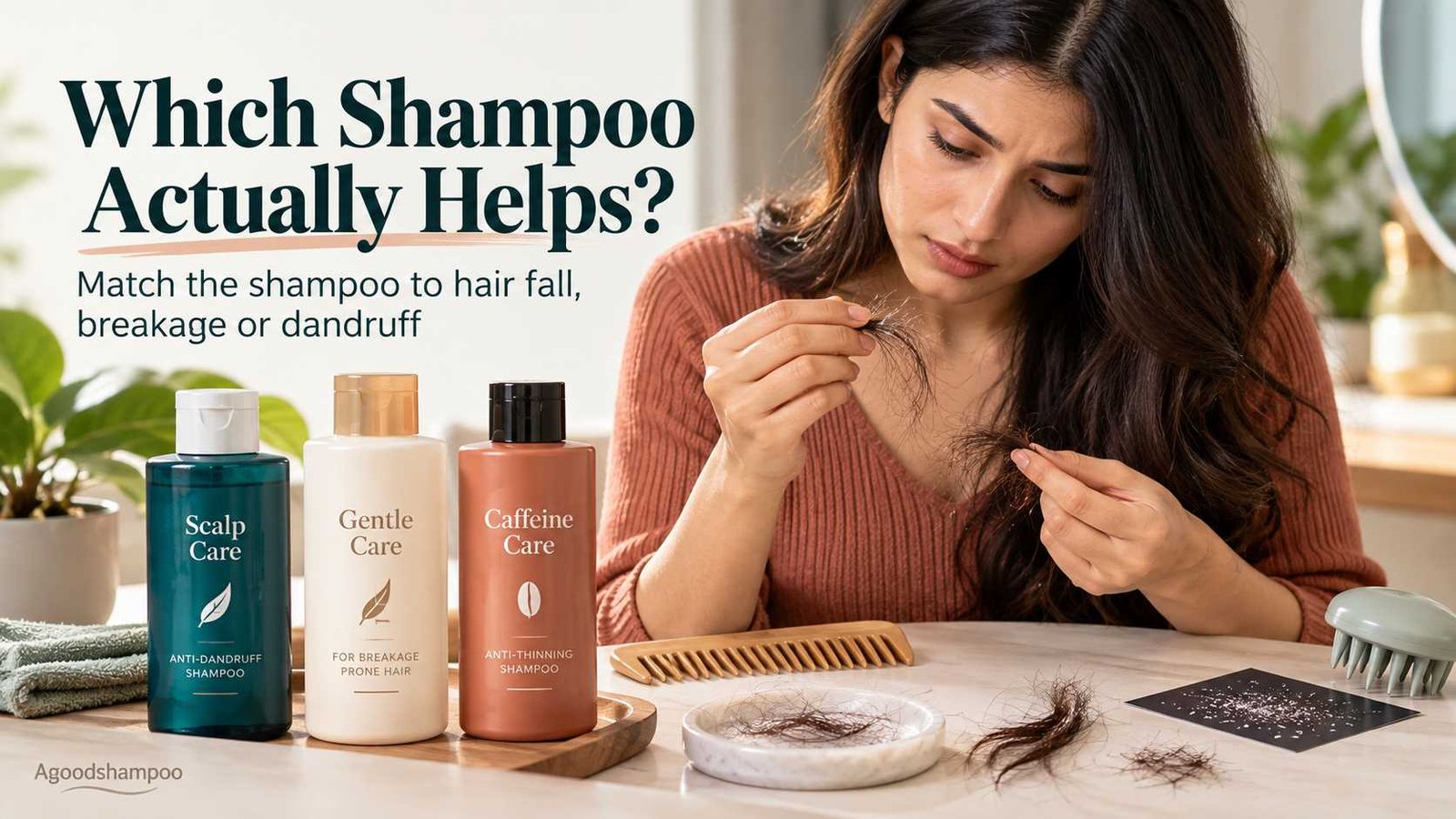
If your hair is snapping because it is dry and damaged, a gentle conditioning shampoo may help reduce breakage. If dandruff and scalp irritation are part of the problem, an anti-dandruff shampoo containing an appropriate active ingredient can make more sense. If you have progressive pattern thinning, however, changing shampoo alone is unlikely to solve the underlying problem.
That distinction matters because less breakage, less shedding and true new hair growth are not the same thing.
The American Academy of Dermatology advises that hair loss can have many causes, and finding the cause is often more important than buying another product marketed for hair growth.
The Best Shampoo Depends on Why Your Hair Is Falling
There isn’t one shampoo that is best for every person experiencing hair fall.
A useful shampoo should address something that shampoo can realistically influence: cleansing the scalp, controlling dandruff, minimizing irritation, removing buildup or reducing damage to the hair shaft.
| What you’re noticing | Shampoo strategy that makes the most sense |
|---|---|
| Dry hair that snaps easily | Gentle, conditioning shampoo that reduces roughness |
| Flakes, itching and dandruff | Shampoo with a recognized anti-dandruff active |
| Very oily scalp or heavy buildup | Effective cleansing suited to your scalp and wash frequency |
| Gradual widening part or patterned thinning | Shampoo can support the routine, but don’t rely on it as the main treatment |
| Sudden heavy shedding | Investigate the cause rather than searching for a stronger shampoo |
| Sensitive, irritated scalp | Mild cleanser with fewer ingredients that trigger your scalp |
The most common mistake is treating all hairs seen in the shower as the same kind of hair loss.
A full-length hair released from the follicle is different from a strand that has snapped halfway down because of bleaching, heat, rough detangling or dryness. A shampoo that improves conditioning may reduce the second problem without changing follicle activity at all.
This is why phrases such as anti-hair-fall and hair-growth shampoo need context.
A shampoo can sometimes make hair look fuller, reduce breakage or help create a healthier scalp environment. Those are useful benefits. They should not automatically be described as regrowing lost hair follicles.
If you’re particularly concerned about scalp irritation as well as shedding, our guide to shampoo for scalp inflammation and hair loss goes deeper into that combination.
Which Shampoo Ingredients Have the Best Evidence?
Hair-growth shampoos often display long lists of herbs, vitamins, proteins, oils and botanical extracts. More ingredients do not necessarily mean better evidence.
The ingredients worth paying most attention to depend on the problem you’re trying to solve.
Ketoconazole Makes the Most Sense When Dandruff Is Part of the Problem
Ketoconazole is primarily an antifungal ingredient used in dandruff shampoos. That makes it particularly relevant when shedding is accompanied by persistent flaking, itching or a dandruff-prone scalp.
The American Academy of Dermatology lists ketoconazole among the active ingredients used in dandruff shampoos, alongside zinc pyrithione, selenium sulfide, salicylic acid, sulfur and coal tar.
There is also some research interest in ketoconazole for androgenetic alopecia, or pattern hair loss.
A 2020 systematic review evaluated seven ketoconazole studies, including five human studies with a combined 318 participants. Human studies reported findings such as increased hair-shaft diameter and some clinical improvement. However, the authors described ketoconazole as a promising adjunct and specifically said randomized controlled trials were still needed.
That makes the practical interpretation straightforward.
If you have dandruff and hair fall, ketoconazole shampoo may be a sensible choice because it addresses a real scalp condition and may offer additional supportive benefits. It should not be sold to you as a guaranteed regrowth treatment.
For a deeper look at that combination, see our guide to shampoo for dandruff and hair fall.
Caffeine Shampoo Has Promising but Limited Evidence
Caffeine is one of the more interesting shampoo ingredients for people specifically concerned about thinning.
A randomized, double-blind study in women with androgenetic alopecia compared a phyto-caffeine shampoo with a control shampoo over six months. Women using the caffeine shampoo had a larger reduction in hairs removed during a hair-pull test than the control group. Hair strength and several secondary measures also improved.
More recent research continues to explore caffeine-containing shampoo formulations. A 24-week randomized placebo-controlled trial in 154 men tested a shampoo containing caffeine and dimethylglycine sodium salt. The active formulation produced better results than placebo on the study’s hair-pull outcome, while a smaller phototrichogram subgroup also showed improvements in measured hair parameters.
These findings are promising, but there is an important limitation: they tested specific formulations.
They do not prove that any bottle with caffeine written on the label will produce the same results.
If you want a cosmetic shampoo specifically aimed at thinning and your scalp doesn’t need a medicated dandruff treatment, a well-formulated caffeine shampoo is one of the more reasonable categories to consider. Just keep expectations measured.
Rosemary Shampoo Is Not the Same as Rosemary Oil Treatment
Rosemary is another ingredient surrounded by strong hair-growth claims.
There is human research behind rosemary oil, but this evidence is often applied too broadly.
A randomized trial involving 100 people with androgenetic alopecia compared rosemary oil with 2% minoxidil over six months. Both groups showed increased hair counts by six months.
But the study tested rosemary oil, not a rinse-off rosemary shampoo.
A shampoo may contain rosemary extract or oil and still be perfectly pleasant to use, but the presence of rosemary on an ingredient list does not prove that the shampoo will reproduce results from a six-month leave-on treatment study.
Contact time, concentration, formulation and method of use all matter.
Biotin in Shampoo Shouldn’t Be Treated as a Shortcut to Regrowth
Biotin is easy to market because consumers strongly associate it with hair.
That doesn’t mean a biotin shampoo automatically stimulates follicles.
For people without an identified deficiency, simply adding biotin to a rinse-off cosmetic product doesn’t establish that the finished shampoo will increase hair growth. Biotin-containing formulas may still cleanse and condition well, but their value should be judged on the whole formulation rather than the familiar ingredient name on the front label.
This principle applies to many botanical shampoos too. Amla, bhringraj, neem, kelp and shikakai may contribute to the identity or cosmetic properties of a formula, but an ingredient appearing in a shampoo is not automatically clinical evidence for regrowth.
Which Shampoo Is Good for Hair Growth in India?
For someone shopping in India, I would choose by scalp condition and hair condition before choosing by brand.
If dandruff and itching are obvious, an appropriate anti-dandruff shampoo containing an established active ingredient is usually a more logical first choice than a cosmetic herbal hair-growth shampoo.
If your hair is dry, rough and breaking, look for a shampoo that cleans without leaving the lengths unusually rough or tangled. Conditioning ingredients and a suitable conditioner after shampooing may do more for visible hair retention than chasing increasingly complicated growth claims.
If you have gradual thinning but no major scalp problem, a caffeine-based shampoo can be considered as a supportive cosmetic option because finished caffeine formulations have at least some human evidence behind them. It still should not replace proper assessment or evidence-based treatment when true androgenetic alopecia is present.
And if you prefer Ayurvedic or botanical products, that’s a reasonable preference. Just separate the question Does this shampoo suit my scalp and hair? from the much stronger question Has this finished shampoo been shown to regrow hair?
Those are not interchangeable.
How Kundal, Patanjali, Biotique and Nyle Compare
Several popular searches ask which shampoo within a particular brand is best for hair growth. Here’s where the distinctions become useful.
Which Kundal Shampoo Is Good for Hair Fall?
Kundal’s current Korean hair-loss range includes both a Caffeine Hair Loss Shampoo and a Brewer’s Yeast Hair Loss Shampoo.
Between those two concepts, the caffeine version is easier to justify for a reader specifically interested in thinning because caffeine-containing shampoo formulations have been studied in human participants.
That does not mean Kundal’s own finished shampoo has been independently proven to regrow hair unless product-specific clinical evidence establishes that.
So the practical choice is:
Kundal Caffeine Hair Loss Shampoo is the more logical Kundal option to consider for thinning, while the brewer’s yeast version may appeal for its broader conditioning or scalp-care positioning.
Neither should be treated as a substitute for diagnosing progressive hair loss.
Which Patanjali Shampoo Is Good for Hair Growth?
Patanjali sells several Kesh Kanti hair cleansers, but the Kesh Kanti Natural Hair Cleanser is the most straightforward general choice for someone primarily interested in dryness, roughness and hair fall.
Its current official product information lists botanical ingredients including aloe vera, reetha, amla, bhringraj, henna, shikakai, neem and tulsi. Patanjali says the product helps dryness and roughness and prevents hair fall.
Those are manufacturer claims.
The ingredient list does not establish that the shampoo causes faster follicular growth.
If your hair is coarse and dry, Kesh Kanti Shikakai Hair Cleanser is another relevant option. Patanjali positions it toward dryness, rough texture and cleansing excess oil, with ingredients including shikakai and bhringraj.
Between the two, choose according to how your hair and scalp feel rather than assuming the shampoo with the strongest herbal language will produce the fastest growth.
Which Biotique Shampoo Is Good for Hair Growth?
Within Biotique’s range, Ocean Kelp Anti Hair Fall Shampoo is the product most directly positioned for this concern.
Biotique’s current product page lists kelp, Flame of the Forest and Indian soapberry among the key ingredients. The company markets it for anti-hair-fall benefits, healthier shine and hair growth.
That tells us what Biotique intends the product to do. It does not independently prove follicular regrowth.
So I would view Ocean Kelp as a cosmetic anti-hair-fall shampoo for someone who prefers botanical formulas, not as a replacement for clinically established treatment of pattern hair loss.
If you like the cleansing experience and your scalp tolerates it, that’s a valid reason to use it. The word kelp alone isn’t a reason to expect dramatic new growth.
Which Nyle Shampoo Is Good for Hair Growth?
Nyle currently sells an Anti Hairfall Shampoo containing amla, almonds and coconut milk. The brand says it is intended for weak or thinning hair and markets the ingredients for scalp nourishment, manageability and reduced hair fall.
The formula makes more sense as a general cleansing and conditioning option for someone concerned about weak-feeling hair than as a medically proven growth treatment.
In other words, if your main problem is dryness, roughness and breakage, Nyle Anti Hairfall Shampoo may fit the goal better than it would for someone with a clearly widening part caused by androgenetic alopecia.
Which Shampoo Is Good for Hair Growth and Dandruff?
When dandruff and hair fall occur together, treating the dandruff is usually the more useful shampoo goal.
Dandruff can involve itching, flaking and scalp irritation. Scratching an irritated scalp can also be rough on the hair.
The American Academy of Dermatology advises looking for dandruff shampoos containing recognized ingredients such as ketoconazole, selenium sulfide, zinc pyrithione, salicylic acid, sulfur or coal tar. Which one suits you best can depend on your scalp, hair texture and how you respond to the product.
Instructions matter too.
Some dandruff shampoos need time on the scalp before rinsing. The AAD notes that certain formulas may need to remain on the scalp for about five to ten minutes, while frequency can vary by product and hair type.
Don’t assume that stronger or more frequent use is automatically better.
Curly, coily or very dry hair may need particular attention because medicated dandruff shampoos can sometimes leave the lengths feeling dry. Concentrating treatment on the scalp and following with appropriate conditioning may help.
If you’re specifically interested in different dandruff actives, our guide to how zinc pyrithione shampoo works for dandruff explains that ingredient in more detail.
Can Any Shampoo Make Hair Grow Fast?
No shampoo should be expected to make normal scalp hair suddenly grow dramatically faster.
This is where marketing language can create unrealistic expectations.
A product may make your hair seem to improve quickly because it:
- reduces breakage
- smooths rough cuticles
- makes strands appear fuller
- reduces visible flakes
- improves manageability
- reduces tangling
- removes buildup that was flattening the roots
All of those changes can make hair look healthier or denser.
They are not the same as creating new follicles or dramatically accelerating biological hair growth.
Even treatments with established roles in hair-loss management take time.
For example, the American Academy of Dermatology notes that minoxidil, a recognized treatment rather than an ordinary shampoo ingredient, often requires about 6 to 12 months before regrowth becomes noticeable.
That gives useful perspective to claims that an ordinary rinse-off shampoo will deliver rapid regrowth within a few washes.
Be especially skeptical of phrases such as fast hair growth, instant growth or guaranteed regrowth when the evidence provided is simply a list of botanical ingredients.
Hair Fall Control and Hair Growth Need Different Strategies
If your goal is the best shampoo for hair fall control and growth, think of shampoo as one piece of a larger routine.
For breakage, shampoo and conditioner can matter a lot. Gentler cleansing, better conditioning, reduced heat exposure and careful detangling can help more of the hair you already have stay intact.
For dandruff, choosing an appropriate active shampoo and using it correctly may improve scalp symptoms.
For pattern thinning, shampoos play a more supportive role. They may improve scalp cleanliness, make hair feel thicker or, in the case of certain studied formulations, possibly influence shedding measurements. They aren’t automatically equivalent to treatments specifically used for androgenetic alopecia.
For temporary shedding, the trigger may lie elsewhere. Illness, stress, medication changes, nutritional problems and hormonal changes are among the many issues that can contribute to hair loss, which is why identifying the cause matters.
That also explains why copying someone else’s shampoo routine often fails.
Two people can both say my hair is falling, yet one may be experiencing shaft breakage while the other has progressive follicular miniaturization. The same bottle is unlikely to be the best answer for both.
For more detail on that distinction, see our guide to choosing shampoo for hair-loss prevention.
When Changing Shampoo Is Not Enough
There is a point where trying a fourth or fifth anti-hair-fall shampoo stops being useful.
Consider professional assessment if you notice:
- sudden heavy shedding
- clearly defined bald patches
- a steadily widening part
- rapid thinning at the crown or temples
- scalp pain
- open sores
- marked redness or inflammation
- obvious scarring
- loss of eyebrows or other body hair
- hair loss that continues without an obvious explanation
The AAD emphasizes that hair loss has many potential causes and that identifying the cause early can improve the chance of getting an appropriate result from treatment.
This doesn’t mean every extra hair in the shower requires a dermatologist visit.
It means persistent or clearly progressive loss deserves more than another cosmetic product with hair growth printed on the bottle.
Choose Shampoo for the Cause, Not the Hair-Growth Label
So, which shampoo is good for hair fall and hair growth?
For dandruff with hair fall: choose a suitable anti-dandruff shampoo containing an established active such as ketoconazole, zinc pyrithione or selenium sulfide, depending on availability and personal suitability.
For dry, damaged hair that is breaking: choose a gentle shampoo that doesn’t leave your lengths excessively rough, and pair it with effective conditioning.
For uncomplicated thinning with a healthy scalp: a caffeine-containing shampoo is one of the more defensible cosmetic options because some finished caffeine formulations have produced encouraging results in human studies. The evidence is still product-specific and doesn’t justify guaranteed regrowth claims.
For people who prefer Patanjali, Biotique or Nyle: choose the formula according to scalp condition and hair texture. Their botanical positioning may suit your preferences, but herbal ingredients shouldn’t automatically be translated into clinically proven follicle growth.
For Kundal: the Caffeine Hair Loss Shampoo is the most logical product in the current range to consider specifically for thinning, based on the broader evidence around caffeine-containing shampoo formulations, not because Kundal itself has been proven to regrow lost follicles.
And if your hair is progressively thinning, falling out in patches or shedding heavily without an obvious reason, the best next step isn’t finding a stronger shampoo. It’s finding out what is causing the loss.
That’s the distinction that turns a hair-care purchase into a useful decision rather than another bottle promising more than a shampoo can realistically deliver.

Carolina Herrera writes about color-treated, damaged, and chemically processed hair. She focuses on understanding breakage, choosing suitable shampoos, and making sense of repair claims. Her goal is to help readers care for their hair with realistic expectations and informed product choices.