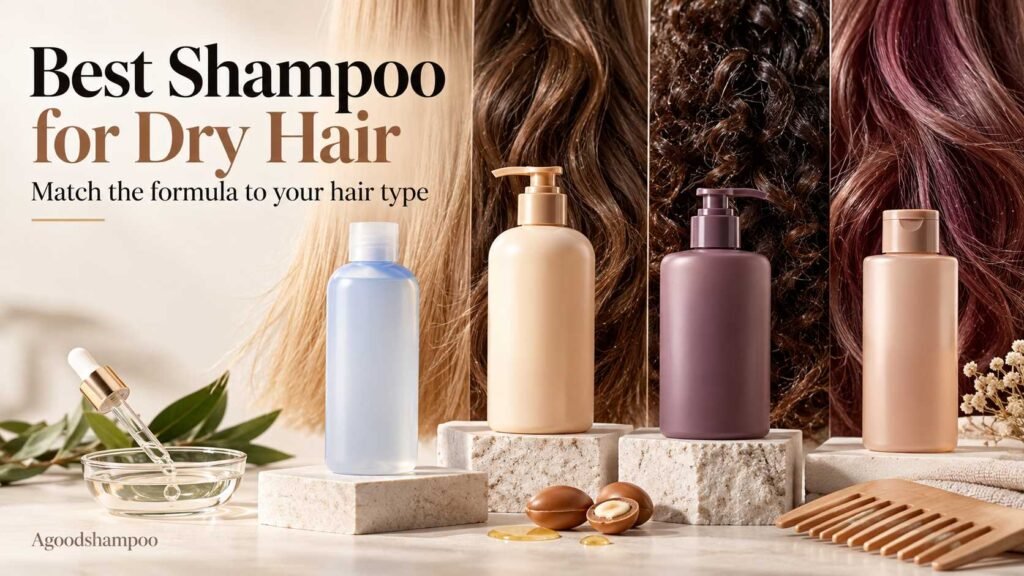
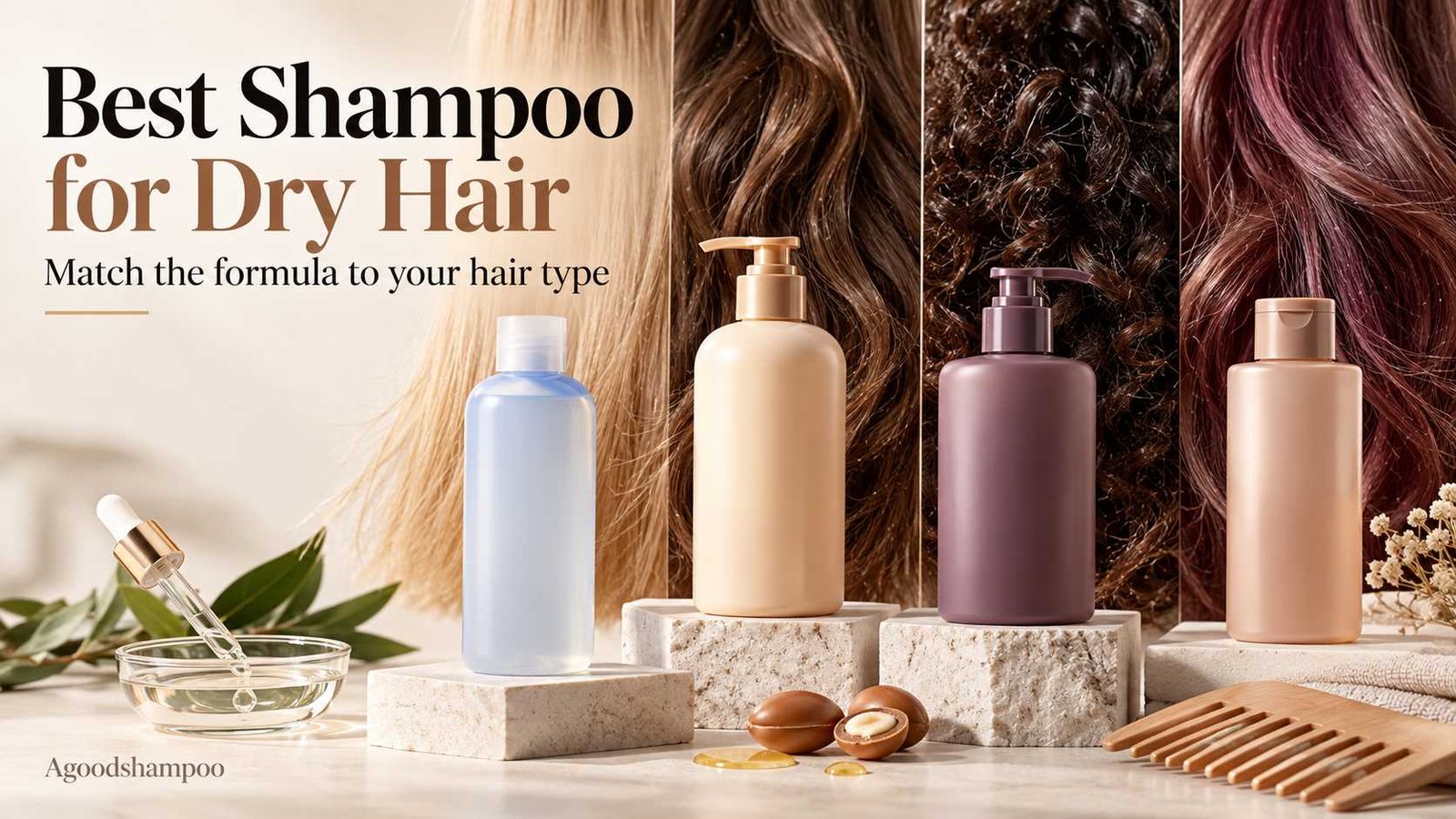
 If you’re wondering which shampoo is good for dry hair in the USA, the best choice depends on what your dry hair is actually like. Fine hair usually needs lightweight hydration. Thick, coarse, or very dry hair can tolerate a richer formula. Color-treated hair adds another concern: you want enough cleansing to keep the scalp fresh without making already processed lengths feel rougher.
For an affordable everyday choice, L’Oréal Paris Elvive Hyaluron + Plump Hydrating Shampoo is a sensible starting point for dry or dehydrated hair that becomes flat under heavy products. If your hair is fine and color-treated, Pureology Hydrate Sheer Shampoo is more specifically targeted to that combination. Redken All Soft Shampoo makes more sense for dry, brittle hair, while Kérastase Nutritive Bain Satin Riche is designed for medium-to-thick dry hair. Davines MOMO Shampoo is another lightweight option for dry or dehydrated hair.
None of these shampoos can permanently repair dryness on its own. Shampoo mainly needs to clean the scalp effectively without making the lengths feel unnecessarily rough. Conditioner, handling, heat exposure, coloring, washing frequency, and your natural hair texture all affect how dry your hair feels.
Which Shampoo Is Good for Dry Hair in the USA?
There isn’t one shampoo that is best for every person with dry hair. The useful question is: which shampoo provides enough cleansing for your scalp while leaving your particular hair type manageable?
Here is the practical comparison.
| Shampoo | Best Match | Main Advantage | Main Consideration |
|---|---|---|---|
| L’Oréal Elvive Hyaluron + Plump | Dry or dehydrated hair on a budget | Lightweight hydration positioning | Brand hydration claims refer to the full system |
| Pureology Hydrate Sheer | Fine, dry, color-treated hair | Lightweight formula specifically aimed at finer strands | Premium price; contains fragrance |
| Redken All Soft | Dry, rough or brittle hair | Moisture-focused formula for softness | May be more conditioning than some very fine hair needs |
| Kérastase Bain Satin Riche | Medium-to-thick, dry to very dry hair | Richer nourishment-oriented formula | Likely more than fine hair needs |
| Davines MOMO Shampoo | Dry or dehydrated hair needing a lighter feel | Mild-looking multi-surfactant cleansing system with conditioning ingredients | Fragranced and comparatively expensive |
The point isn’t that one product has the most impressive ingredient or the longest list of moisturizing claims. Formulation balance matters more than a single ingredient.
The American Academy of Dermatology also advises choosing products for your actual hair type. Its current hair-care guidance notes that dry, textured, curly, thick, fine, and straight hair can need different routines.
Best Shampoos for Dry Hair by Hair Type
L’Oréal Elvive Hyaluron + Plump Is a Strong Budget Choice
For many people asking which L’Oréal shampoo is good for dry hair, Elvive Hyaluron + Plump Hydrating Shampoo is the most straightforward current U.S. option.
L’Oréal markets it for dry and dehydrated hair and says it is intended to hydrate without weighing hair down. The company describes it as suitable across hair types and recommends pairing it with the rest of the Hyaluron + Plump range.
The formula’s hyaluronic-acid positioning sounds familiar because hyaluronic acid is widely associated with water binding in skin care. In a rinse-off shampoo, however, the useful question isn’t whether hyaluronic acid appears on the label. It’s whether the whole formula cleanses comfortably and leaves hair feeling manageable afterward.
L’Oréal advertises up to 72 hours of hydration and twice the hydration, but the product page states that this claim applies with the system. That distinction matters. It should not be interpreted as independent proof that one shampoo application keeps every person’s hair hydrated for three days.
For someone who wants an inexpensive U.S. drugstore option and finds richer shampoos too heavy, Hyaluron + Plump is a reasonable first choice.
Pureology Hydrate Sheer Makes More Sense for Fine, Dry, Color-Treated Hair
Dry hair creates a difficult balance when the strands are also fine. A shampoo can reduce that rough, dry feeling yet leave fine hair limp if its conditioning profile is too rich.
Pureology specifically positions Hydrate Sheer Shampoo as a silicone-free, lightweight shampoo for fine, dry, color-treated hair. Its current U.S. ingredient list includes several cleansing agents, including sodium cocoyl isethionate, disodium laureth sulfosuccinate, sodium lauryl sulfoacetate, cocamidopropyl betaine, sodium lauroyl sarcosinate, and decyl glucoside. It also contains conditioning polymers and humectant-type ingredients.
That combination is more informative than simply saying the shampoo is sulfate-free or moisturizing. Multiple surfactants can be blended to create the cleansing and sensory characteristics the formulator wants, while polymers such as polyquaterniums can improve hair feel.
Pureology also contains fragrance. If your scalp is sensitive to fragranced products, that is worth considering regardless of how suitable the product looks for the hair shaft.
If your main problem is thin or fine hair that becomes dry and frizzy, AGoodShampoo also has a more focused guide to shampoo for thin, frizzy hair.
Redken All Soft Fits Dry, Rough or Brittle Hair
Redken All Soft Shampoo sits in a different part of the dry-hair spectrum. Redken currently describes it as a moisturizing shampoo for dry, brittle hair and says it is intended to soften and replenish moisture.
The brand highlights argan oil as part of its moisture-focused positioning. That doesn’t mean argan oil alone explains how the shampoo performs. A rinse-off shampoo is a complete formulation, and its surfactants, conditioning ingredients, fragrance, polymers and other components all contribute to how hair feels.
Redken also promotes substantially greater conditioning when the shampoo is used with All Soft Conditioner and Argan-6 Oil. Again, that is a system claim, not evidence that the shampoo alone produces the same result.
For dry hair that feels rough, brittle or difficult to detangle after washing, All Soft is more logically matched than an ultra-light volumizing shampoo. If your hair is extremely fine and becomes oily quickly at the roots, though, a lighter formula may be easier to live with.
Kérastase Bain Satin Riche Is Designed for Medium-to-Thick Dry Hair
Hair diameter matters.
A person with coarse, thick strands can often use a more conditioning cleanser without getting the flat, coated result that someone with fine hair may notice.
Kérastase currently describes Nutritive Bain Satin Riche Shampoo as a hydrating shampoo for medium-to-thick dry hair. The brand positions it for dry to very dry hair and says its formula includes plant-based proteins and niacinamide.
That positioning makes this one of the clearer choices in the group because it tells you who the formula is actually intended for rather than simply saying dry hair.
Kérastase publishes numerical strength and shine claims on its product page. Those should be understood as manufacturer-reported testing under specified comparisons rather than proof that everyone who buys the shampoo will see the same percentage improvement.
If your hair is fine, only mildly dry and easily weighed down, this would not be my first choice. For thick hair that repeatedly feels rough after cleansing, the richer positioning makes more sense.
Davines MOMO Works for Dry Hair When You Want a Lighter Cleanse
Davines MOMO Shampoo is marketed for dry or dehydrated hair, but its current ingredient list is particularly useful for understanding why a shampoo cannot be judged by one buzzword.
Its cleansing system includes cocamidopropyl betaine, sodium cocoyl alaninate, caprylyl/capryl glucoside, decyl glucoside and sodium lauroyl methyl isethionate. It also includes glyceryl oleate, glycerin, conditioning polymers and apricot fruit extract.
That gives it a very different formulation profile from a simple high-detergency shampoo.
Davines says the formula provides hydration without weighing hair down. It also advertises up to 11.8 times more hydrated hair, but the company’s own footnote states that this instrumental test involved hair treated with the MOMO shampoo, conditioner and serum together, compared with untreated hair.
That doesn’t make the claim meaningless. It simply means it shouldn’t be attributed to the shampoo alone.
MOMO is therefore an interesting premium option for someone whose hair is dry but who dislikes the feel of very rich cleansers.
What Should a Good Shampoo for Dry Hair Actually Do?
Dry hair doesn’t necessarily need the shampoo with the longest oil list.
A shampoo still has to clean. Sebum, styling products, pollution, sweat and dead skin accumulate at the scalp. The goal is not to stop cleansing altogether but to avoid creating more roughness than necessary.
Three formulation characteristics matter most.
First, the cleansing system has to suit your scalp and wash frequency. Surfactants remove oil and debris. Their behavior depends on the whole formula, not merely whether the front label says sulfate-free.
That’s an important distinction because sulfate-free is often treated as a synonym for mild. It isn’t. Surfactant type, concentration, combinations, formulation pH, polymers and other ingredients can all influence cleansing and after-feel.
Second, dry hair often benefits from conditioning support. Conditioning polymers and related ingredients can reduce friction and improve slip. That can make the hair easier to comb and less rough to the touch. This is a hair-fiber effect, not a change in the hair follicle.
Third, shampoo needs to fit the rest of the routine. A perfectly reasonable cleanser can still leave very dry hair feeling poor if you skip conditioner, repeatedly bleach the hair or use high heat every day.
The American Academy of Dermatology recommends conditioner after washing because it moisturizes, detangles and improves manageability. For fine or straight hair, it suggests focusing conditioner toward the ends; for dry or curly hair, conditioner can be applied through the full length.
This is why conditioner often changes the feel of dry hair more dramatically than switching between two reasonably formulated shampoos.
Which L’Oréal Shampoo Is Good for Dry Hair?
For general dry or dehydrated hair, L’Oréal Paris Elvive Hyaluron + Plump is the simplest starting point. The current U.S. product is specifically marketed for dry/dehydrated hair and for hydration without excessive weight.
For dry, color-treated or frizz-prone hair, L’Oréal Paris EverPure Moisture Shampoo is the more relevant alternative.
L’Oréal currently describes EverPure Moisture as a sulfate-free moisturizing shampoo for dry, dehydrated, frizzy and color-treated hair. Its current U.S. ingredient list begins with water followed by sodium C14-16 olefin sulfonate, cocamide MEA, glycerin and cocamidopropyl betaine, among other ingredients.
There’s an important lesson in that list: don’t select shampoo using the sulfate-free label alone. Sodium C14-16 olefin sulfonate is not a sulfate, so the sulfate-free claim is technically consistent with the ingredient list, but its presence shows why the complete cleansing system still matters.
If your scalp and hair tolerate EverPure Moisture well and maintaining color is part of your priority, it may be the better L’Oréal choice. If you’re mainly dealing with dehydrated hair and want a simpler, lower-cost hydration-focused product, Hyaluron + Plump makes more sense.
AGoodShampoo also has a separate review of L’Oréal Extraordinary Oil Shampoo if you’re comparing different L’Oréal ranges rather than looking only at current hydration-focused products.
Dry Hair, Dry Scalp and Frizz Need Different Decisions
This distinction saves people a lot of wasted products.
Dry hair describes the hair fibers. They may feel rough, dull, stiff, tangly or prone to breakage. Bleaching, coloring, heat, UV exposure, mechanical wear and naturally curly or coarse texture can all contribute to how dry those lengths feel.
A dry scalp is skin. Tightness, scaling, irritation, redness or persistent itching can involve something different from the condition of your hair strands. A richer shampoo aimed at dry lengths isn’t automatically the right treatment for a scalp problem.
If you have oily roots but dry ends, don’t automatically choose the richest shampoo you can find. You may need adequate scalp cleansing combined with better conditioning on the lengths. AGoodShampoo’s guide to an oily scalp with dry hair addresses that combination directly.
Frizz overlaps with dryness but isn’t identical to it either. Hair texture, damage, humidity, friction and styling can all affect frizz. Simply loading the hair with oils won’t necessarily solve the problem, and on fine hair it can create a new one: heaviness.
Curly and coily hair deserves special attention. The American Academy of Dermatology notes that curly hair tends to be drier and recommends a moisturizing shampoo formulated for curly hair, along with thorough conditioning.
So if your search was really for a shampoo that’s good for dry and frizzy hair, choose by texture first. Fine frizzy hair usually needs less weight than thick curls or coils.
How to Wash Dry Hair Without Making It Feel Rougher
Buying a moisturizing shampoo and then scrubbing it aggressively through the ends defeats part of the purpose.
The American Academy of Dermatology recommends applying shampoo primarily to the scalp rather than the entire length of the hair. As you rinse, the shampoo passes over the lengths without requiring you to repeatedly rub the driest portions.
Wash according to how quickly your scalp becomes dirty or oily rather than following an arbitrary schedule. Someone with straight hair and an oily scalp may need frequent washing, while dry, thick, textured or curly hair may need considerably less frequent shampooing. AAD guidance emphasizes adjusting frequency to hair type and scalp needs.
Condition after shampooing. If you have fine hair, concentrate conditioner more heavily on the ends. If your hair is dry or curly, distribute it through more of the length.
Detangling technique matters too. Wet hair is vulnerable to mechanical stress. AAD recommends gentle handling and a wide-tooth comb, particularly for thicker or curly hair.
Heat is another common source of unnecessary dryness. Lowering blow-dryer or hot-tool temperature and using heat protection won’t replace a good shampoo, but it can stop your styling routine from continually undoing what your conditioning routine is trying to accomplish.
A useful way to judge your shampoo is simple: look at what happens over several washes. If the scalp becomes clean but comfortable and your conditioned lengths remain manageable, the shampoo is probably doing its job. If the roots stay greasy, it may not cleanse enough for you. If the ends consistently emerge tangled, stiff and squeaky, the shampoo or overall routine may be too aggressive for your hair.
Which Dry-Hair Shampoo Should You Choose?
For most shoppers in the USA, the decision can be narrowed down by hair type rather than by marketing claims.
Choose L’Oréal Elvive Hyaluron + Plump if you want an accessible, hydration-focused shampoo for generally dry or dehydrated hair without starting with a heavy formula.
Choose Pureology Hydrate Sheer if your hair is fine, dry and color-treated and richer moisturizing shampoos tend to flatten it.
Choose Redken All Soft if dryness comes with a distinctly rough or brittle feel and softness is the main goal.
Choose Kérastase Bain Satin Riche if your hair is medium-to-thick, dry to very dry, and can handle a richer formula.
Choose Davines MOMO if you want a premium moisturizing shampoo with a relatively lightweight positioning and a varied surfactant system rather than an especially rich cleanser.
For curly or coily hair, prioritize a moisturizing shampoo formulated for curls rather than assuming every product labeled for dry hair will provide the same balance of cleansing and conditioning.
And remember the biggest limitation of any shampoo recommendation: a shampoo can improve cleansing, softness and manageability, but it cannot reverse all structural damage or treat a medical scalp condition. Persistent itching, inflammation, sores, unusual scaling or sudden hair shedding deserves appropriate professional evaluation rather than another cosmetic shampoo.
The best shampoo for dry hair is therefore not simply the richest bottle on the shelf. It’s the one that cleans your scalp adequately, respects your hair texture, works with your conditioner, and doesn’t create a new problem while trying to solve dryness.

Marlena Stell makes everyday hair care easier to understand. From choosing a shampoo to managing common hair concerns, she breaks down confusing product claims and practical routines into straightforward advice that helps readers find what works for their needs.