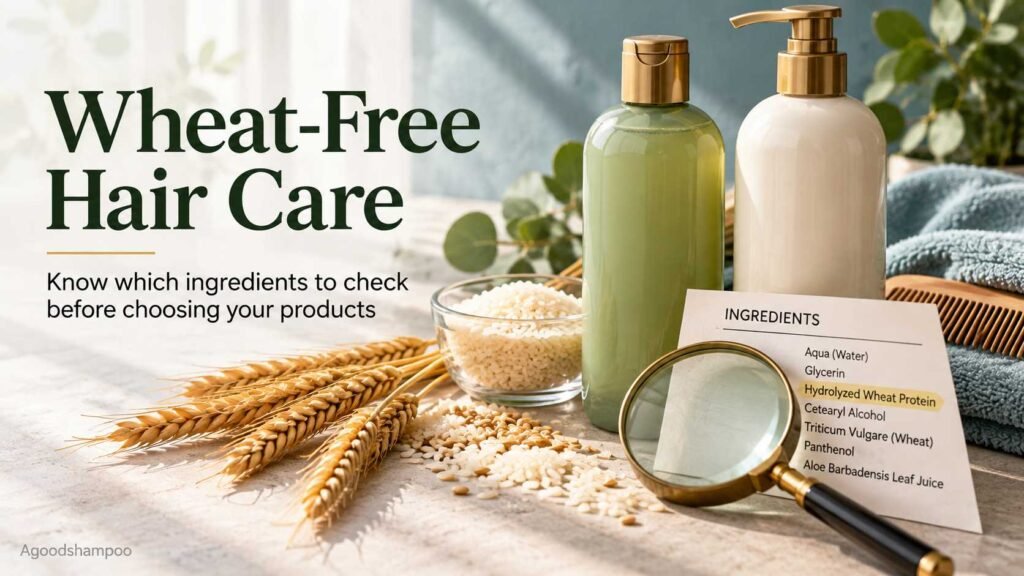
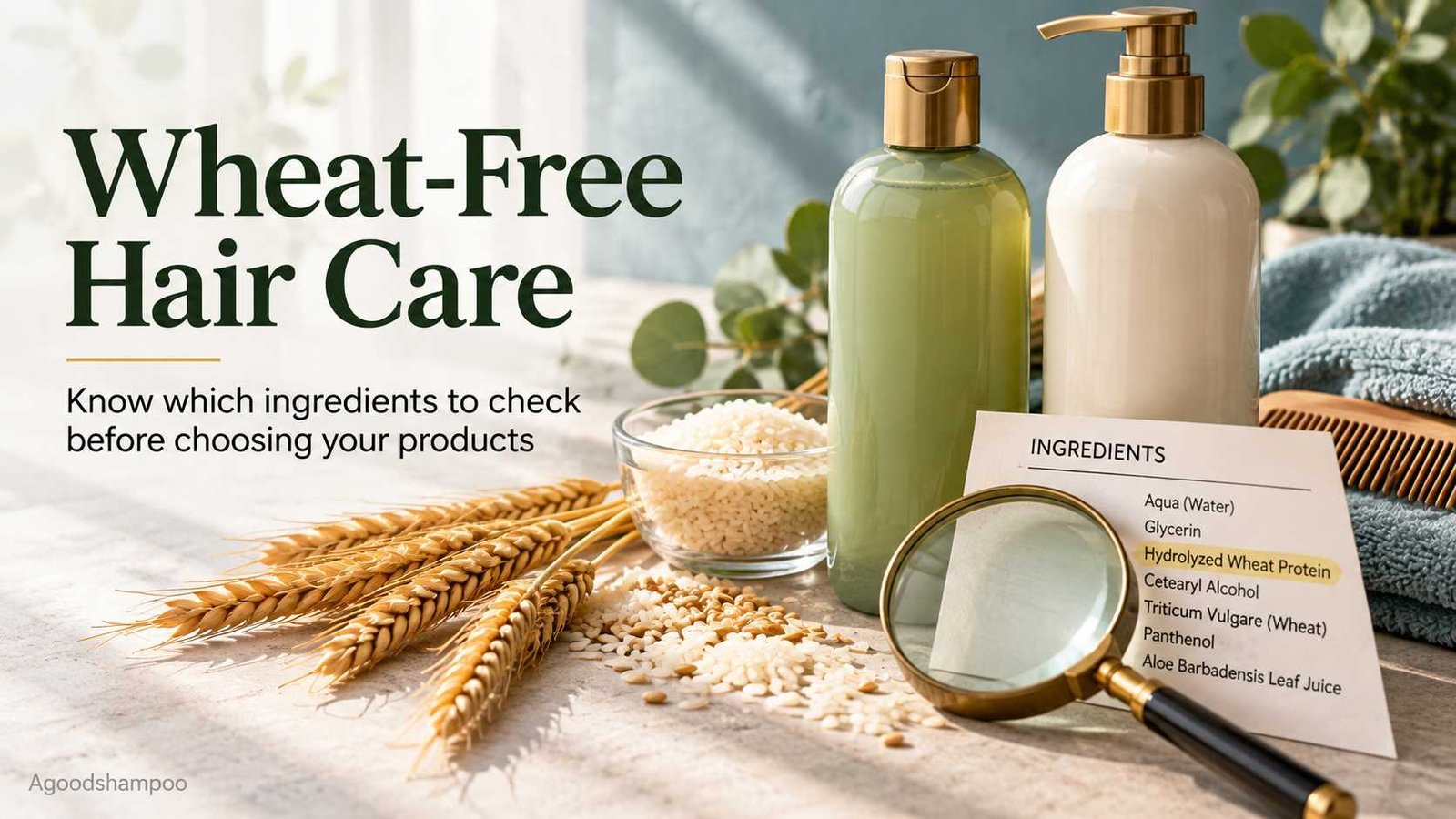
 A shampoo can be advertised as gentle, natural, or suitable for sensitive hair and still contain wheat-derived ingredients. Kiehl’s Rice and Wheat Volumizing Shampoo, for example, lists Hydroxypropyltrimonium Hydrolyzed Wheat Protein in its published formula. That matters if you’re specifically trying to avoid wheat.
Wheat free hair products are shampoos, conditioners, and styling treatments made without wheat-derived ingredients. Choosing them starts with reading the ingredient list, not trusting broad claims on the front of a bottle. Whether avoiding wheat is medically necessary depends on your circumstances, particularly whether you have a wheat allergy, celiac disease, or simply an ingredient preference.
The good news is that you don’t need to avoid every protein treatment or buy an expensive specialist range. You need to know which ingredients matter and choose products that still suit your hair.
What Makes Hair Products Wheat-Free?
A wheat-free hair product should not contain ingredients derived from wheat. Manufacturers sometimes use wheat proteins, amino acids, starches, and extracts because they can help with conditioning, texture, or the appearance of hair.
Wheat-free and gluten-free sound interchangeable, but they describe different restrictions.
Wheat-free means avoiding wheat-derived ingredients. Gluten-free generally means avoiding gluten from wheat, barley, rye, and other relevant sources.
A product without wheat could still contain barley-derived ingredients. Likewise, a product described as gluten-free isn’t necessarily suitable for everyone with a wheat allergy, particularly if it contains highly processed wheat-derived materials.
This distinction is especially important when choosing products for an allergy rather than an everyday cosmetic preference.
For more detail about gluten and scalp exposure, see our guide to gluten-free shampoo benefits and limitations.
Wheat-Derived Ingredients to Check on Hair Product Labels
Wheat doesn’t always appear as the simple word wheat on a shampoo label. Cosmetic ingredients commonly use standardized names that describe the source material or how it has been processed.
The following names deserve attention when you’re looking for wheat-free products.
| Ingredient name | Why it matters |
|---|---|
| Hydrolyzed Wheat Protein | Wheat-derived protein broken into smaller components, commonly used for conditioning |
| Wheat Amino Acids | Amino acids derived from wheat, used in some conditioning formulas |
| Hydrolyzed Wheat Starch | Processed wheat starch used in cosmetic formulations |
| Triticum Vulgare | Botanical name associated with common wheat |
| Triticum Vulgare Germ Oil | Wheat-germ-derived oil |
| Hydroxypropyltrimonium Hydrolyzed Wheat Protein | Modified wheat protein used as a conditioning ingredient |
These names indicate wheat-derived materials, but they don’t reveal the exact quantity of allergenic protein remaining in a finished product.
That distinction matters. A highly processed wheat-derived oil is not chemically identical to a hydrolyzed wheat protein, and the potential for allergic reactions cannot be determined from the ingredient’s name alone.
For strict wheat avoidance, however, checking all wheat-derived ingredients is the more practical approach.
What about rice protein, soy protein, or keratin?
Rice protein and soy protein are not inherently wheat-derived. They may provide conditioning benefits without using wheat as their source. Keratin is another protein ingredient, but its origin depends on the particular material and manufacturing process.
A product containing rice protein is not automatically wheat-free, because the same formulation may contain wheat protein too.
If an ingredient’s source is unclear, ask the manufacturer rather than assuming that all plant proteins are interchangeable.
Two Popular Hair Products That Contain Wheat
Some established hair-care products use wheat-derived ingredients deliberately. Two examples show why checking actual formulations is more useful than relying on general product descriptions.
Kiehl’s Rice and Wheat Volumizing Shampoo
Kiehl’s describes its Rice and Wheat Volumizing Shampoo as a lightweight product intended to add body to fine or flat hair.
The manufacturer’s published ingredient list for the Philippine market includes Hydroxypropyltrimonium Hydrolyzed Wheat Protein, along with Hydrolyzed Rice Protein.
The company describes its protein blend as part of the product’s volumizing and conditioning approach. These are manufacturer claims about cosmetic performance, not independent evidence of increased hair growth or permanent thickening.
The presence of a wheat-derived ingredient is much more straightforward.
Is Kiehl’s Rice and Wheat Volumizing Shampoo wheat-free? No. The verified formulation contains modified wheat protein and would not meet a strict wheat-free selection requirement.
Formula availability and ingredients can vary by market, so check the bottle sold in your country.
Sexy Hair Soy Tri-Wheat Leave-In Conditioner
Sexy Hair’s Tri-Wheat Leave-In Conditioner is another example where wheat-derived ingredients are central to the product’s formulation.
Published ingredient lists from major retailers include:
- Hydrolyzed Wheat Protein
- Wheat Amino Acids
- Hydrolyzed Wheat Starch
The product is marketed for conditioning, detangling, and helping manage frizz.
There is also a useful lesson about relying on online ingredient lists. The versions published by Target and Ulta differ in some other ingredients, including preservatives. Those differences may reflect separate formulations or listing updates.
Both reviewed lists contain wheat-derived materials.
Is Soy Tri-Wheat Leave-In Conditioner suitable for strict wheat avoidance? No. Choose an alternative without wheat-derived ingredients if avoiding wheat is your requirement.
The exact current packaging remains the best reference before purchase.
Does Wheat in Shampoo Matter for Celiac Disease or Wheat Allergy?
The reason you’re avoiding wheat changes how carefully you need to assess a hair product.
If You Have Celiac Disease
Celiac disease is an autoimmune condition triggered by ingesting gluten. It isn’t the same as a wheat allergy.
According to the Celiac Disease Foundation, gluten cannot pass through intact skin or scalp in a way that triggers celiac disease. Normal external use of a shampoo containing gluten is therefore generally not considered equivalent to eating gluten.
There are situations where additional caution makes sense.
A young child might accidentally swallow shampoo foam while bathing. Products used near the mouth may also present a greater chance of ingestion.
Beyond Celiac notes that people may prefer gluten-free hair products for peace of mind, while emphasizing that normal topical exposure is usually not a problem for people with celiac disease.
If you have open skin lesions or a condition affecting your skin barrier, ask your healthcare professional about appropriate product choices.
If You Have a Wheat Allergy
Wheat allergy involves an immune response to wheat proteins. Depending on the individual, exposure to relevant wheat allergens can produce allergic symptoms.
Wheat-derived proteins in cosmetic products deserve more attention in this situation.
Medical literature has documented allergic reactions associated with certain hydrolyzed wheat proteins used in cosmetics. That doesn’t establish that every wheat-derived cosmetic ingredient is dangerous, but it does show why a wheat allergy should not be managed using gluten-free marketing claims alone.
If you have a diagnosed wheat allergy, discuss ingredient avoidance with your allergist, especially if you’ve previously experienced reactions to shampoos, conditioners, or skincare products.
Persistent itching, hives, swelling, or other reactions after using hair products should not automatically be blamed on wheat. Fragrance, preservatives, and other ingredients can also cause reactions.
Why Paraben-Free and Cruelty-Free Don’t Mean Wheat-Free
Beauty packaging often combines several free-from claims. They may look related, but each describes something different about a product.
Paraben-free shampoo and conditioner contain no preservatives from the paraben family, such as methylparaben or propylparaben.
Parabens are used to help protect water-containing cosmetics from microbial growth. The US Food and Drug Administration states that it currently does not have information showing that parabens, as used in cosmetics, affect human health.
Removing parabens doesn’t establish that a product is safer, and it certainly doesn’t establish that it contains no wheat.
Cruelty-free shampoo and conditioner concern animal-testing practices, not whether the formula contains wheat proteins.
A brand may make a cruelty-free claim while using wheat-derived ingredients. For shoppers who care about animal testing, independently verified certification and the organization’s standards are more informative than vague packaging language.
The same applies when searching for the best cruelty-free shampoo: first evaluate the animal-testing claim, then examine the actual ingredients and whether the formula suits your hair.
Chemical-free shampoo and conditioner is another misleading description.
Water, proteins, oils, and botanical extracts are all chemical substances. No genuine shampoo is literally chemical-free.
A natural-looking formulation can contain wheat derivatives. A synthetic ingredient can also be appropriate for cosmetic use when properly formulated.
If you want to avoid wheat, the question isn’t whether the product looks natural. It’s whether its documented composition includes wheat-derived ingredients.
Similarly, silicone-free does not mean wheat-free. Our explanation of silicone-free shampoo and hair health covers that separate formulation choice.
How to Choose Wheat Free Hair Products for Your Routine
A wheat-free shampoo that leaves your scalp uncomfortable or your hair difficult to manage isn’t necessarily a good purchase.
Start with ingredient suitability, then consider what the formula is designed to do.
Check More Than Just Your Shampoo
If you’re following a strict wheat-avoidance routine, examine every product that regularly contacts your hair or scalp.
That can include rinse-out conditioners, leave-in treatments, masks, dry shampoo, styling creams, mousse, and hairspray.
Leave-in products deserve particular attention because they remain on the hair rather than being rinsed away immediately.
Match the Product to Your Hair Type
Fine hair may benefit from lightweight conditioning and a cleansing system that doesn’t leave heavy residue.
Dry, curly, or bleached hair may need more conditioning support to improve slip, reduce tangling, and make styling easier.
An oily scalp may require stronger cleansing than dry hair lengths need. A wheat-free label doesn’t reveal how effectively a shampoo removes oil.
If you’re replacing a wheat-containing product, look for an alternative designed for the same hair concern rather than selecting the first wheat-free bottle available.
Confirm the Current Formula
Before buying, read the complete ingredient list on the product packaging.
If the manufacturer offers an explicit wheat-free statement for that exact product, it can provide additional information. However, a general brand claim doesn’t necessarily apply to every item in its range.
When strict allergen avoidance matters, contact the manufacturer and ask whether any wheat-derived ingredients are used in the specific product and whether there are relevant manufacturing or cross-contact concerns.
Don’t rely on an outdated online ingredient list, even if you previously purchased the same product.
Which Wheat-Free Hair Products Are Worth Choosing?
The best wheat free hair products are those with ingredients that meet your avoidance requirements and a formulation appropriate for your hair.
For strict wheat avoidance, prioritize clearly documented formulations and direct manufacturer confirmation when necessary. If you have a wheat allergy, medical guidance takes priority over marketing claims.
For everyday ingredient preferences, there’s no reason to assume that removing wheat automatically makes shampoo gentler, improves hair growth, or repairs damage.
What matters is finding a product that cleans effectively, conditions appropriately, and avoids ingredients you personally need or prefer to exclude.
A clearly verified ingredient list is worth more than a collection of attractive free-from labels.

Emily Turner explores natural hair care, ingredient transparency, and the claims behind clean beauty products. She helps readers look beyond attractive labels, understand what ingredients actually do, and make thoughtful choices without assuming that natural always means better.