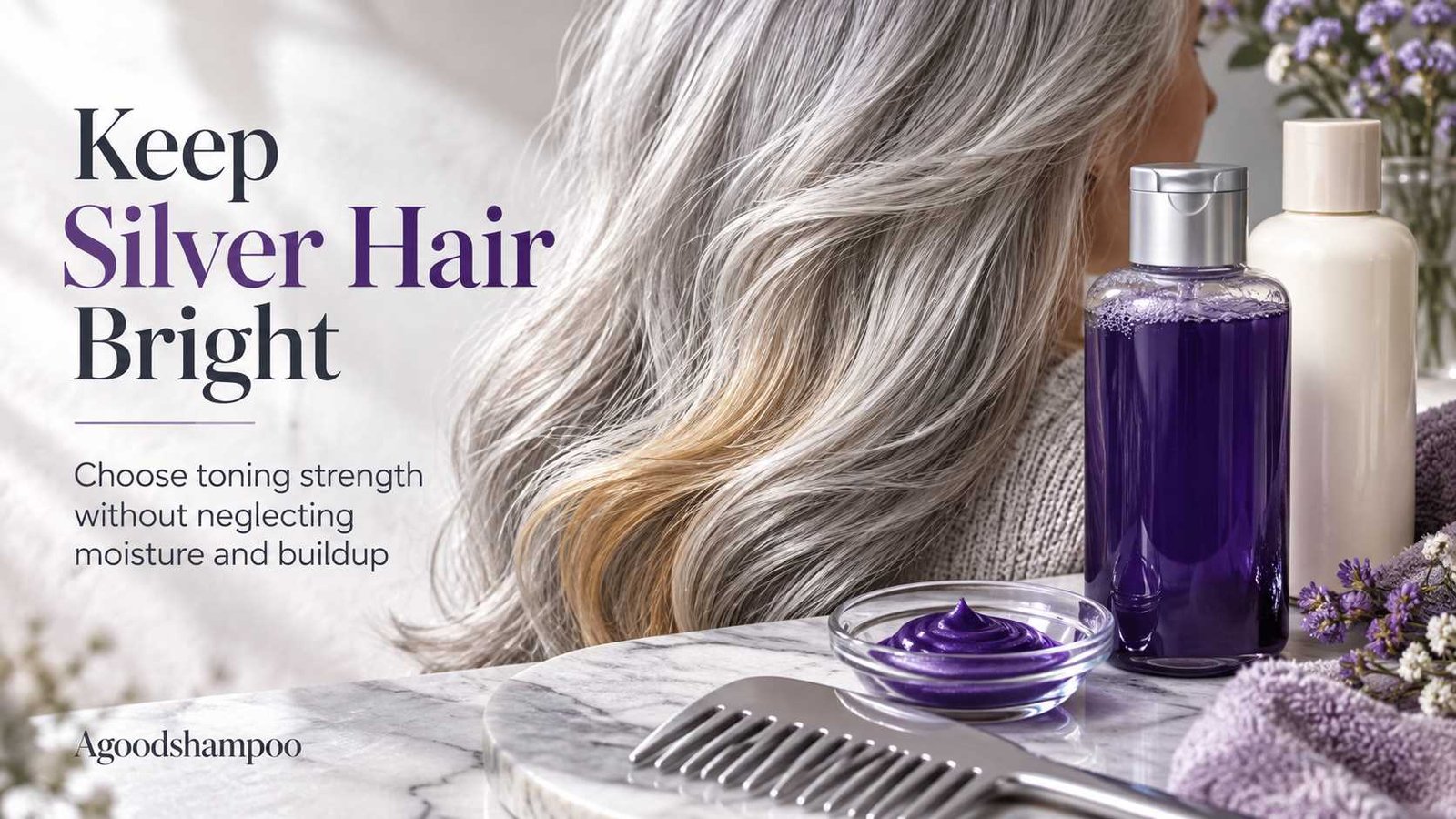
 Silver hair doesn’t always need more purple pigment. Sometimes it needs more moisture, and sometimes it simply needs buildup removed. That distinction matters because hair itself also changes with age: one study evaluating hair luster in 230 women aged 10 to 70 found that luster decreased with age and linked part of that change to increasingly irregular curvature of the hair fibers. The study did not test shampoo, but it helps explain why silver or graying hair can present texture and shine concerns alongside color concerns.
So, if you’re searching for a good shampoo for purple silver hair, the practical answer is this: choose a purple shampoo when silver, white, or gray hair is developing unwanted yellow tones. Choose a gentle moisturizing shampoo when the color already looks clean but the hair feels dry or coarse. Consider clarifying or chelating cleansing when dullness appears to come from styling residue or mineral buildup instead.
The Best Shampoo Depends on What Your Silver Hair Needs
Purple shampoo is a toning cleanser, not automatically the best everyday shampoo for every person with silver hair.
Its most useful job is depositing violet pigment on the hair. Because violet visually counters yellow, it can make gray, white, platinum, and very light blonde hair look cooler and cleaner when warmth starts showing through.
Current Matrix So Silver, for example, contains CI 60730 / Ext. Violet 2 and is specifically described by Matrix as suitable for natural and color-treated hair ranging from gray to white.
That doesn’t mean every silver-haired person needs it regularly.
A useful way to choose is to look at the problem first:
| What you notice | Shampoo type to consider | Main purpose |
|---|---|---|
| Yellow or warm cast | Purple toning shampoo | Deposit violet pigment |
| Dry, rough or wiry feel | Gentle moisturizing shampoo | Cleanse with more emphasis on softness |
| Heavy styling residue | Clarifying shampoo | Remove accumulated residue |
| Suspected hard-water mineral buildup | Chelating shampoo | Target mineral deposits |
| Silver tone already looks balanced | Regular gentle shampoo | Routine cleansing without extra pigment |
This is why the phrase best shampoo for hair isn’t specific enough to make a useful recommendation. The right shampoo depends on what the hair actually needs.
Use Purple Shampoo When Silver Hair Starts Looking Yellow
Purple shampoo makes the most sense when cool silver, white, gray, or platinum hair begins looking warmer or yellower than you want.
It doesn’t bleach the hair or make dark hair silver. Instead, violet colorants temporarily alter how unwanted yellow tones appear.
Olaplex describes its Nº.4P Blonde Enhancer Purple Toning Shampoo as a toning product for natural or color-treated blondes and grays, while Matrix markets So Silver for blonde and silver hair. Those are manufacturer descriptions, but their current formulas and intended uses confirm that purple toning is a genuine product category rather than simply a marketing nickname.
For a fuller explanation of the color principle, AGoodShampoo’s guide to how purple shampoo works on light hair explains why violet pigment can reduce the appearance of yellow warmth.
The important limitation is frequency. More purple isn’t always better.
Highly porous, bleached, very pale, or damaged areas can sometimes take up pigment faster than healthier sections. If hair starts looking lavender, smoky, or unevenly violet, that’s a sign to reduce toning rather than leave the shampoo on longer.
Always follow the instructions for the specific product. Matrix currently directs users of So Silver to rinse after lathering and, when stronger toning is wanted, leave the second lather on for 3 to 5 minutes.
Dry Silver Hair May Need Moisture More Than More Purple Pigment
If your silver hair already has a clean, cool tone but feels stiff, rough, tangly, or dry, adding more violet pigment doesn’t address the main problem.
A moisturizing shampoo may make more sense as the regular cleanser, with purple shampoo used only when yellowing becomes noticeable.
This is especially relevant for naturally graying hair that has also experienced age-related texture changes, or for silver hair created through bleaching and chemical processing. Hair that has been lightened aggressively may need conditioning and reduced friction more urgently than stronger toning.
That doesn’t mean a product labeled moisturizing automatically repairs structural damage. Shampoo mainly cleanses, and conditioning ingredients can improve softness, slip, manageability, and the feel of the hair shaft. Those cosmetic improvements should not be confused with changing the follicle or reversing biological aging.
Readers considering other conditioning approaches can also see AGoodShampoo’s analysis of collagen shampoo for gray and silver hair.
A practical routine is often simpler than buying an entire purple product line: use a comfortable regular shampoo for routine washing and bring in the purple shampoo when the tone actually needs correction.
Clarifying and Chelating Shampoo Solve a Different Problem
Dull silver hair isn’t always brassy hair.
Styling sprays, dry shampoo, conditioners, silicones, oils, and other products can accumulate enough residue to make pale hair look less reflective. A clarifying shampoo is designed for stronger cleansing and can be useful periodically when ordinary shampoo isn’t removing that buildup effectively.
If you want more detail on that distinction, AGoodShampoo’s guide to what clarifying shampoos are good for covers their role in deeper cleansing.
Chelating shampoo is more specific. Chelating formulas are intended to help deal with mineral deposits, which can matter in hard-water conditions or after swimming. That makes the supporting search best chelating shampoo guide relevant to silver hair, but only when mineral buildup is actually part of the problem.
Neither clarifying nor chelating shampoo should automatically replace a purple shampoo. They solve different problems:
Purple shampoo changes visible tone. Clarifying shampoo removes accumulated residue. Chelating shampoo targets mineral buildup.
Some products blur these categories. Matrix itself describes So Silver as a clarifying shampoo while also using violet pigment for toning. That is a useful reminder to judge the complete formula and its directions rather than relying on one word on the label.
Good Shampoo Options for Different Silver-Hair Needs
There isn’t one universally best shampoo for gray or silver hair. A better shortlist starts with the problem you want to solve.
Matrix So Silver: For Noticeable Yellow Tones
Matrix So Silver is a straightforward option when silver, gray, white, or blonde hair needs visible violet toning. Its current ingredient list includes sodium laureth sulfate, coco-betaine, dimethicone, fragrance, and Ext. Violet 2.
That formula also shows why sulfate-free should not automatically be treated as a synonym for gentle or better. Cleansing performance depends on the full formulation, how often the product is used, hair condition, and individual tolerance.
AGoodShampoo also has a separate look at Redken shampoo options for gray hair if you’re comparing salon-brand choices.
Olaplex Nº.4P: For Purple Toning With a Conditioning Focus
Olaplex Nº.4P is currently marketed for blonde and gray hair and uses violet toning agents to address unwanted yellow tones. The manufacturer also describes the cleanser as hydrating and positions it for natural or color-treated hair.
Those conditioning and repair statements are manufacturer claims and shouldn’t be treated as proof that one wash permanently repairs damaged hair. Still, Nº.4P may appeal to someone who wants toning without choosing a product marketed primarily around strong clarification.
A Regular Moisturizing Shampoo: When Tone Isn’t the Problem
This may be the most overlooked choice.
If your silver hair looks bright enough but feels dry, there’s little reason to use pigment every time you wash. A gentle moisturizing cleanser paired with a suitable conditioner can become the main routine, while purple shampoo stays in reserve.
For readers building the entire routine rather than choosing shampoo alone, see the AGoodShampoo guide to shampoo and conditioner for gray hair.
Keep Silver Hair Bright Without Turning It Lavender
A simple routine works better than automatically using the strongest toner available.
- Start with what you see. Use purple shampoo when yellow warmth is actually present.
- Follow the product’s contact-time directions. Don’t assume leaving it on twice as long will produce a better result.
- Watch porous ends carefully. Very light or damaged sections may take pigment differently from healthier hair.
- Alternate with a regular shampoo when needed. This limits unnecessary pigment deposition and lets you address dryness or scalp comfort separately.
- Clarify or chelate for the right reason. Use deeper cleansing for residue or mineral concerns, not simply because silver hair exists.
- Condition after cleansing when the hair needs it. Toning and moisture are separate needs.
If the scalp develops persistent burning, itching, sores, significant inflammation, or unusual hair loss, changing shampoo shouldn’t be treated as a medical solution. Those symptoms deserve assessment from a dermatologist or another qualified healthcare professional.
Choose Shampoo by Yellowing, Dryness or Buildup
A good shampoo for silver hair isn’t necessarily the purple bottle with the darkest pigment.
If the hair is yellowing, a well-formulated purple shampoo such as Matrix So Silver or Olaplex Nº.4P is a logical option. If the silver color already looks good but the hair feels dry, make a gentle moisturizing shampoo your regular cleanser instead. If the hair is dull because of product or mineral deposits, occasional clarifying or chelating cleansing addresses that problem more directly.
The strongest routine is the one that separates tone, moisture and buildup instead of expecting one shampoo to fix all three.

Carolina Herrera writes about color-treated, damaged, and chemically processed hair. She focuses on understanding breakage, choosing suitable shampoos, and making sense of repair claims. Her goal is to help readers care for their hair with realistic expectations and informed product choices.