Finding a good shampoo for starter locs is less about finding a bottle labeled for dreadlocks and more about how the cleanser behaves once it is in your hair. New locs need a clean scalp, but they are also more vulnerable to unraveling than mature locs. That makes effective cleansing, easy rinsing, and gentle washing especially important.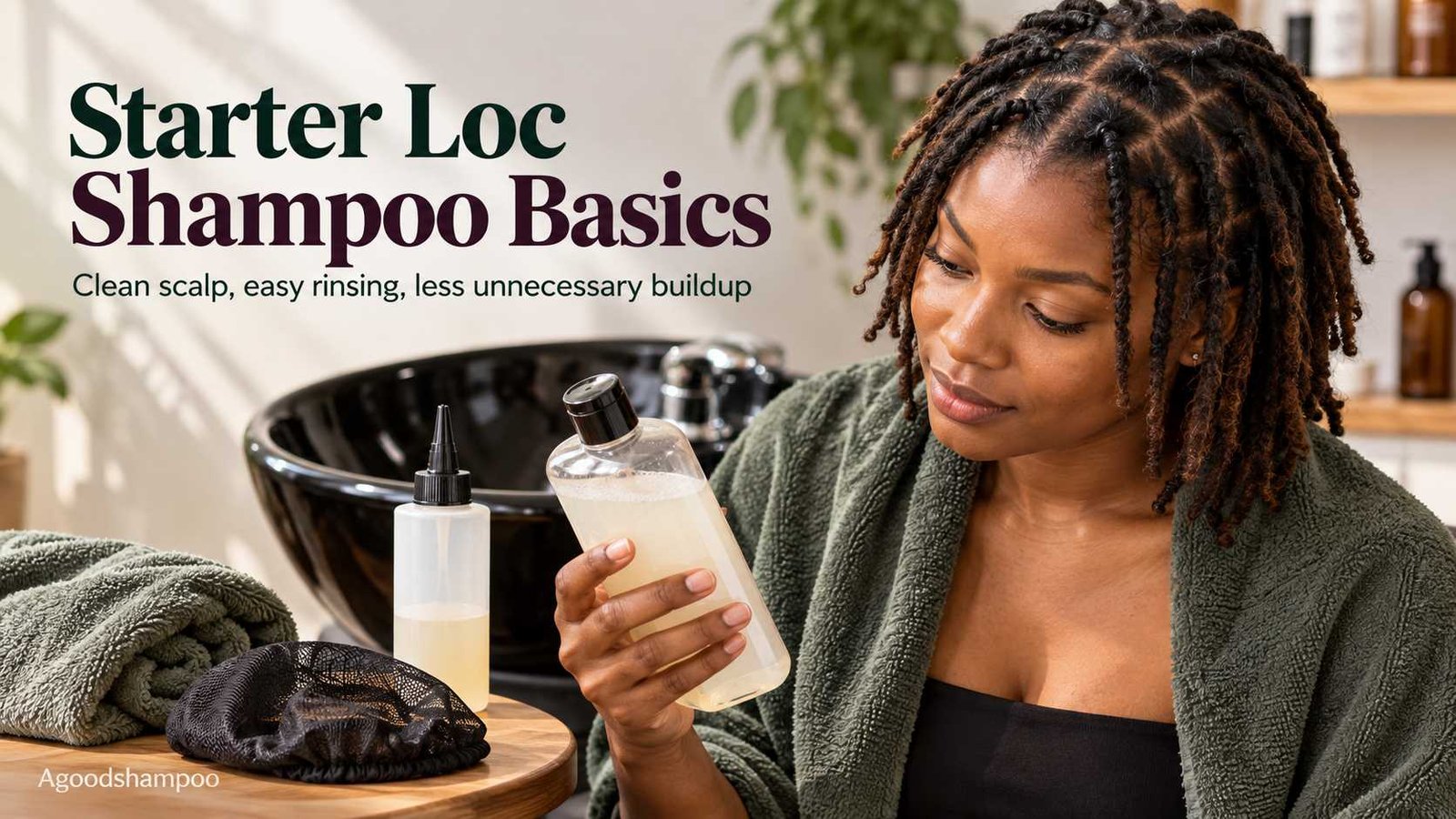
A shampoo does not automatically become better for starter locs because it says sulfate-free, natural, moisturizing, or strengthening. Some formulas marketed with those terms contain substantial conditioning ingredients, while stronger cleansers can sometimes rinse very cleanly when used correctly. What matters is the complete formula, how much you use, how thoroughly you rinse, and how your own scalp responds.
What Makes a Shampoo Good for Starter Locs?
A useful starter-loc shampoo should remove scalp oil, sweat, dirt, and styling residue without making wash day unnecessarily difficult.
The most useful qualities to look for are straightforward:
- It cleans the scalp effectively.
- It distributes easily without aggressive rubbing.
- It rinses out thoroughly.
- It does not leave your locs feeling coated or unusually heavy after drying.
- Your scalp feels comfortable rather than persistently tight, itchy, or irritated.
- The formula suits how much product you normally use between washes.
The phrase residue-free is common in loc care, but it is not a regulated shampoo category. You cannot always determine how a product will rinse simply by looking for that phrase on the label. The ingredients, amount applied, water quality, cleansing frequency, and rinsing technique all affect how much material remains behind.
This is also why sulfate-free is not a requirement for healthy starter locs. Sulfates are one family of cleansing agents, not a universal measure of whether shampoo is gentle or harsh. Sulfate-free shampoos can still clean strongly, and some contain significant amounts of conditioning agents.
If buildup becomes a recurring problem as your locs mature, our guide to clarifying shampoo for dreads explains where a stronger cleanser may fit. Clarifying shampoo does not need to be the default cleanser for every new set of locs.
Residue Matters More Than the Marketing on the Bottle
Starter locs eventually become compact structures made from intertwined hair. That makes rinsing worth taking seriously. Material that is easy to remove from loose hair can be more troublesome when it repeatedly collects within locs.
This does not mean every oil, polymer, butter, or conditioning ingredient is automatically bad. Shampoo formulas contain combinations of surfactants, thickeners, conditioning agents, fragrance, preservatives, botanical ingredients, and other materials for different reasons. An ingredient list does not reveal exactly how much of each ingredient is present, either.
Instead of rejecting a shampoo because it contains one ingredient, pay attention to performance.
After the locs are completely dry, ask:
Does the hair feel genuinely clean or strangely coated?
Does the scalp stay comfortable?
Do you see recurring visible product residue?
Does the shampoo require excessive effort to rinse away?
Are you using several creams, gels, oils, sprays, or edge products that may be contributing more buildup than the shampoo itself?
That last question matters. Shampoo often gets blamed for residue that actually comes from the entire routine.
Heavy styling-product use may require more cleansing than a very simple loc routine. Conversely, a person who washes frequently and uses almost no styling product may not need a strong clarifying formula every wash.
How to Wash Starter Locs Without Overworking Them
Starter locs can loosen during washing because the hair has not fully settled into a mature locked structure. The answer is not necessarily to avoid washing indefinitely. It is to wash strategically.
Start by thoroughly wetting the scalp and hair. Water helps distribute shampoo, so there is usually no advantage to pouring a large concentration directly onto one section.
Apply a modest amount of shampoo primarily to the scalp. Some people find an applicator bottle useful because it lets diluted shampoo reach between sections without excessive manipulation. Dilution is a technique rather than a requirement; follow the product instructions unless your loctician has advised another approach.
Massage the scalp with your fingertips rather than scratching it with your nails. You are trying to loosen oil and debris, not scrub the starter locs apart.
Let the lather and rinse water travel through the locs. If the lengths genuinely need more cleansing, gently work the cleanser through them without repeated twisting, pulling, or rough circular rubbing.
Rinse longer than you think you need to. This step is especially important with locs.
For very fresh coils or twists that loosen easily, some loc-care routines use a mesh cap or stocking cap during early washes to reduce movement. Whether that is appropriate depends on the starter method and how secure the locs are, so instructions from the person who installed your locs should take priority over a universal online timetable.
Finally, dry the locs thoroughly. Dampness trapped for long periods inside developing or mature locs is not a substitute for moisture care. Give the hair enough airflow and drying time to become fully dry.
Are Mielle, Cantu, OGX, or Axe Shampoos Good for Locs?
Brand names alone cannot answer this question because each brand sells different shampoo formulas.
Mielle Shampoo and Starter Locs
Mielle currently places its Rosemary Mint Strengthening Shampoo in its For Locs collection, but that does not mean every person with starter locs will respond to it the same way. The current formula begins with water, sodium C14-16 olefin sulfonate, and cocamidopropyl betaine. It also contains conditioning polymers such as polyquaternium-7 and polyquaternium-10, plus several oils, botanical extracts, and fragrance.
The important point is easy to miss: Mielle markets this shampoo as sulfate-free, yet sulfate-free does not mean weak cleansing. Sodium C14-16 olefin sulfonate is a different cleansing agent rather than a sulfate. The manufacturer tells users to massage a dime-sized amount onto wet hair and rinse thoroughly.
So is Mielle shampoo good for locs? It can be a reasonable option for some people, but judge the exact formula by scalp comfort, cleansing, and how cleanly it rinses rather than assuming the entire brand is ideal for starter locs.
Cantu and OGX Depend on the Exact Shampoo
Cantu’s current Sulfate-Free Cleansing Cream Shampoo is formulated for textured hair. Cantu describes it as a rich-lather cleanser that removes heavy buildup, contains shea butter, and is formulated without sulfates, mineral oil, silicones, parabens, paraffin, or phthalates. The company’s directions emphasize rinsing thoroughly and suggest a second cleanse when there is heavy product buildup.
That makes blanket statements such as Cantu is too moisturizing for all locs unreliable. The better question is whether this particular shampoo gives your starter locs the cleaning and rinse performance you need.
You can compare the wider brand context in our Cantu shampoo review.
OGX varies just as much by product. For example, OGX Quenching + Coconut Curls Shampoo is formulated without sulfated surfactants and is designed primarily around detangling, softness, curl definition, and hydration. The official product page highlights coconut oil and describes the formula for medium-to-coarse curly hair.
Those goals are not automatically incompatible with locs, but they are different from designing a cleanser specifically around minimal conditioning and easy loc rinsing. Our guide to OGX shampoo for textured Black hair covers the brand in more detail.
Axe Is Not Automatically a Loc Shampoo
Axe shampoos are mainstream grooming products rather than one dedicated loc-care system. That does not make them automatically harmful, and it does not make them automatically suitable.
Judge the exact Axe shampoo the same way you would any other product: cleansing system, conditioning ingredients, fragrance tolerance, rinsability, and how the scalp and locs feel afterward.
Our existing guide on whether Axe shampoo is suitable for dreads goes deeper into that specific brand question.
Dry Shampoo Doesn’t Replace Washing Starter Locs
Dry shampoo has a different job from regular shampoo. It is typically used between washes to absorb some visible scalp oil and make hair feel fresher temporarily. It does not provide the same water-based cleansing and rinsing that removes accumulated sweat, oil, dirt, and product from the scalp and locs.
That distinction is particularly useful with locs because adding repeated layers of powder or spray without eventually washing them away can create another source of visible residue.
An occasional dry shampoo may be practical when you cannot complete a full wash immediately, but it should not become a reason to postpone proper scalp cleansing indefinitely.
The same principle applies to protective styles such as braids. Our guide to using dry shampoo with braids explains why sparing application matters; too much can leave visible residue.
The Best Starter-Loc Shampoo Is the One You Can Rinse Clean
A good shampoo for starter locs should leave your scalp clean and comfortable while rinsing away without making developing locs feel persistently coated. That matters more than whether the front label says loc shampoo, sulfate-free, natural, strengthening, clarifying, or moisturizing.
For many beginners, the sensible approach is simple: use a modest amount of an effective cleanser, concentrate cleansing on the scalp, manipulate young locs gently, rinse extremely well, and let the hair dry completely.
Then judge the result rather than the advertising.
If your scalp is clean, your locs dry without visible residue or unusual heaviness, and the shampoo is not causing persistent irritation or excessive dryness, there may be little reason to change it just because another bottle is marketed specifically for dreadlocks.
If buildup keeps returning despite careful washing, review the whole routine before blaming one ingredient. Styling creams, gels, oils, dry shampoo, hard-water minerals, insufficient rinsing, and the cleanser can all contribute.
Starter locs do not need a complicated cabinet. They need consistent cleansing, gentle handling, and enough attention to notice when a product is actually helping rather than simply sounding right on the label.

Marlena Stell makes everyday hair care easier to understand. From choosing a shampoo to managing common hair concerns, she breaks down confusing product claims and practical routines into straightforward advice that helps readers find what works for their needs.