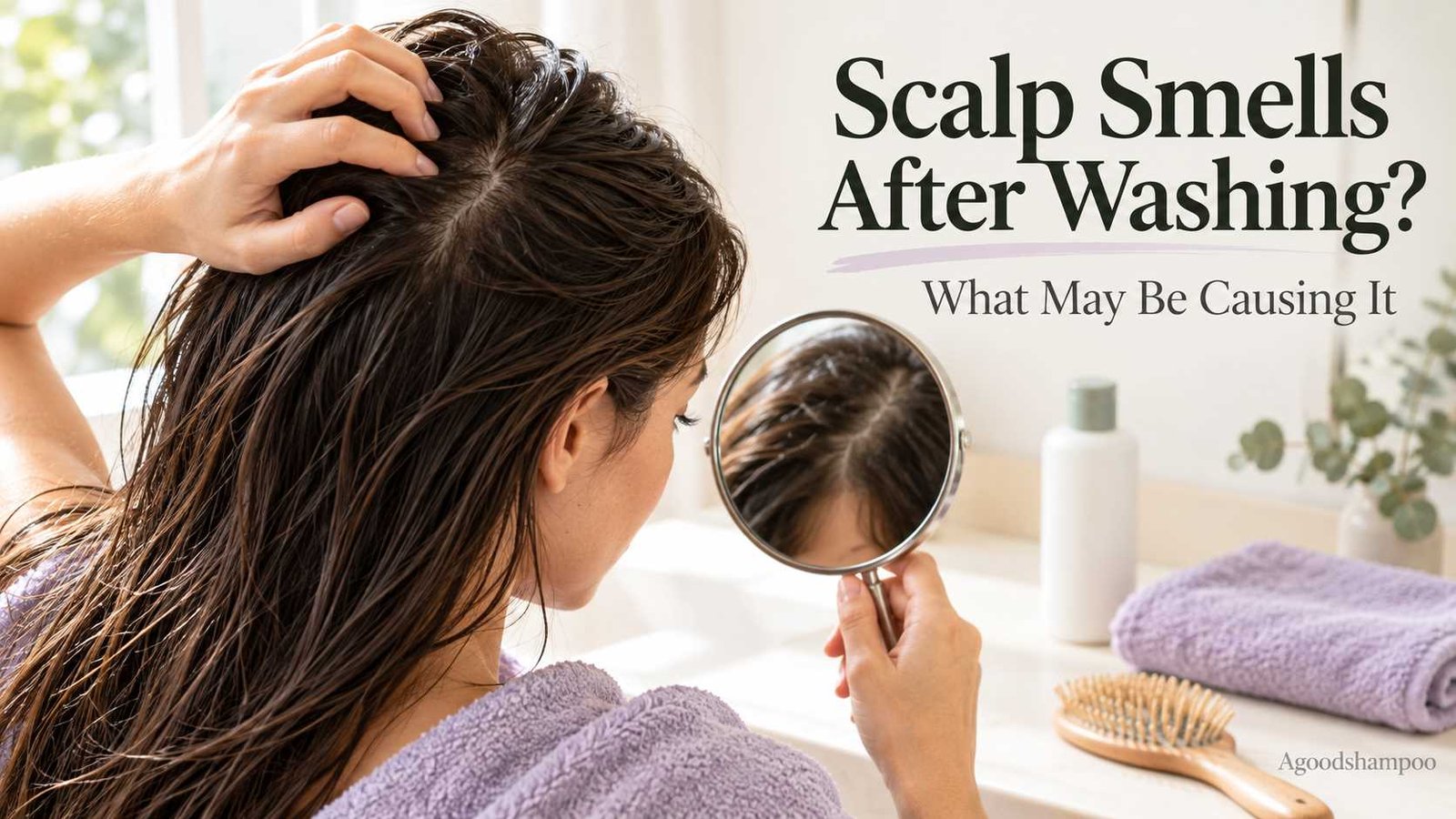
 You have just washed your hair, but when you touch your roots or lean close to a mirror, you notice an unpleasant smell. Sometimes it never seems to disappear. Other times, your scalp smells clean at first, then develops an odor a few hours later.
A scalp can smell bad after washing because of remaining oil, sweat, dead skin cells, product residue or activity from naturally occurring microorganisms. In some cases, dandruff, seborrheic dermatitis or another scalp condition contributes to the problem.
The timing of the smell and any accompanying symptoms can help you decide what to investigate first. They cannot, however, identify a medical condition on their own.
Why Your Scalp Can Smell Even After Shampooing
Your scalp contains sebaceous glands that produce sebum, the natural oil that helps protect skin and hair. It also has sweat glands and a community of microorganisms, including bacteria and yeasts.
These are normal features of healthy skin. But when sweat, oils, skin cells and microorganisms interact, unpleasant odors can sometimes develop.
According to Cleveland Clinic, scalp odor can result from a combination of these substances, hair-product residue and certain underlying skin conditions.
Washing usually removes much of the accumulated material. However, shampooing your hair is not necessarily the same as thoroughly cleansing your scalp.
If most of the shampoo stays on the hair lengths, areas near the roots may receive less attention. Dense hair, scalp-applied oils and heavy styling products can make it harder to distribute shampoo evenly.
A persistent smell does not automatically mean your scalp is dirty or infected. It means you need to consider both your cleansing routine and the condition of the skin underneath your hair.
What the Timing of the Smell Can Tell You
Pay attention to when the odor appears and how your scalp feels at the same time.
| When you notice the smell | What to investigate first |
|---|---|
| Immediately after washing | Shampoo coverage, incomplete cleansing and rinsing |
| After your hair dries | Remaining product residue, damp items touching the hair or other odor sources |
| A few hours after washing | Sweat, oil accumulation and scalp condition |
| After exercise or wearing a hat | Perspiration and the time your scalp stays warm or damp |
| Along with itching and flakes | Dandruff, irritation or another inflammatory scalp condition |
These patterns are practical clues, not diagnostic rules. Several causes can overlap, and there is no reliable way to identify a scalp disorder by odor alone.
Also, check whether the smell comes from your scalp or the hair itself. An unwashed hat, hair wrap, towel or pillowcase may transfer odors to freshly washed hair.
If your scalp feels comfortable and the odor appears only after using a particular styling product, reviewing that product may be more useful than immediately switching shampoos.
Common Reasons the Smell Keeps Coming Back
Product Residue Left Near the Roots
Dry shampoo, styling creams, scalp oils, leave-in products and conditioner can leave material near the roots, particularly when used repeatedly.
A regular shampoo may remove much of this residue, but the result depends on the formula, the products used and how thoroughly you cleanse.
You might also notice hair that feels coated, unusually heavy or difficult to rinse clean.
If product accumulation seems likely, reduce unnecessary scalp-applied products and concentrate shampoo where the residue collects. An occasional clarifying shampoo may help with cosmetic buildup, provided your scalp tolerates it.
However, product buildup does not always cause odor, and odor alone cannot confirm that buildup is present.
Oil and Sweat Returning Between Washes
Some scalps become oily sooner than others. Exercise, warm weather and head coverings can also increase perspiration.
Sweat itself is not always strongly scented, but its interaction with skin microorganisms can contribute to body odor.
If your scalp smells clean after washing but develops an odor after a physically active day, this pattern may be worth investigating.
The American Academy of Dermatology recommends washing according to how quickly your scalp becomes oily or dirty. Some people with oily scalps and straight hair may benefit from daily shampooing, while others need less frequent washing.
There is no single ideal schedule for everyone.
Dandruff or Seborrheic Dermatitis
If the unpleasant smell appears alongside greasy-looking flakes, itching or irritated skin, dandruff or seborrheic dermatitis may be involved.
Seborrheic dermatitis is an inflammatory skin condition associated with several factors, including skin oils and the scalp’s response to Malassezia yeast.
Malassezia can also be present on healthy skin. Finding it on the scalp would not, by itself, establish an infection.
Dandruff shampoos containing ingredients such as ketoconazole or selenium sulfide may help certain dandruff-related problems. Their effectiveness depends on the underlying condition and proper use.
Some medicated shampoos need several minutes of scalp contact before rinsing. Always follow the product instructions rather than assuming every shampoo works the same way.
Scalp Irritation or Infection
Persistent odor accompanied by tender bumps, pustules, sores or crusting deserves more attention.
Folliculitis, for example, involves inflammation around hair follicles and may produce itchy or painful bumps. Some forms are associated with microorganisms, while others involve irritation or different inflammatory processes.
These signs do not mean folliculitis is necessarily responsible for the smell. They mean ordinary shampoo changes may not address the underlying problem.
Avoid scratching, squeezing bumps or treating an unexplained scalp condition with strong home remedies.
What to Change in Your Washing Routine
If you have no concerning scalp symptoms, begin with a few straightforward adjustments rather than replacing every hair-care product.
- Wet the scalp thoroughly. Part dense or thick hair in several places if needed so water reaches the roots rather than only the outer hair.
- Apply shampoo directly where cleansing is needed. Distribute it across the scalp and massage gently with your fingertips. Avoid aggressively scratching with your nails.
- Rinse carefully. Continue until shampoo is removed from the roots and hair. Residual shampoo can irritate sensitive skin.
- Use conditioner according to your hair needs. For fine or oily hair, concentrating it on the lengths and ends may reduce unwanted heaviness. Dry, curly or coily hair may need broader conditioning.
- Review scalp-applied products. Temporarily simplify your routine if you regularly use dry shampoo, oils or styling creams near the roots.
- Allow your scalp and hair to dry appropriately. Avoid leaving them trapped under a damp towel or tight covering for extended periods.
- Adjust washing frequency when necessary. If sweat or excess oil regularly accumulates before your next wash, consider whether your current schedule meets your scalp’s needs.
You do not need to repeat shampooing until your hair feels squeaky or stripped. Excessive washing or harsh scrubbing can irritate the scalp and dry out hair lengths.
Likewise, a strong fragrance may conceal an unpleasant smell temporarily without addressing its cause.
Avoid applying undiluted essential oils, baking soda or concentrated vinegar directly to your scalp as an odor remedy. These treatments may irritate the skin, especially if inflammation is already present.
When Scalp Odor Needs Medical Attention
A temporary scalp smell without other symptoms is often reasonable to investigate through routine changes.
However, persistent or recurring odor despite appropriate cleansing should be discussed with a healthcare professional, particularly when it affects your comfort or daily life.
Arrange a medical assessment if you notice:
- Persistent redness, itching or significant scaling
- Painful bumps, pustules, sores or crusting
- Unusual scalp tenderness or swelling
- Patchy hair loss or areas where hair appears to be breaking
- A scalp condition that worsens after using new products
- Odor that continues despite reasonable changes to your routine
Seek prompt medical care for rapidly spreading redness, severe pain, fever or significant swelling.
A dermatologist can examine the scalp and determine whether treatment for dandruff, dermatitis, folliculitis or another condition is appropriate.
Medicated shampoos are useful for some scalp disorders, but they are not universal treatments for odor.
Choosing Your Next Step Based on Your Scalp
The most useful next step depends on what accompanies the smell.
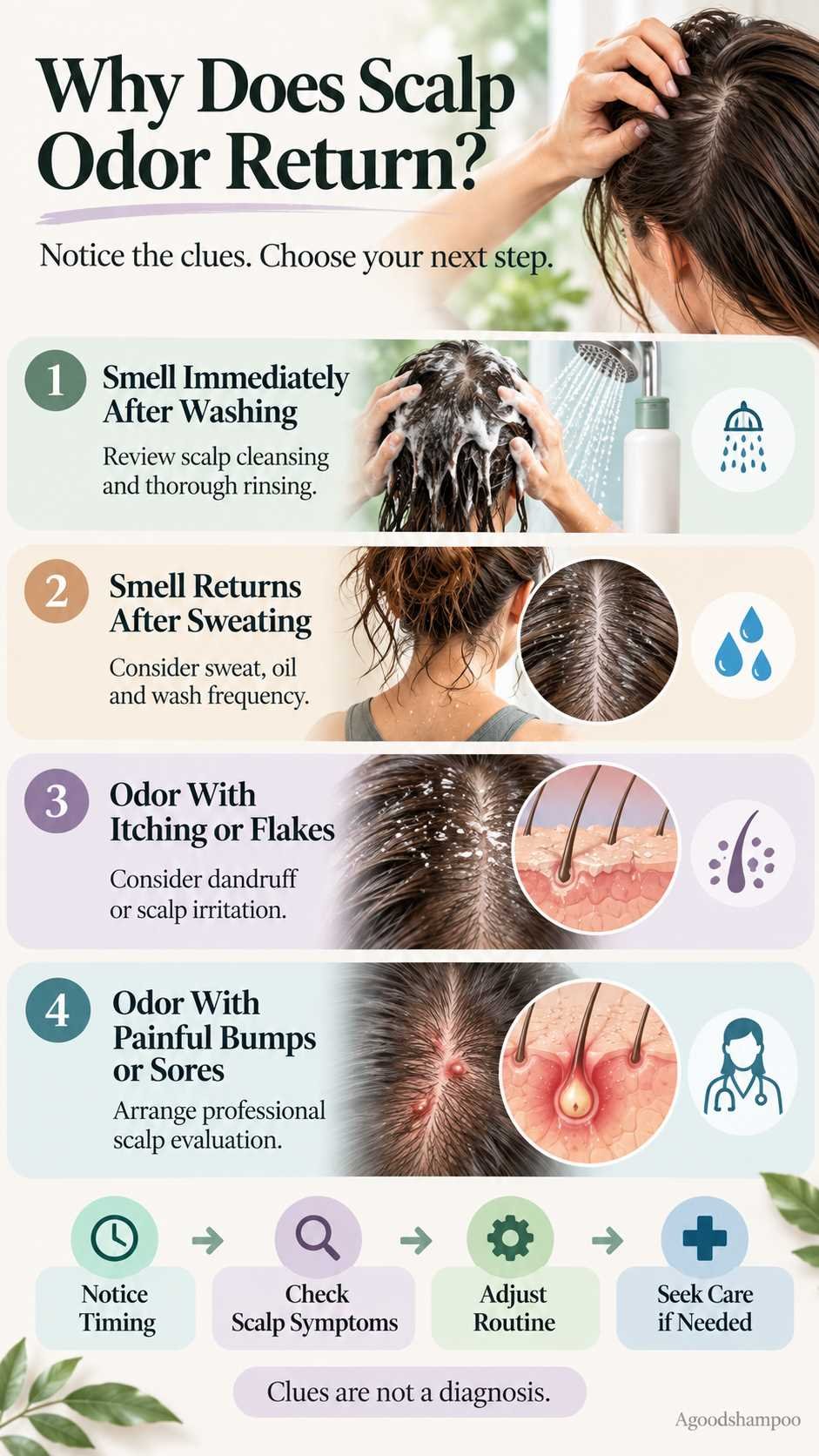
If your scalp is comfortable and the odor appears immediately after washing, start by checking shampoo distribution and rinsing.
If it returns after sweating or oil accumulation, reconsider your washing frequency and the products you use near your roots.
If you also notice persistent flakes, itching, sores or painful bumps, focus on the underlying scalp symptoms rather than trying to cover the smell with fragrance.
A clean-smelling scalp does not require harsh cleansing or a complicated routine. Often, careful washing and a few product adjustments are enough. When they are not, a proper scalp assessment is more useful than continuing to experiment with increasingly strong shampoos.

Marlena Stell makes everyday hair care easier to understand. From choosing a shampoo to managing common hair concerns, she breaks down confusing product claims and practical routines into straightforward advice that helps readers find what works for their needs.