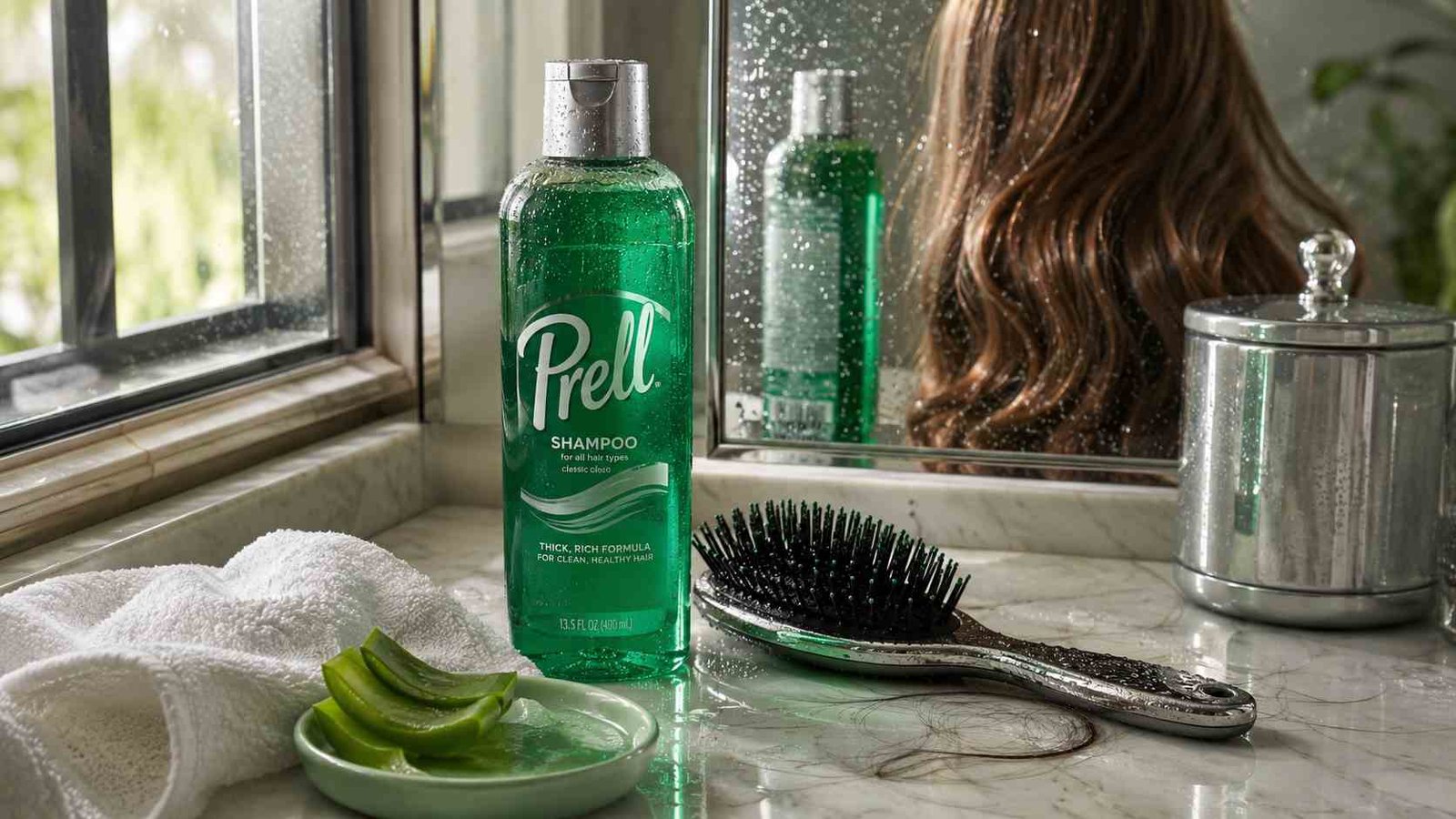
 There’s something weirdly nostalgic about Prell shampoo. You see that bright green bottle and suddenly it feels like you stepped into somebody’s bathroom from the 1980s. Maybe your dad used it. Maybe your grandmother kept a bottle under the sink for “really dirty hair days.” Or maybe you found it online and thought, wait… people still use this stuff?
Yeah. They do.
And honestly, I get why people keep searching for it.
Hair care today feels exhausting sometimes. Every bottle promises miracles. Bond repair. Hyaluronic acid. Rice water. Peptides. Moon dust. Whatever trend TikTok discovered this week. Then there’s Prell sitting quietly in the corner looking exactly the same for decades, basically saying, “I clean hair. That’s it.”
Simple. Old-school. Kind of aggressive.
But is Prell shampoo actually good?
That depends on your hair type, your scalp, and what you expect from a shampoo. Some people swear it leaves their scalp unbelievably fresh. Others say it turned their hair into straw after two washes. Both can be true.
Here’s what matters. Prell is not trying to be a luxury moisturizing shampoo. It’s a deep-cleansing shampoo first. Once you understand that, the whole product makes more sense.
What Is Prell Shampoo Supposed To Do?
Prell is mainly designed as a clarifying shampoo. That means it removes:
- Oil buildup
- Sweat
- Hair spray
- Pomade
- Silicone residue
- Grease
- Dirt from the scalp
Think of it like a reset button for your hair.
If your scalp gets oily fast, or your hair feels heavy no matter how much you wash it, clarifying shampoos can help remove layers of buildup regular shampoos sometimes leave behind.
That super-clean feeling people talk about with Prell? That’s because the formula contains strong cleansing agents.
And wow… it cleans.
Sometimes a little too well.
The Reason Prell Became So Popular
Prell was huge in America during the 1970s and 1980s. The thick green formula became famous for its “concentrated” texture and rich lather.
Back then, people loved squeaky-clean hair. The idea was simple:
More foam = cleaner hair.
Modern hair care has shifted away from that thinking because over-cleansing can damage dry or color-treated hair. But oily scalp users still often love shampoos like Prell because they cut through grease fast.
When was Prell shampoo most popular?
Probably its peak years were the late 70s through early 90s. It became one of those recognizable household brands almost everyone knew.
Funny thing though… vintage beauty products sometimes survive because they actually worked for a certain group of people. Prell is one of those.
Is Prell Shampoo Good For Your Hair?
Here’s the honest answer.
Prell can be very good for some hair types and absolutely terrible for others.
That sounds dramatic, but it’s true.
Prell may work well if you have:
- Very oily hair
- Heavy product buildup
- Fine hair that gets greasy quickly
- Scalp oiliness after workouts
- Hair that feels flat and coated
Prell may NOT work well if you have:
- Dry hair
- Curly hair needing moisture
- Bleached hair
- Color-treated hair
- Damaged hair
- Sensitive scalp
- Frizzy hair
That’s the biggest thing people miss.
They use Prell like an everyday moisturizing shampoo, then wonder why their hair feels rough afterward.
That’s not really its job.
What Research Says About Clarifying Shampoos
Studies published through dermatology and cosmetic science journals show that shampoo formulas with stronger surfactants remove oil and residue more effectively, but they can also increase dryness and friction on hair fibers when used too often.
This is especially important for chemically treated hair.
Hair science research also shows repeated aggressive cleansing may weaken the outer cuticle layer over time, which can increase breakage and frizz in vulnerable hair types.
That doesn’t automatically make Prell “bad.” It just means it needs the right user.
Honestly, that’s true for most shampoos.
Ingredient Breakdown
This is where things get interesting.
Prell uses cleansing ingredients designed for powerful oil removal. The formula has changed over the years, but its identity stayed pretty consistent: strong cleansing performance.
Ingredients commonly found in Prell formulas include:
- Sodium Laureth Sulfate
- Cocamidopropyl Betaine
- Fragrance
- Citric Acid
- Conditioning agents
- Preservatives
Let me explain the important part.
Sodium Laureth Sulfate
This is the main cleanser doing most of the heavy lifting.
It helps water mix with oil so grease can rinse away from your scalp.
That’s why Prell feels so clean.
But sulfate cleansers can sometimes strip natural oils too aggressively in people with dry or sensitive hair.
Now before people panic, sulfates are not evil. Internet fear made them sound radioactive or something.
Dermatologists generally agree sulfates are safe for most people. The real issue is whether your hair type tolerates them well.
Big difference.
Is Prell Shampoo Good For Oily Hair?
Honestly? Yes.
Probably better than many trendy shampoos pretending to be “deep cleansing.”
People with oily scalps often complain that moisturizing shampoos leave residue behind. Hair gets greasy again within hours.
Prell attacks that problem aggressively.
You wash your hair and it actually feels lighter afterward.
That’s why some gym-goers, athletes, and people living in humid climates still love it.
If your scalp produces excess sebum, clarifying shampoos can temporarily reduce that heavy greasy feeling.
But there’s a catch.
Using strong cleansers too often may cause rebound oiliness in some people. Your scalp notices dryness and starts producing more oil to compensate.
So daily use isn’t always ideal.
For many oily-hair users, once or twice weekly works better.
What Shampoo Is Good For Lupus Hair Loss?
This question comes up a lot online, especially because people dealing with lupus-related hair loss often search for gentle scalp care.
Here’s the important thing.
Lupus hair loss usually requires very gentle products because the scalp may already be inflamed or sensitive.
In many cases, dermatologists recommend:
- Sulfate-free shampoos
- Fragrance-free formulas
- Gentle moisturizing cleansers
- Medicated shampoos if prescribed
Prell is probably not the best choice for active lupus scalp sensitivity because its cleansing power can feel harsh on irritated skin.
A gentler shampoo would usually make more sense.
Hair loss connected to autoimmune conditions is complicated though. Shampoo alone rarely fixes it. A dermatologist should always guide treatment for lupus-related shedding.
Does Prell Help Hair Grow?
No shampoo magically grows hair faster.
I know the internet keeps trying to sell fantasy potions, but hair growth depends on:
- Genetics
- Hormones
- Nutrition
- Scalp health
- Stress
- Medical conditions
What Prell can do is remove buildup from the scalp.
A cleaner scalp environment may help some people feel fresher and less greasy, but that’s different from actually stimulating new hair growth.
There’s no strong clinical evidence showing Prell directly increases hair growth.
Which Is The No. 1 Shampoo?
That’s impossible to answer universally because hair needs are different.
The “best” shampoo for oily hair may ruin curly hair.
The best shampoo for damaged blondes might flatten fine hair completely.
But some brands consistently rank highly among dermatologists and consumers for different needs:
For damaged hair
- Olaplex
- Redken Acidic Bonding
- Kérastase
For dandruff
- Nizoral
- Head & Shoulders Clinical
For oily scalp
- Neutrogena clarifying shampoos
- Paul Mitchell Shampoo Two
- Prell
For sensitive scalp
- Vanicream
- Seen
- Free & Clear
Prell sits more in the oily scalp and clarifying category.
That’s its lane.
My Honest Experience With Prell-Type Shampoos
This reminds me of something funny.
A lot of people who grew up using rich moisturizing shampoos try Prell once and immediately say:
“My hair feels weird.”
What they’re actually feeling is the absence of silicone buildup.
Modern shampoos often coat the hair to create softness instantly. Clarifying shampoos remove that coating.
For some people, hair suddenly feels lighter and cleaner.
For others, it feels stripped.
That reaction tells you a lot about your hair condition.
If your hair only feels “good” when coated heavily with smoothing ingredients, a clarifying shampoo can expose hidden dryness or damage underneath.
Kind of brutal. But useful.
How Often Should You Use Prell?
Not every day for most people.
That’s probably the biggest mistake users make.
A better routine usually looks like:
Once weekly if:
- You use lots of styling products
- You have normal hair
- Your scalp gets mildly oily
Twice weekly if:
- Your scalp becomes greasy quickly
- You work out heavily
- You sweat often
Avoid frequent use if:
- Hair is colored
- Hair feels brittle
- Scalp burns or itches
- You already struggle with dryness
Honestly, moderation matters more than brand loyalty here.
Is Prell Safe For Color-Treated Hair?
Not ideal.
Clarifying shampoos can fade hair color faster because they remove surface deposits aggressively.
That includes artificial dye molecules.
If you spend serious money coloring your hair, using Prell constantly might shorten the life of your color.
Especially reds.
Red dye already disappears faster than almost anything else. One harsh clarifying session and suddenly your expensive salon color looks tired.
Painful.
The Smell Of Prell
Okay, weird section maybe. But people always mention this.
Prell has that classic “clean shampoo” smell. Very traditional. Kind of sharp and green.
Some people love the nostalgic scent.
Others think it smells like a locker room from 1992.
Honestly… both descriptions feel accurate somehow.
Quick Fact
A 2023 consumer beauty survey showed more than 60% of users with oily scalps preferred shampoos labeled “clarifying” or “deep cleansing” over moisturizing formulas because they felt their hair stayed fresher longer.
That lines up pretty closely with why Prell still has loyal fans decades later.
Who Should Probably Skip Prell?
Let’s make this simple.
You probably shouldn’t use Prell regularly if:
- Your hair snaps easily
- Your scalp feels tight after washing
- You bleach your hair
- You have eczema or scalp irritation
- Your curls need moisture
- You already battle frizz daily
A lot of viral hair advice ignores texture differences.
Curly and coily hair usually loses moisture faster naturally. Strong cleansers can make that worse.
Can Prell Remove Hard Water Buildup?
Actually… yes, somewhat.
Clarifying shampoos often help reduce mineral residue caused by hard water. Hair exposed to mineral-heavy water can feel:
- Waxy
- Sticky
- Dull
- Rough
Prell may temporarily improve that heavy coated feeling.
But if hard water is severe, a chelating shampoo works better because it specifically targets mineral deposits.
Why Some People Still Love Prell
You know what’s funny?
Some modern shampoos try so hard to feel luxurious that they barely clean oily hair anymore.
People with greasy scalps notice this immediately.
Then they try something old-school like Prell and suddenly their hair finally feels fresh again.
No heavy residue.
No coated feeling.
Just clean.
There’s a reason certain classic products survive decades. Usually because a specific group keeps buying them no matter what trends appear.
Prell definitely has that loyal fan base.
The Biggest Misunderstanding About Prell
People judge it using the wrong expectations.
Prell is not:
- A repair shampoo
- A bond builder
- A moisture mask
- A curl cream substitute
- A luxury salon treatment
It’s basically a scalp-cleansing workhorse.
And honestly? It never pretended otherwise.
Final Thoughts
So… is Prell shampoo good?
Yes. For the right person.
If your scalp gets oily fast, your hair feels weighed down, or you need a strong clarifying shampoo, Prell can work surprisingly well.
But if your hair is dry, damaged, color-treated, curly, or sensitive, there are gentler options that will probably make you much happier long term.
That’s the real answer nobody likes because it isn’t dramatic enough for social media.
Hair care is personal.
One person’s holy grail shampoo is another person’s frizz disaster.
Prell survived this long because it still solves a real problem for oily-hair users. It cleans deeply. Maybe too deeply sometimes. But that intense clean feeling is exactly why some people keep coming back to it after all these years.
And honestly… in a beauty industry full of exaggerated promises, there’s something almost refreshing about a shampoo that simply says:
“I remove grease.”
Not glamorous. But weirdly dependable.

Michael Chen focuses on the science behind shampoos and hair-care ingredients. He explains how cleansing agents, silicones, proteins, and other formula components work, separating useful evidence from marketing claims to help readers better understand the products they use.