Silver hair doesn’t automatically need purple shampoo every time it gets wet. A review of hair aging reports that roughly 6% to 23% of people have 50% gray hair by age 50, but once hair turns gray or silver, the more useful question is what the strands actually need now: toning, gentle cleansing, moisture, or some combination of the three. 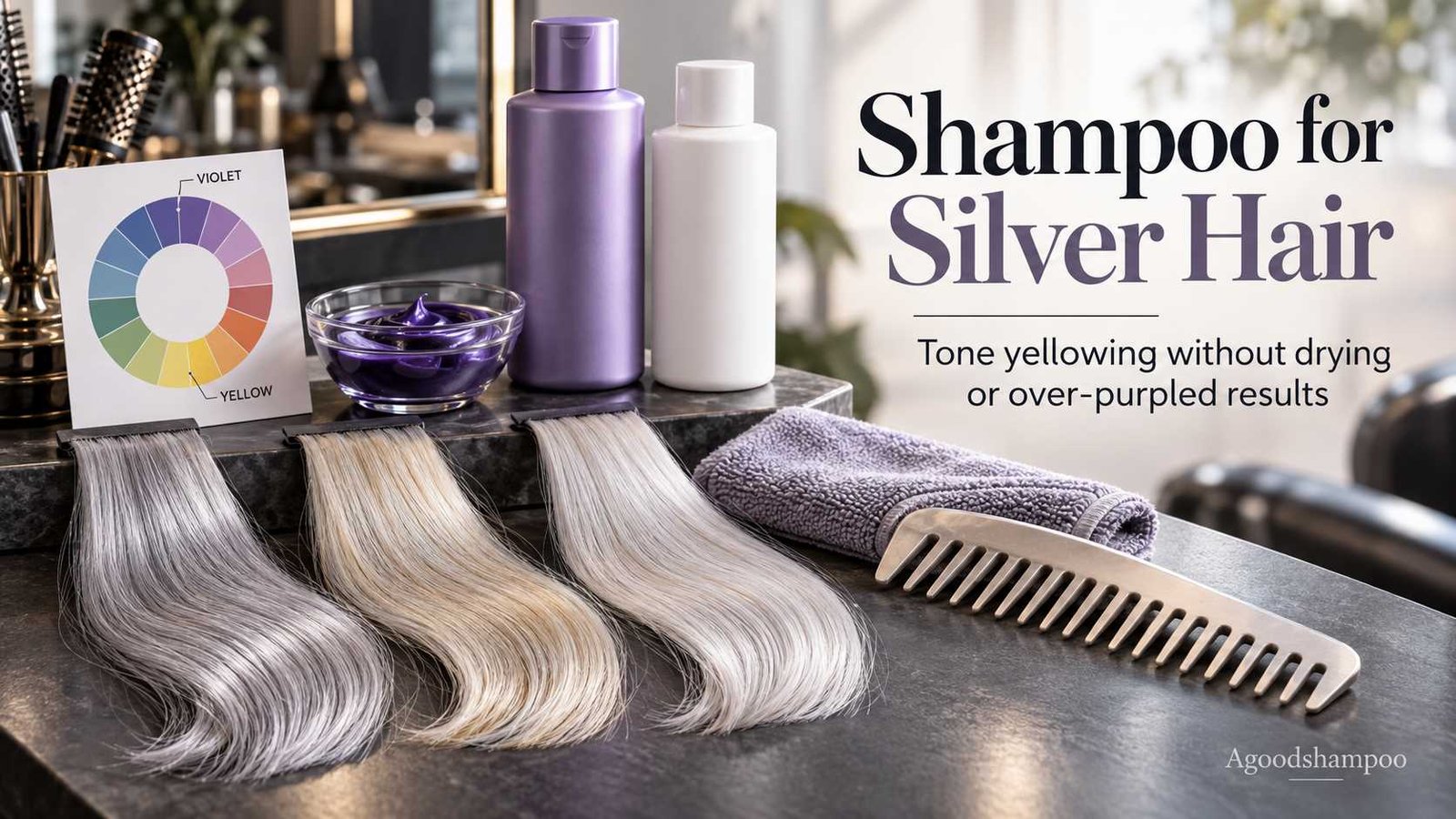
A good shampoo for purple silver hair is therefore not one specific bottle. If your silver, white, or platinum hair is developing a yellow cast, a purple or silver toning shampoo can help neutralize that warmth. If the color already looks clean and cool, a regular shampoo suited to your scalp and hair condition may be the better choice.
That distinction keeps you from treating every wash like a color-correction session.
The Best Shampoo Depends on Why Your Silver Hair Needs Help
Start by looking at your hair rather than the front label of the shampoo.
If the problem is yellowing, look for a purple or violet-pigmented shampoo. Purple sits opposite yellow on the traditional color wheel, so depositing violet pigment can make unwanted yellow tones appear less noticeable. Professional hair-care brands use the same color-correction principle for blonde, gray, white, and silver hair.
If your silver tone already looks good but the hair feels dry, coarse, frizzy, or rough, stronger toning is unlikely to solve the real problem. Research on hair aging describes changes in sebum production, fiber diameter, pigmentation, density, and surface condition that can contribute to dullness, dryness, roughness, and frizz.
And if your scalp simply needs cleansing, a normal shampoo may be exactly what you need.
A simple way to choose is:
- Yellow silver or gray hair: purple or silver toning shampoo
- Clean silver tone but dry lengths: gentle or moisturizing shampoo
- Color-treated silver or platinum hair: color-care shampoo between toning washes
- Heavy buildup or dull coating: occasional clarifying care may help
- Orange rather than yellow warmth: purple may not be the best color correction
The shampoo should match the problem, not merely the hair color.
Purple Shampoo Works Best When Silver Hair Is Turning Yellow
Purple shampoo is good for silver hair when unwanted yellow tones are visible. It does not bleach gray hair whiter, restore lost natural pigment, or permanently recolor the hair.
Its role is more specific: it deposits violet pigment that changes the appearance of yellow warmth.
Wella’s current professional guidance recommends purple shampoo for gray and silver hair when yellow tones appear, while L’Oréal Professionnel describes silver shampoo as a purple-pigmented anti-yellow shampoo suitable for blonde, gray, and silver hair.
That also explains why someone with perfectly clean, neutral silver hair may see little benefit from frequent toning.
Too much toning can become noticeable on very pale hair. Gray, white, bleached, or porous strands may pick up violet pigment more visibly than darker hair, which can leave sections looking muted, lavender, or slightly dull if a strong formula is left on too long.
For a broader explanation of the same color-correction principle, see our guide to how purple shampoo works on blonde hair.
Purple shampoo is best thought of as a maintenance tool, not an automatic replacement for your regular shampoo.
What Should You Use When Your Silver Hair Does Not Need Toning?
If your hair already looks silver rather than yellow, choose your regular shampoo according to scalp condition and hair texture.
Dry or coarse silver hair may benefit from a formula designed around gentle cleansing and conditioning. Hair that becomes oily quickly may need more effective cleansing at the roots. Fine silver hair may feel weighed down by very rich formulas, while thick or wiry hair may tolerate more conditioning.
Wella’s gray-hair guidance specifically distinguishes regular shampoo from purple shampoo: a normal shampoo handles cleansing, moisture, smoothness, volume, or other routine needs, while purple shampoo provides the additional color-correcting function.
This means you do not need to search for a mysterious special “normal shampoo for silver hair.” Look for a shampoo that suits the condition of your hair, then add a toning product only when the color needs correction.
For more detail on routine care, our guide to choosing shampoo for gray hair looks at shine and texture as well as color.
If the silver shade comes from bleaching or professional coloring rather than natural graying, protecting chemically processed hair also matters. Toning cannot repair structural damage from lightening.
Purple, Silver, and Regular Shampoo Are Not Three Versions of the Same Thing
The terminology creates more confusion than it should.
| Shampoo type | Main job | Best fit |
|---|---|---|
| Purple shampoo | Deposits violet pigment to reduce visible yellow warmth | Blonde, platinum, gray, white, or silver hair with yellow tones |
| Silver shampoo | Often another name for a stronger purple anti-yellow shampoo | Gray, white, silver, and very light blonde hair |
| Regular shampoo | Cleanses without intentional violet toning | Routine washes when color correction is not needed |
| Moisturizing shampoo | Cleanses while emphasizing softness and conditioning | Dry, coarse, rough, or frizz-prone silver hair |
“Silver shampoo” does not necessarily mean the liquid itself is silver. L’Oréal Professionnel uses the term for a deeply purple-pigmented shampoo intended to neutralize yellow tones in light blonde, gray, and silver hair.
That is why the terms purple shampoo and silver shampoo often overlap in stores.
Is Silver Shampoo Good for Blonde Hair?
Yes, when the blonde has unwanted yellow warmth.
Silver shampoo can suit pale blonde, platinum, highlighted, or cool blonde hair because the useful part is the violet pigment, not whether the person identifies their shade as blonde or silver.
But intentionally golden blonde hair may not need that cooling effect. And strongly orange brassiness is a different color problem from pale yellow.
If blonde hair is your main concern, our dedicated guide to purple shampoo for blonde hair explains the distinction in more detail.
Where Collagen Shampoo Fits Into a Silver-Hair Routine
Collagen shampoo answers a different question.
Purple pigment is used to alter the visible tone of yellow hair. Collagen ingredients, where present in a shampoo, do not perform that color-correcting job.
A collagen-containing formula might also contain cleansing agents, conditioning ingredients, proteins, silicones, humectants, or oils that affect how the hair feels. But seeing the word collagen on a label does not establish that the shampoo can restore lost melanin, reverse graying, or turn white hair back to its original color.
For readers considering that specific product category, we have a separate analysis of collagen shampoo for gray and silver hair.
The practical rule is simple: choose collagen shampoo only if the whole formula suits your cleansing and conditioning needs. Choose purple shampoo when the problem is yellow tone.
They are not substitutes for one another.
How to Keep Silver Hair Bright Without Making It Purple
The safest routine is responsive rather than rigid.
- Look at your hair before washing. If it still looks clean silver or white, there may be no reason to add more violet pigment.
- Use your regular shampoo for ordinary cleansing. This keeps toning separate from everyday scalp and hair needs.
- Bring in purple or silver shampoo when yellow warmth becomes noticeable. Professional guidance commonly recommends periodic rather than automatic daily use. Wella, for example, currently suggests using purple shampoo around once weekly or when yellow tones appear, while also advising users to follow the individual product instructions.
- Start with the shortest recommended contact time. Very pale or porous hair may grab pigment quickly. One current Wella gray-hair guide specifically recommends beginning with the shortest label-directed time and adjusting only if more toning is needed.
- Follow with conditioner when your hair needs it. Toning is not the same as conditioning, and silver hair that feels rough still needs attention to softness and manageability.
If the hair starts looking lavender, grayish in an unwanted way, flat, or over-toned, reduce the frequency rather than adding another toning product.
Persistent yellowing can also have causes beyond insufficient purple pigment. Product residue, environmental exposure, heat, metals in water, and other factors can affect the appearance of gray hair.
Choose Toning for Yellowing and Moisture for Everyday Care
A good shampoo for purple silver hair should solve the problem you can actually see.
Choose a purple or silver shampoo when gray, white, platinum, or silver hair develops unwanted yellow tones. Choose a normal gentle, moisturizing, volumizing, or color-care shampoo when the tone already looks right and the hair simply needs cleansing or conditioning support.
Silver shampoo can also work well on light blonde hair because many products marketed as silver shampoos use the same violet anti-yellow principle as purple shampoos. Collagen shampoo, meanwhile, belongs in a different category and should not be expected to tone yellow hair or reverse natural graying.
The best routine usually isn’t purple shampoo at every wash. It is regular cleansing that suits your scalp and hair texture, with violet toning added only when your silver starts looking warmer than you want.

Marlena Stell makes everyday hair care easier to understand. From choosing a shampoo to managing common hair concerns, she breaks down confusing product claims and practical routines into straightforward advice that helps readers find what works for their needs.