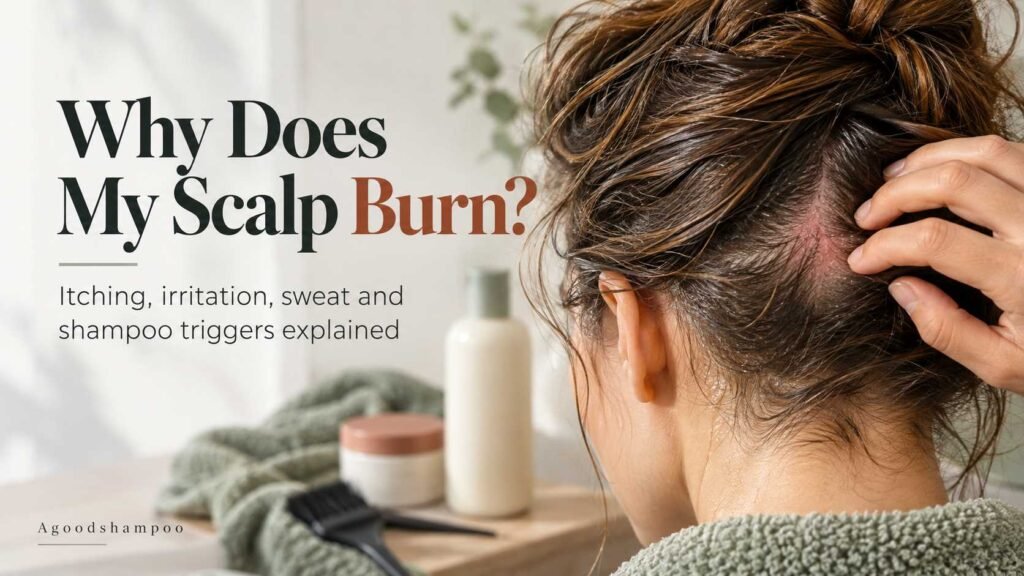
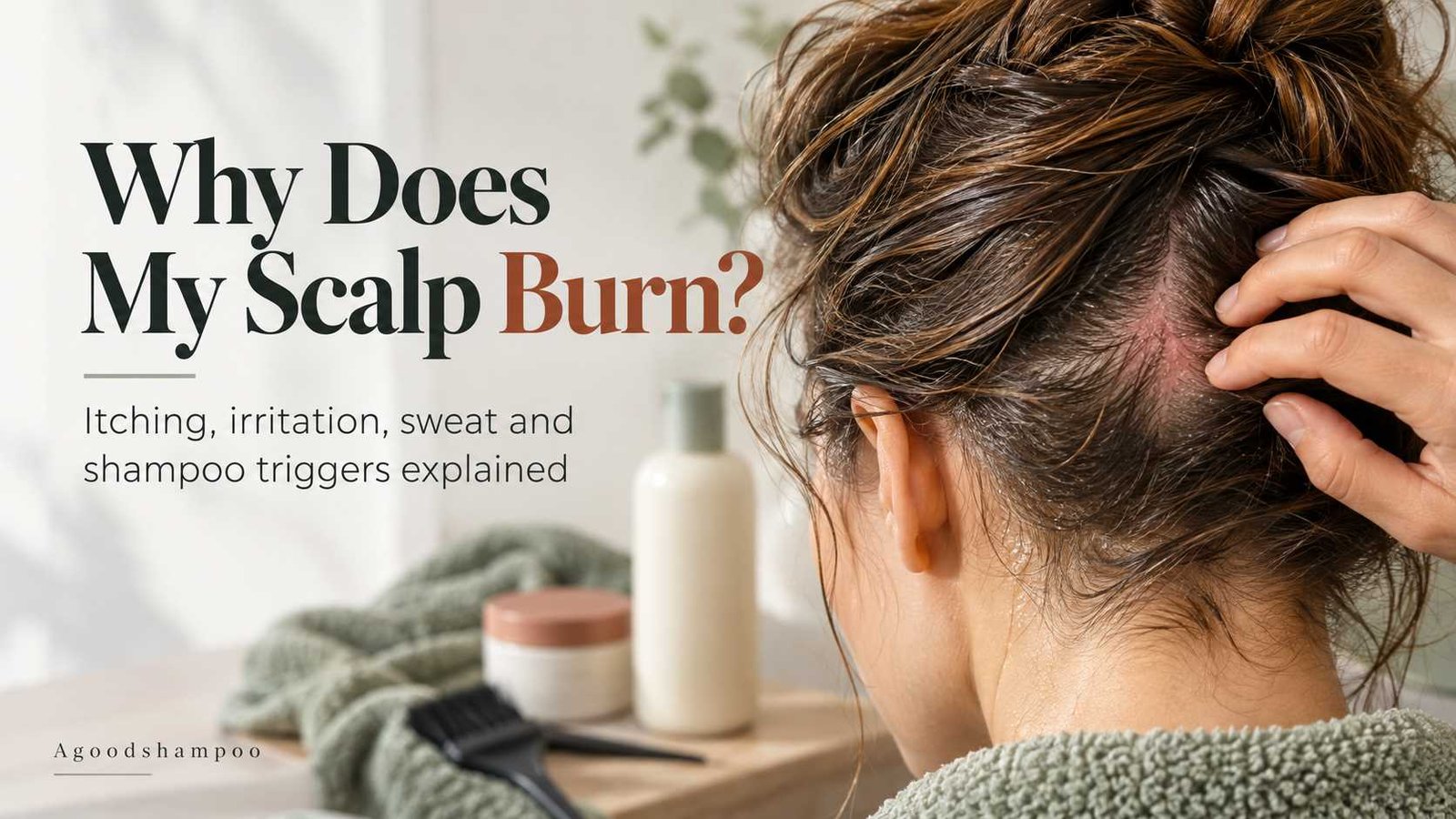
 An itchy scalp that also burns usually means the scalp is irritated, inflamed, reacting to something, or experiencing altered skin sensation. The cause may be as simple as dandruff or a shampoo that does not agree with your skin, but eczema, psoriasis, allergic contact dermatitis, infection, and less common nerve-related scalp conditions can produce similar symptoms.
The important point is that itching and burning are symptoms, not a diagnosis. What happens alongside them often gives much better clues. Flakes, redness, bumps, sores, sweating, recent hair coloring, a new shampoo, or hair loss can all change what the most sensible next step is.
Changing shampoo may help in some situations. In others, repeatedly trying new products can make an already irritated scalp worse.
Why Does My Scalp Itch and Burn at the Same Time?
Itching and burning can occur together because many scalp problems affect the skin’s protective barrier and sensory nerve endings at the same time.
Inflamed scalp skin may itch, sting, feel hot, or become tender. Scratching adds another layer of irritation because fingernails can damage already-sensitive skin. That can create a cycle where itching leads to scratching, scratching increases inflammation, and the scalp begins to burn more.
Some common possibilities include:
- dandruff or seborrheic dermatitis
- irritation from shampoo or styling products
- allergic contact dermatitis
- eczema
- psoriasis
- folliculitis or another scalp infection
- a reaction to hair dye
- irritation made worse by heat and sweat
- scalp dysesthesia, in which burning, tingling or itching occurs without an obvious primary rash
The American Academy of Dermatology notes that an itchy scalp can have several causes, including dandruff, reactions to hair-care products, psoriasis and scalp ringworm.
This is why choosing a shampoo simply because its label says sensitive scalp may not solve the problem. The right approach depends on what is actually triggering the symptoms.
What Your Other Scalp Symptoms Can Tell You
The sensation itself gives only part of the picture. Pay attention to what your scalp looks like, when the symptoms appear, and what changed shortly before they began.
| What You Notice | Possible Explanation | Sensible Next Step |
|---|---|---|
| Flakes with itching | Dandruff or seborrheic dermatitis | Consider an appropriate anti-dandruff shampoo |
| Greasy scale and redness | Seborrheic dermatitis | Use targeted scalp care and seek help if persistent |
| Burning after a new shampoo | Irritant or allergic reaction | Stop the suspected product |
| Burning after hair dye | Irritation or allergy | Stop exposure and seek care if swelling or severe symptoms develop |
| Worse after exercise or sweating | Heat, sweat, friction or an underlying skin condition | Cool and cleanse the scalp gently |
| Bumps, crusts or pus | Folliculitis or infection may be possible | Medical assessment may be needed |
| Thick plaques or heavy scaling | Psoriasis or another inflammatory condition may be possible | Dermatology assessment is reasonable |
| Patchy hair loss with scaling | Fungal infection or another scalp disorder may be possible | Seek professional assessment |
| Burning with little visible change | Irritation or scalp dysesthesia may be possible | Persistent symptoms deserve evaluation |
These patterns cannot diagnose the cause at home, but they can help you avoid treating every itchy scalp in exactly the same way.
Itching, Burning and Flakes or Greasy Scale
Flaking is one of the strongest clues that dandruff or seborrheic dermatitis may be involved.
Dandruff is generally considered a mild form of seborrheic dermatitis affecting the scalp. Seborrheic dermatitis can cause scaling, redness, itching and sometimes burning or discomfort.
The American Academy of Dermatology describes itching and burning as possible symptoms of seborrheic dermatitis.
If your symptoms mainly involve flakes and scalp oiliness, an anti-dandruff shampoo may make more sense than continually switching among gentle cosmetic shampoos.
Our guide to shampoo for itchy scalp and dandruff explains how dandruff-focused shampoos differ from ordinary cleansing products.
Burning After Shampoo, Hair Dye or a New Hair Product
Timing matters.
If your scalp started burning shortly after changing shampoo, conditioner, dry shampoo, styling spray, hair dye, fragrance-heavy products or scalp treatments, the product deserves attention.
Hair products can cause either irritant contact dermatitis or allergic contact dermatitis.
An irritant reaction happens when a substance directly irritates the skin. An allergic reaction involves the immune system reacting to a particular ingredient.
Symptoms may include:
- itching
- burning
- stinging
- redness
- swelling
- scaling
- tenderness
- rash
Fragrance is one possible allergen, but it is not the only one. Hair dyes, preservatives, cleansing agents and other formula components can also cause reactions.
A systematic review of 99 studies involving 3,185 patients with scalp allergic contact dermatitis found several recurring product and ingredient categories, including hair dyes, shampoos, fragrances and cocamidopropyl betaine-related allergens. Those percentages describe patients studied for allergic contact dermatitis and should not be interpreted as the risk for an average shampoo user.
If one particular product consistently causes burning, discontinuing that product is generally more useful than adding another scalp treatment on top of it.
Burning With Bumps, Crusts, Sores or Hair Loss
An itchy scalp accompanied by bumps, crusting, pus, broken skin or patchy hair loss deserves more caution.
Folliculitis can affect hair follicles and produce itchy or painful bumps. Fungal infections can also cause scaling and hair loss. Psoriasis may produce thicker scale and inflamed plaques.
These problems do not all respond to dandruff shampoo.
Patchy hair loss, drainage, spreading redness, painful swelling or open sores are especially poor situations for repeated trial-and-error with cosmetic products.
If scalp inflammation appears together with shedding or hair loss, see our guide to scalp inflammation and hair loss shampoo choices for the limits of what shampoo can realistically do.
Burning or Tingling With a Normal-Looking Scalp
Some people experience scalp burning, itching, tingling or pain even when the skin does not show an obvious rash.
One medical term used for this pattern is scalp dysesthesia. Published medical literature describes scalp dysesthesia as abnormal sensations such as burning, tingling or itching without a primary visible skin disorder.
That does not mean unexplained scalp burning automatically equals scalp dysesthesia. Product irritation, dry skin and other conditions still need to be considered.
The practical point is simpler: if the scalp looks relatively normal but repeatedly burns or tingles despite changing shampoos, continuing to experiment with stronger scalp products may not address the cause.
Why Does My Head Itch When I Sweat?
Sweat-related itching is common enough to notice, but sweat does not automatically mean your scalp is dirty, infected or clogged.
Several things happen during exercise or hot weather. The scalp becomes warmer, sweat adds moisture and salt, oil production continues, and hats or tightly tied hair can increase friction. On already-irritated skin, that combination can make itching or stinging more noticeable.
Sweating can also aggravate conditions such as eczema in some people. Heat-related hives are another possible reason someone may itch while exercising or becoming hot.
Cleveland Clinic notes that heat, sweating and several underlying scalp conditions can contribute to scalp itching.
If your head mainly itches after sweating, try practical measures first:
- Let the scalp cool after exercise.
- Avoid leaving a sweat-soaked hat or head covering on longer than necessary.
- Rinse or wash when sweat and oil are accumulating noticeably.
- Use lukewarm rather than very hot water.
- Avoid aggressively scratching the scalp.
- Pay attention to whether one shampoo makes the post-sweat burning worse.
You do not necessarily need shampoo after every minor sweat session. Washing frequency should depend on oiliness, activity level, hair type, styling routine and how your scalp responds.
Could Your Shampoo Be Making the Burning Worse?
Yes. Shampoo is designed to remove oil, sweat, styling residue and environmental buildup, but cleansing ingredients and other formula components can irritate some scalps.
That does not mean shampoo itself is bad for the scalp.
A well-formulated shampoo that suits your skin and is used appropriately can support scalp hygiene. Problems usually arise when the formula is too irritating for a particular person, an allergy is present, shampoo is used excessively, or residue remains on the scalp.
One easily overlooked issue is rinsing.
The American Academy of Dermatology specifically notes that shampoo left on the scalp can irritate it.
If your scalp feels tight, itchy or hot immediately after washing, consider:
- whether you recently changed shampoo
- whether you increased washing frequency
- whether you are using several scalp products at once
- whether the shampoo contains a fragrance or ingredient you already know bothers your skin
- whether you rinse thoroughly
- whether the water is very hot
- whether you scratch vigorously while washing
If you are looking specifically for product-selection guidance, our guide to what shampoo is good for an itchy scalp goes deeper into matching shampoo type to scalp symptoms.
Does Sulfate-Free Shampoo Help an Itchy or Burning Scalp?
Sometimes, but sulfate-free does not automatically mean gentle, safe or better for every scalp.
Sulfates are surfactants, meaning they help water mix with oil and dirt so those materials can be washed away. Sodium lauryl sulfate, or SLS, is one of the better-known examples.
SLS can irritate skin under sufficient experimental exposure, which is one reason people with sensitive skin sometimes prefer milder cleansing systems. But that does not mean every shampoo containing sulfate will irritate everyone.
More importantly, removing sulfates does not remove every potential irritant or allergen.
A sulfate-free shampoo may still contain:
- fragrance
- essential oils
- preservatives
- botanical extracts
- cocamidopropyl betaine
- other surfactants that an individual may not tolerate
This is why formulation matters more than a single marketing label.
If you want a deeper explanation, see our sulfate-free shampoo and scalp care guide.
For an irritated scalp, the better question is not simply Is this sulfate-free? It is Does this complete formula cleanse adequately without repeatedly triggering my symptoms?
What Shampoo Is Good for an Itchy Scalp? Match It to the Cause
There is no single best scalp shampoo because itching can come from different problems.
If You Have Dandruff or Seborrheic Dermatitis
Anti-dandruff shampoos are designed specifically for flaking scalp conditions.
The American Academy of Dermatology lists active ingredients commonly used in dandruff shampoos, including:
- ketoconazole
- selenium sulfide
- salicylic acid
- zinc pyrithione
- coal tar
- sulfur
Availability differs by country and product type. Some ingredients are available over the counter in certain markets and regulated differently elsewhere.
Follow the product directions because some dandruff shampoos need time on the scalp before rinsing.
Also remember that stronger cleansing is not always better. If a treatment controls flakes but leaves the scalp painfully dry or irritated, frequency and product choice may need adjustment.
If a New Product Started the Burning
The most useful step is often removing the suspected trigger.
Switching directly from one complicated formula to another may make it difficult to know which ingredient is responsible.
A simpler shampoo with fewer unnecessary fragrance components may be easier to evaluate, but labels such as natural, clean or hypoallergenic do not guarantee that a product cannot cause a reaction.
If Your Scalp Is Simply Dry
Dry scalp may benefit from gentler cleansing, less frequent washing when appropriate, lukewarm water and formulas that do not leave the scalp feeling stripped.
But visible flaking is not automatically dry scalp. Dandruff and seborrheic dermatitis can also flake, and treatment may differ.
If You Have Bumps, Sores or Patchy Hair Loss
Do not rely on cosmetic shampoo alone.
Those symptoms can point toward conditions where proper diagnosis matters more than finding a more soothing cleanser.
When Itching and Burning Need More Than a Shampoo Change
Occasional mild itching after sweating or using a product that does not suit you may improve once the trigger is removed.
Persistent burning is different.
Consider professional medical assessment if your scalp symptoms:
- continue despite stopping suspected irritating products
- become increasingly painful
- repeatedly return
- involve swelling
- produce open sores or drainage
- spread beyond the scalp
- cause significant crusting
- appear with patchy hair loss
- involve substantial redness or tenderness
- interfere with sleep or normal activities
Cleveland Clinic also advises seeking dermatologic care when persistent scalp itching is associated with problems such as rash, pain or hair loss.
Severe swelling of the face, lips or throat, trouble breathing, or a rapidly developing allergic reaction requires urgent medical care.
What Makes the Most Sense for an Itchy, Burning Scalp?
If you are wondering why your scalp itches and burns, start with timing and accompanying symptoms, not with a shampoo label.
Flakes and greasy scale make dandruff or seborrheic dermatitis more plausible. Burning that begins after a new shampoo, dye or styling product raises suspicion of irritation or contact allergy. Symptoms that mainly appear with sweating may reflect heat, salt, friction or an underlying sensitive-skin condition. Bumps, sores, significant pain or hair loss deserve more careful evaluation.
A different shampoo can absolutely help when the current cleanser is irritating your skin or when you need an appropriate dandruff treatment. But shampoo cannot diagnose every scalp condition, and sulfate-free does not automatically mean irritation-free.
If symptoms are mild, remove obvious triggers, rinse thoroughly, avoid aggressive scratching and use a shampoo suited to the actual scalp problem.
If the burning persists or your scalp is painful, inflamed, damaged or losing hair, the sensible next step is not another round of shampoo experiments. It is getting the cause properly assessed.

Marlena Stell makes everyday hair care easier to understand. From choosing a shampoo to managing common hair concerns, she breaks down confusing product claims and practical routines into straightforward advice that helps readers find what works for their needs.