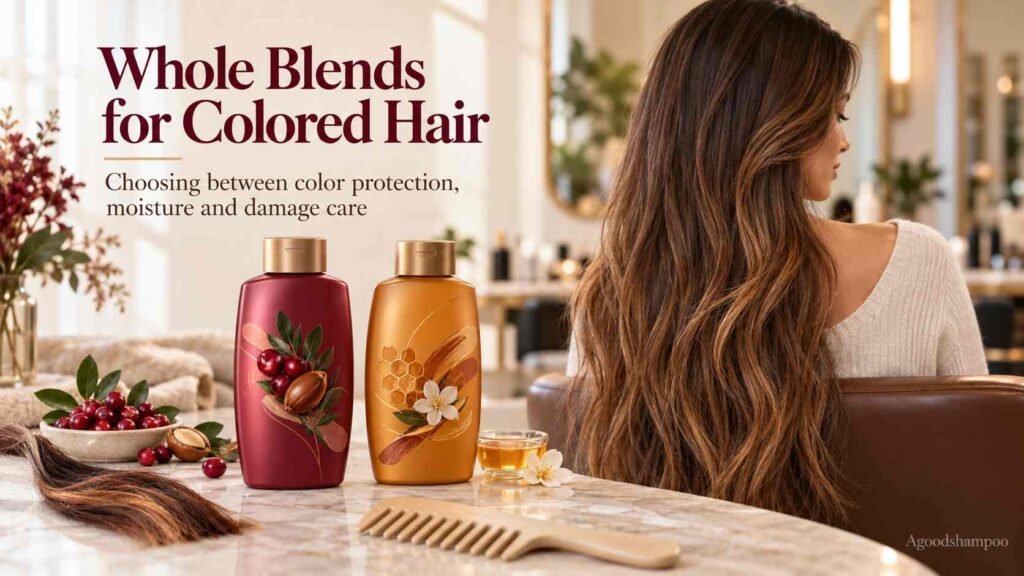
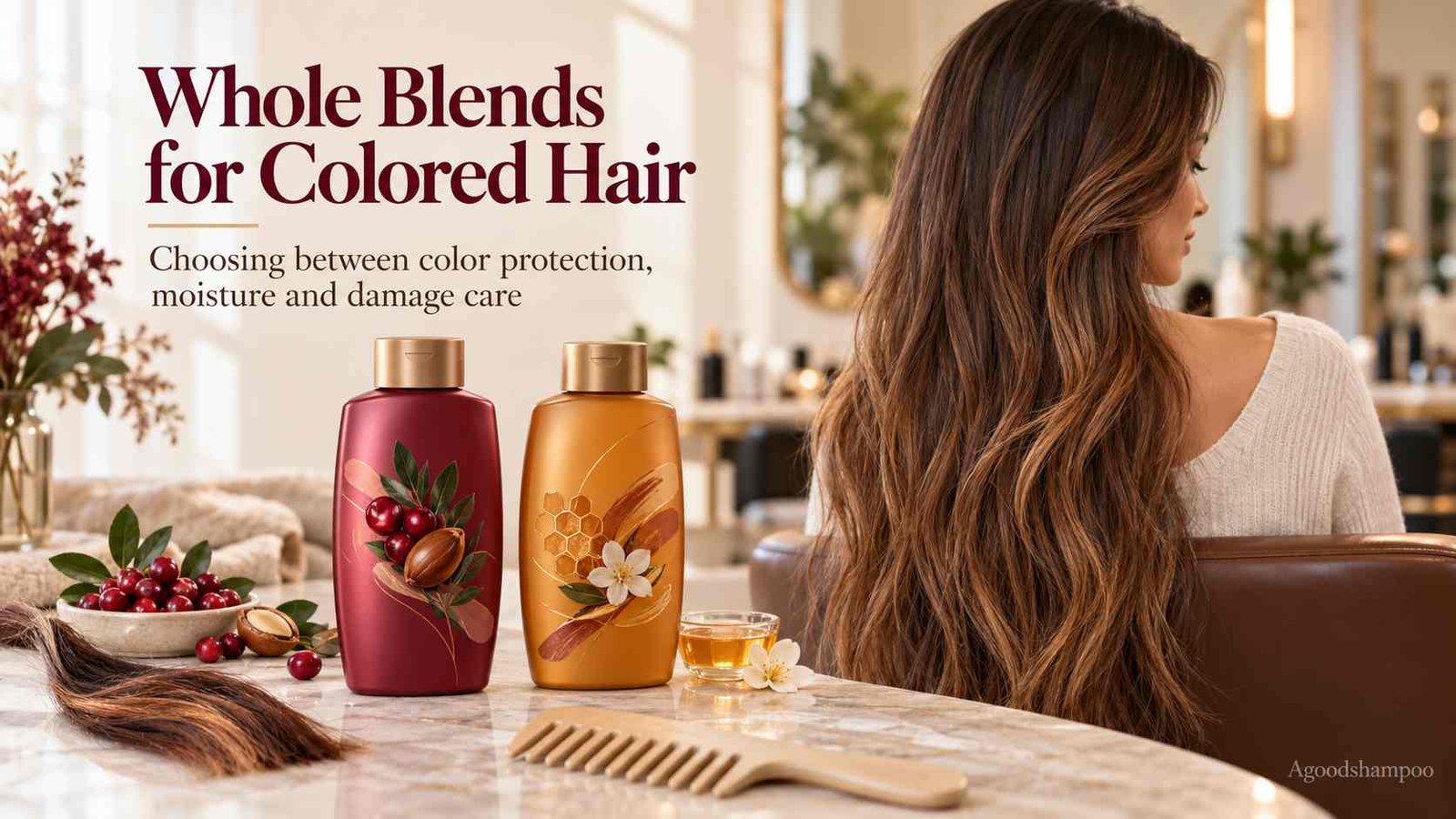
 If you have long, color-treated hair, the Whole Blends formula that makes the most sense depends on what you are trying to protect most. For preserving dyed color, Garnier Whole Blends Argan Oil & Cranberry Color Care is the most directly targeted choice where it is available. Garnier Canada currently describes this range specifically for color-treated hair and says it is designed to help protect color and reveal radiance.
If your long colored hair is noticeably dry, brittle, or breaking, Whole Blends Honey Treasures Repairing Shampoo may be the more useful option. Garnier currently positions Honey Treasures around dryness, breakage, and the appearance of split ends rather than color preservation itself.
That distinction matters. Long hair often has two competing needs: you want to minimize unnecessary color fading, but the older mid-lengths and ends may also need more conditioning and protection from mechanical damage.
The Best Whole Blends Choice for Long Colored Hair
For most people whose first concern is keeping dyed color looking fresh, Whole Blends Argan Oil & Cranberry Color Care is the clearest match within the brand.
Garnier Canada’s current Whole Blends guidance lists Argan Oil & Cranberry under its Color Care category and recommends it for color-treated hair. The brand describes the range as intended to protect color, improve radiance, and help color remain true for longer. Those are manufacturer claims rather than independent clinical findings, but they do establish what the formula is designed to do.
The important qualification is availability. Garnier’s regional Whole Blends lineup is not identical everywhere. The Color Care range remains listed by Garnier Canada, but a shopper in another country may find a different selection.
So the practical answer is:
| Your main concern | Whole Blends option that makes more sense |
|---|---|
| Maintaining dyed color | Argan Oil & Cranberry Color Care |
| Dryness and breakage | Honey Treasures Repairing |
| Very fine colored hair | Consider a lighter formula and conditioner placement |
| Oily scalp with dry colored ends | Choose for scalp cleansing, then condition lengths separately |
Hair length by itself should not decide the shampoo. Your scalp type, strand thickness, level of chemical processing, color type, and condition of the ends matter more.
For a broader look at what matters in a formula, see AGoodShampoo’s guide to choosing shampoo for colored hair.
Color Care vs Honey Treasures: Which Problem Are You Trying to Solve?
These two Whole Blends ranges address different priorities.
Choose Color Care When Preserving Dye Is the Priority
Color-treated hair can gradually lose intensity through washing, heat exposure, UV exposure, friction, and the general wear associated with chemical processing.
A shampoo marketed specifically for color-treated hair is designed around that use case. Garnier currently places Argan Oil & Cranberry Color Care in that category, describing it as a blend for protecting color and enhancing radiance.
That makes it the more logical Whole Blends starting point if:
- you recently dyed your hair
- fading is your main complaint
- you wash relatively often
- your hair is highlighted, balayaged, or permanently colored
- the lengths are in reasonable condition and don’t need intensive repair-focused care
It is still worth checking the ingredient list on the bottle sold in your country. Hair-care formulas can vary by region or change over time.
Choose Honey Treasures When Long Hair Is Dry or Breaking
Honey Treasures takes a different approach.
The current U.S. shampoo is marketed for dry, damaged hair. Garnier says the system targets three visible signs of damage: dryness, breakage, and the appearance of split ends.
The current U.S. ingredient list includes sodium laureth sulfate, sodium lauryl sulfate, dimethicone, glycerin, honey, argan oil, and conditioning polymer guar hydroxypropyltrimonium chloride.
That combination tells us more than the honey imagery alone. The shampoo uses a relatively traditional cleansing system alongside ingredients intended to improve slip, softness, and manageability.
Honey Treasures may therefore make more sense if your colored hair feels:
- rough through the mid-lengths
- prone to snapping during brushing
- dry toward the ends
- difficult to detangle
- generally more damaged than faded
But this is not the same as saying Honey Treasures is the best Whole Blends formula for protecting color. Its main current positioning is repair and moisture.
Is Whole Blends Shampoo Good for Colored Hair?
Whole Blends can be suitable for colored hair, but the exact formula matters much more than the brand name.
Garnier itself recommends Argan Oil & Cranberry Color Care for color-treated hair in its Canadian Whole Blends range.
Other Whole Blends shampoos may still be usable on dyed hair, but they have different priorities. Honey Treasures, for example, is designed around damage and dryness rather than being the brand’s dedicated color-care formula.
One common mistake is judging a shampoo only by whether it contains sulfates.
The current U.S. Honey Treasures formula contains both sodium laureth sulfate and sodium lauryl sulfate. That does not automatically make the shampoo bad, harsh, or unsuitable for everyone with colored hair. Cleansing strength depends on the complete formulation, how frequently you wash, how oily your scalp becomes, how damaged the hair is, and how the product is used.
At the same time, someone whose color fades quickly or whose bleached lengths become rough after frequent washing may prefer a gentler cleansing system.
If that is your priority, AGoodShampoo’s sulfate-free shampoo guide for colored hair explains the issue in more detail.
The broader point is simple: color-safe is not a synonym for sulfate-free, and sulfate-free is not automatically a guarantee of better color retention or healthier hair.
Long Hair Changes What You Need From Shampoo
The fact that your hair is long matters, but probably not for the reason many people expect.
The ends of long hair are older than the hair near the scalp. Over time they accumulate more exposure to:
- brushing and combing
- ponytail holders
- heat styling
- sunlight
- repeated washing
- coloring or bleaching
- friction against clothing and pillows
If you have been coloring the same lengths repeatedly, those ends may also have undergone several chemical processes.
This is why long colored hair can have an oily or normal scalp while the bottom several inches feel dry.
Shampoo primarily needs to clean the scalp and roots effectively. Conditioner, masks, leave-ins, and careful handling do much of the work involved in maintaining softness through long lengths.
That means you do not necessarily need the richest possible shampoo just because your hair reaches your waist or mid-back.
Someone with an oily scalp and long highlighted hair may do better with adequate scalp cleansing followed by conditioner concentrated from the ears downward. Someone with a dry scalp and heavily bleached lengths may need a gentler cleansing routine.
If you want to build the two products together rather than choosing shampoo in isolation, see the site’s guide to shampoo and conditioner for colored hair.
What If Your Colored Hair Is Fine?
Fine colored hair needs a slightly different strategy.
Fine refers to the diameter of the individual hair strand, not how much hair you have. Fine hair can be dense or sparse, straight or curly, oily or dry.
Because individual strands are smaller, heavy conditioning products can sometimes reduce volume or make the roots feel coated sooner.
Garnier Canada’s Whole Blends range currently describes its Oat Milk & Rice Cream formula as a weightless option intended to hydrate even fine hair. That does not automatically make it the best choice for preserving color, but it shows why hair thickness should be considered separately from color treatment.
For fine colored hair, focus on three things:
- Clean the scalp well enough that the roots do not become limp.
- Keep richer conditioner mostly on the mid-lengths and ends.
- Choose color protection based on how quickly your dye fades rather than assuming the richest shampoo is best.
If Argan Oil & Cranberry Color Care works well without flattening your roots, it remains the more directly color-focused Whole Blends option.
If your fine hair becomes weighed down easily, you may need a lighter shampoo and use targeted conditioning only where the processed hair needs it.
How to Wash Long Colored Hair Without Making Fading or Breakage Worse
The product matters, but the way you wash long hair matters too.
1. Concentrate Shampoo Near the Scalp
Your scalp is where oil, sweat, styling products, and debris accumulate most.
You generally do not need to vigorously scrub the entire length. Let the lather move through the ends as you rinse unless the lengths genuinely have heavy buildup.
This reduces unnecessary friction.
2. Use Enough Shampoo to Clean, Not Enough to Coat the Hair
More shampoo does not necessarily mean cleaner hair.
If the scalp remains oily after washing, adjust the amount or cleansing frequency. If the hair feels squeaky and rough every time, your routine may be removing more oil than your lengths tolerate well.
3. Condition the Older Hair More Heavily
For long hair, conditioner placement matters.
Apply most of it through the mid-lengths and ends rather than directly at the scalp, especially if your roots become oily easily.
The current Honey Treasures conditioner contains conditioning ingredients including cetearyl alcohol, behentrimonium chloride and amodimethicone, along with argan oil and honey.
These kinds of conditioning ingredients are relevant to softness, slip and manageability. They do not repair hair biologically, but they can improve how damaged hair fibers feel and behave.
4. Detangle With Less Force
Colored and bleached hair can become more vulnerable to breakage, especially when wet.
Start near the ends and work upward rather than pulling a brush directly from roots to ends through knots.
A wide-tooth comb or flexible detangling brush can make this easier.
5. Do Not Wash on a Schedule Just Because Someone Else Does
There is no universal rule saying colored hair must be washed every three days or once a week.
Wash often enough to keep the scalp comfortable and clean.
Someone with oily roots may need more frequent cleansing than someone with a dry scalp. The best routine balances scalp cleanliness with how the colored lengths respond.
Manufacturer Repair Numbers Need Some Context
Garnier currently reports strong performance numbers for the Honey Treasures system: 83% more moisture and 38% less breakage with the shampoo-and-conditioner system, plus 94% less split ends when the shampoo, conditioner, and Hair Honey Serum are used together.
Those numbers are useful, but they need to be interpreted correctly.
They are manufacturer-reported system claims. They should not be read as proof that the shampoo alone produces those effects, nor as independent clinical evidence that Honey Treasures permanently repairs damaged hair.
Hair fiber is not living tissue. Cosmetic products can improve lubrication, softness, flexibility, manageability, surface condition, and breakage resistance, but a split or severely damaged fiber is not biologically healed in the same way skin can heal.
This distinction is especially useful for long colored hair. A shampoo-and-conditioner system can make damaged lengths easier to manage and reduce further mechanical stress without literally reversing every structural change caused by bleaching, dyeing, heat, and wear.
Is Dry Shampoo Good for Colored Hair?
Dry shampoo can be useful for colored hair when it helps you postpone a wet wash, but it should not replace regular scalp cleansing.
Dry shampoo mainly absorbs oil and can improve how roots look and feel between washes. It does not remove oil, sweat, dead skin, or styling residue as thoroughly as washing with water and shampoo.
For long colored hair, that means dry shampoo can be part of a routine if you want to stretch the appearance of clean roots for an extra day.
The main caution is buildup. Repeatedly layering dry shampoo without properly washing the scalp can leave residue behind.
A sensible pattern is to use it when needed, then cleanse the scalp normally rather than continuing to add layer after layer.
Which Whole Blends Shampoo Should You Buy for Your Hair?
If your main goal is protecting dyed color, start with Whole Blends Argan Oil & Cranberry Color Care if it is sold in your market. It is the Whole Blends range Garnier currently identifies specifically for color-treated hair.
If your color is reasonably stable but your long lengths are dry, rough, splitting, or breaking, Honey Treasures Repairing Shampoo and Conditioner may be more useful. Its current formulation and brand positioning are centered on damaged hair rather than color preservation.
For fine colored hair, be more cautious with rich routines. Use enough conditioning to protect the processed lengths without automatically coating the scalp and roots with the heaviest products available.
And if neither Whole Blends option fits your cleansing preference, there is no reason to stay with the brand simply because you have used it before. A different color-focused formula may suit your hair better. AGoodShampoo also has a separate analysis of OGX shampoo for color-treated hair for readers comparing alternatives.
The most useful way to choose is to ask which problem is actually costing you more: fading, dryness, breakage, buildup, or lack of volume. For long colored hair, one bottle rarely solves all five. Choose the shampoo around your scalp and color needs, then use conditioner and leave-in care to protect the older lengths.

Carolina Herrera writes about color-treated, damaged, and chemically processed hair. She focuses on understanding breakage, choosing suitable shampoos, and making sense of repair claims. Her goal is to help readers care for their hair with realistic expectations and informed product choices.