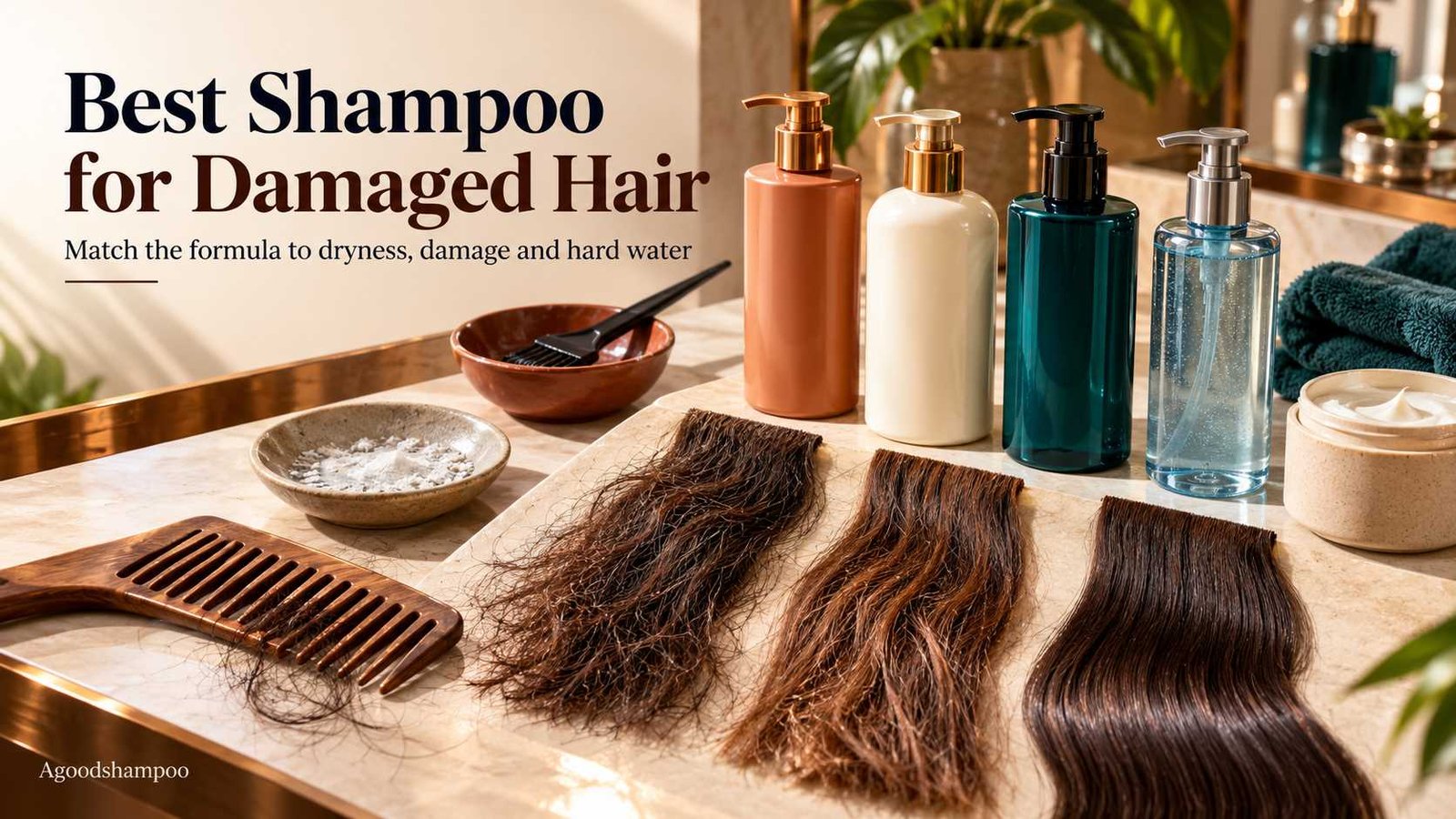
 If your hair feels dry, rough and increasingly prone to breakage, the best shampoo in India depends on what is causing the problem. Minimalist Maleic Bond Repair Complex 3.5% Shampoo is a strong option for weak, heat-styled or chemically damaged hair, while L’Oréal Professionnel Absolut Repair is better suited to dry, sensitized hair that needs both cleansing and conditioning support. Matrix InstaCure is another useful choice for brittle, damaged hair, while Matrix Mega Smooth makes more sense when dryness and frizz are the main concerns rather than severe structural damage.
There isn’t one shampoo that is best for everyone. Dry hair, damaged hair, oily roots, color-treated lengths and mineral buildup from hard water can all make hair feel rough, but they do not require exactly the same approach.
That distinction matters more than the word repair printed on a bottle.
Which Shampoo Is Good for Dry Damaged Hair in India?
For most people with genuinely dry and damaged hair, these are the strongest types of options to consider:
| Shampoo | Best suited to | Main reason to consider it |
|---|---|---|
| Minimalist Maleic Bond Repair Complex 3.5% Shampoo | Weak, brittle, heat-styled or chemically processed hair | Repair-focused formula with maleic acid, amino acids and conditioning ingredients |
| L’Oréal Professionnel Absolut Repair Shampoo | Dry, sensitized and damaged hair | Combines cleansing with a professional repair-focused system |
| Matrix InstaCure Damage Repair Shampoo | Brittle hair prone to knotting and breakage | Repair-focused shampoo designed for damaged hair |
| Matrix Mega Smooth Shampoo | Dry, rough and frizz-prone hair | More focused on moisture, smoothing and manageability |
| L’Oréal Professionnel Absolut Repair Molecular Shampoo | Very damaged, bleached or color-treated hair | Premium sulfate-free system for heavily compromised hair |
The important part is matching the shampoo to your type of damage, not ranking all five from best to worst.
Minimalist describes its Maleic Bond Repair Complex 3.5% Shampoo as a sulfate-free shampoo for dull, weak and damaged hair. Its formula includes maleic acid, amino acids, ceramide and vitamin B5. The company reports improved tensile strength and lower wet and dry combing force after one wash, but these numbers come from in-vitro testing on hair tresses, not an independent clinical trial in people.
L’Oréal Professionnel’s current Indian Absolut Repair Shampoo is designed for damaged and dry hair. The company positions it as a gentle cleansing and resurfacing formula and recommends pairing it with the matching mask and oil. Its numerical repair and shine claims come from instrumental testing of the shampoo as part of a system, so they should not be interpreted as independent proof that the shampoo alone permanently restores damaged hair.
Matrix InstaCure takes a more damage-focused approach. Matrix describes it as a shampoo for damaged and brittle hair that helps with knotting, breakage and heat-related damage. The company’s first-use repair claims apply when the shampoo is used as part of the InstaCure system with conditioner and porosity spray.
Matrix Mega Smooth is different. Its main job is not intensive bond repair. It targets dry, frizzy and unmanageable hair with amino acids and shea butter and is therefore more logical when the biggest problem is roughness, humidity-related frizz and lack of smoothness.
That distinction is useful because hair that looks damaged is not always damaged in the same way.
Dry Hair and Damaged Hair Need Similar Care, but They Are Not the Same
Dry hair lacks enough lubrication and conditioning to feel soft and flexible. It may feel rough, frizzy or tangled without necessarily having severe structural damage.
Damaged hair has experienced physical or chemical stress that has weakened the hair fiber. Common causes include repeated bleaching, coloring, chemical straightening, aggressive brushing and frequent high-temperature styling.
Hair can be both dry and damaged, but one condition does not automatically prove the other.
A person with naturally coarse or curly hair may experience considerable dryness while having relatively little chemical damage. Someone who frequently bleaches or straightens fine hair may have significant structural damage even if the hair does not feel extremely dry immediately after conditioning.
Damaged hair also tends to become more fragile. The American Academy of Dermatology notes that damaged hair is more likely to break and advises reducing practices that continue to stress the fiber. Dermatologists specifically recommend applying shampoo mainly to the scalp instead of repeatedly rubbing it through the lengths, using conditioner after shampooing, avoiding unnecessary pulling and reducing excessive heat.
This is why choosing the best shampoo for dry damaged hair is only one part of the solution.
A shampoo can clean effectively while also depositing conditioning ingredients that improve softness, smoothness and combability. Research on modern shampoo formulations has shown that conditioning polymers can contribute to smoother hair surfaces and easier combing. That is a cosmetic hair-fiber effect, not the same thing as biologically healing the strand.
Match the Shampoo to What Actually Damaged Your Hair
If Heat, Coloring or Chemical Treatment Caused the Damage
If your hair has become brittle after bleaching, coloring, straightening, frequent blow-drying or flat ironing, a repair-focused shampoo makes more sense than choosing one purely because it says moisturizing.
Minimalist Maleic Bond Repair Complex 3.5% Shampoo is one of the more relevant India-market options in this situation. Minimalist says the formula is intended for damage associated with heat styling, coloring and straightening and combines its maleic acid complex with amino acids, ceramide, vitamin B5 and other conditioning ingredients.
It may suit someone who wants a sulfate-free repair-oriented shampoo without immediately moving into salon-priced hair care.
Matrix InstaCure Damage Repair Shampoo is another reasonable choice for brittle hair. Matrix specifically positions the range around dry, damaged hair, knotting and breakage. The strongest performance claims apply to use of the complete system, so shampoo alone should not be expected to duplicate those results.
For more severely processed hair, L’Oréal Professionnel Absolut Repair Molecular Shampoo is the premium choice in this group. The current Indian product is sulfate-free and marketed for damaged, color-treated, lightened and natural hair. L’Oréal says the shampoo contains a peptide bonder and five amino acids. Its headline repair claims are based on instrumental testing of the wider Absolut Repair Molecular routine, not the shampoo in isolation.
That qualification matters. A good damaged-hair routine should be judged as a system rather than expecting all repair to come from the cleansing step.
If Your Hair Is Mainly Dry, Rough and Frizzy
If your hair has not been heavily bleached, chemically straightened or heat damaged, but it feels rough and expands in humid weather, a smoothing shampoo may be more useful than an intensive bond-repair formula.
Matrix Mega Smooth Shampoo is a good example. Matrix’s current Indian formula is built around amino acids and shea butter and is specifically positioned for frizzy, dry and unmanageable hair. The brand reports four-day frizz control from instrumental testing, but the more practical reason to consider it is that the product is designed primarily around smoothing and moisture rather than severe structural repair.
L’Oréal Professionnel Absolut Repair Shampoo sits somewhere between moisture care and repair care. The current Indian product is intended for both dry and damaged hair, so it can make sense when roughness and sensitization exist together.
If your hair is dry but otherwise healthy, however, don’t assume you need the strongest repair technology available. A well-formulated moisturizing shampoo followed by an effective conditioner may be enough.
You can also read AGoodShampoo’s broader guide to choosing shampoo for dry damaged hair for more explanation of how repair and hydration needs overlap.
If Your Scalp Is Oily but the Lengths Are Dry
This combination is common enough to deserve different advice.
An oily scalp does not mean your dry ends need stronger cleansing. Shampoo and conditioner simply need to do different jobs.
Apply shampoo primarily to the scalp, where oil, sweat and product residue accumulate. Let the lather and rinse water pass through the lengths instead of aggressively rubbing shampoo into them. The American Academy of Dermatology specifically recommends scalp-focused shampooing to reduce unnecessary drying of the hair length.
Then apply conditioner where the dryness exists, usually through the mid-lengths and ends.
A very rich shampoo used directly over the whole head may leave oily roots feeling heavy. At the opposite extreme, repeatedly using a strong clarifying cleanser may make damaged lengths feel worse.
For this hair pattern, AGoodShampoo’s guide to oily scalp with dry hair is the more useful next step because the scalp and lengths need to be treated separately.
Does Herbal Shampoo Work Better for Dry Hair in India?
Not necessarily.
A shampoo containing amla, bhringraj, shikakai, aloe vera or other botanical ingredients can be perfectly suitable for dry hair, but the word herbal does not tell you how gentle or moisturizing the finished formula will be.
What matters more is the complete formula.
Shampoo performance depends heavily on its surfactant system, conditioning agents, polymers, silicones or other smoothing ingredients, oils, humectants and the balance between cleansing and deposition.
A plant extract appearing on an ingredient list does not prove that the finished shampoo will repair damaged hair.
The same rule applies to labels such as sulfate-free, silicone-free, natural and clean. These descriptions can tell you something about the formulation, but none automatically means better for dry or damaged hair.
A sulfate-free shampoo can still be a poor match for your hair. A shampoo containing sulfates can also be formulated with conditioning ingredients that make the overall product tolerable for many users.
So if you are specifically searching for which herbal shampoo is good for dry hair in India, compare the actual cleansing and conditioning system rather than choosing only by botanical claims on the front label.
Hard Water Changes What Your Hair May Need
Hard water deserves separate attention because dryness caused partly by mineral deposition is not exactly the same as dryness caused by bleaching or heat styling.
Hard water contains higher levels of dissolved minerals, particularly calcium and magnesium.
A controlled study using hair samples from 20 healthy volunteers found significantly greater magnesium deposition on hair exposed to hard water compared with soft water. Importantly, the same study did not find a statistically significant difference in visible surface damage under scanning electron microscopy.
Another laboratory study involving hair samples from 70 participants reported reduced tensile strength after exposure to hard water compared with its comparison groups. These experiments examined treated hair fibers, not people washing their hair normally at home, so they should not be interpreted as proof that hard water is the reason for every case of dry or breaking hair.
Still, mineral buildup can be a reasonable possibility if your hair:
• feels coated soon after washing
• becomes unusually rough despite conditioning
• loses shine
• tangles more easily
• lives in an area with known hard water
• responds temporarily after clarifying
In that situation, simply changing to a richer moisturizing shampoo may not solve the underlying buildup.
A chelating shampoo is formulated to help remove mineral deposits more effectively than an ordinary moisturizing shampoo. That does not mean you need to use one at every wash. Chelating and clarifying products can be more cleansing than everyday shampoos, so the frequency should depend on your hair, water and product instructions.
AGoodShampoo’s chelating shampoo guide for mineral buildup explains this distinction in more detail.
If your hair is already bleached or severely damaged, follow chelating washes with appropriate conditioning rather than repeatedly stripping the lengths.
Shampoo Alone Is Usually Not Enough for Dry, Damaged Hair
The biggest mistake in dry damaged hair care is expecting shampoo to perform the whole repair routine.
Shampoo’s primary job is cleansing. Modern shampoos can also contain conditioning ingredients that reduce friction, improve smoothness and help with combing, but a rinse-off cleanser has limited contact time with the hair.
Conditioner, masks and leave-in products can do more of the work of improving the feel and manageability of dry lengths.
The American Academy of Dermatology recommends conditioner after shampooing because it moisturizes, detangles and improves manageability. For dry or curly hair, conditioner can generally be applied through the full length rather than only the ends.
A practical dry damaged hair routine looks like this:
- Clean the scalp rather than scrubbing the lengths.
Massage shampoo gently into the scalp. Allow the rinse water and foam to cleanse the lengths without aggressively rubbing them. - Use conditioner every time you shampoo.
Concentrate it where the hair is dry, tangled or chemically treated. - Use a mask or treatment according to the type of damage.
Highly processed hair may benefit from a more intensive conditioning or repair routine. The matching conditioner or mask can matter as much as the shampoo. - Detangle with less force.
Wet, damaged hair is vulnerable to mechanical stress. A wide-tooth comb and a conditioner with enough slip can reduce unnecessary pulling. - Reduce repeated high heat.
Frequent blow-drying, straightening and curling can continue the cycle of damage even if you buy a more expensive shampoo. The AAD advises limiting heat and using lower or medium settings where possible. - Treat hard-water buildup separately when necessary.
Don’t use an increasingly rich moisturizing routine to solve a problem that may partly be mineral accumulation.
For chemically treated or very dry hair, a leave-in conditioner can also be useful. Dermatologists cited by the AAD note that leave-in products can help dry, brittle, tangled or chemically treated lengths, but they should generally be applied to the hair rather than the scalp to reduce buildup.
Which Dry Damaged Hair Products Matter Most?
If your budget is limited, don’t spend all of it on shampoo.
For dry and damaged hair, a sensible product order is usually:
• a shampoo appropriate for your scalp and level of damage
• a good rinse-out conditioner
• a mask or intensive treatment if the hair is significantly processed
• a leave-in or detangling product if the lengths remain rough or prone to breakage
• heat protection if you regularly use hot styling tools
A premium repair shampoo paired with no conditioner may give poorer practical results than a moderately priced shampoo used with a good conditioner and gentler styling habits.
That is especially important for long hair because older lengths have been exposed to more washing, weather, brushing and styling than newly grown hair near the scalp.
If hair is breaking repeatedly despite good conditioning and gentler handling, or if what appears to be breakage is actually unusual shedding from the scalp, the problem may not be something a cosmetic shampoo can solve.
Persistent hair loss, scalp inflammation, sores, significant itching or unexplained thinning deserves professional assessment rather than repeated shampoo changes. The AAD similarly recommends dermatologic evaluation when hair problems persist or when thinning or hair loss is a concern.
Choose According to Your Damage, Not the Biggest Repair Claim
For someone asking which shampoo is good for dry damaged hair in India, the most useful answer is to match the formula to the reason the hair is struggling.
Choose Minimalist Maleic Bond Repair Complex 3.5% Shampoo if your main concern is weakened, breakage-prone hair after heat or chemical processing and you want a more affordable repair-focused option.
Choose L’Oréal Professionnel Absolut Repair Shampoo if your hair is both dry and sensitized and you want a professional system that combines cleansing with intensive conditioning support.
Choose Matrix InstaCure Damage Repair Shampoo when brittle texture, knotting and visible damage are the main concerns.
Choose Matrix Mega Smooth Shampoo if your hair is mainly dry, rough and frizzy rather than severely chemically damaged.
Consider L’Oréal Professionnel Absolut Repair Molecular Shampoo when the hair is very compromised by bleaching, coloring or repeated heat and you are comfortable investing in the wider treatment system rather than expecting the shampoo alone to do everything.
For an oily scalp with dry ends, prioritize scalp cleansing and condition the lengths. For suspected hard-water buildup, consider occasional chelating care rather than simply switching to an even richer moisturizing shampoo.
The strongest dry damaged hair routine is rarely the shampoo with the boldest repair wording. It is the routine that cleans the scalp adequately, conditions the vulnerable lengths, limits continued damage and targets the actual reason your hair feels rough or breaks easily.

Carolina Herrera: Cosmetics specialist & Hair Analyst. Specializing in hair treatments, Carolina provides thorough reviews and advice on choosing the best products for damaged or treated hair.