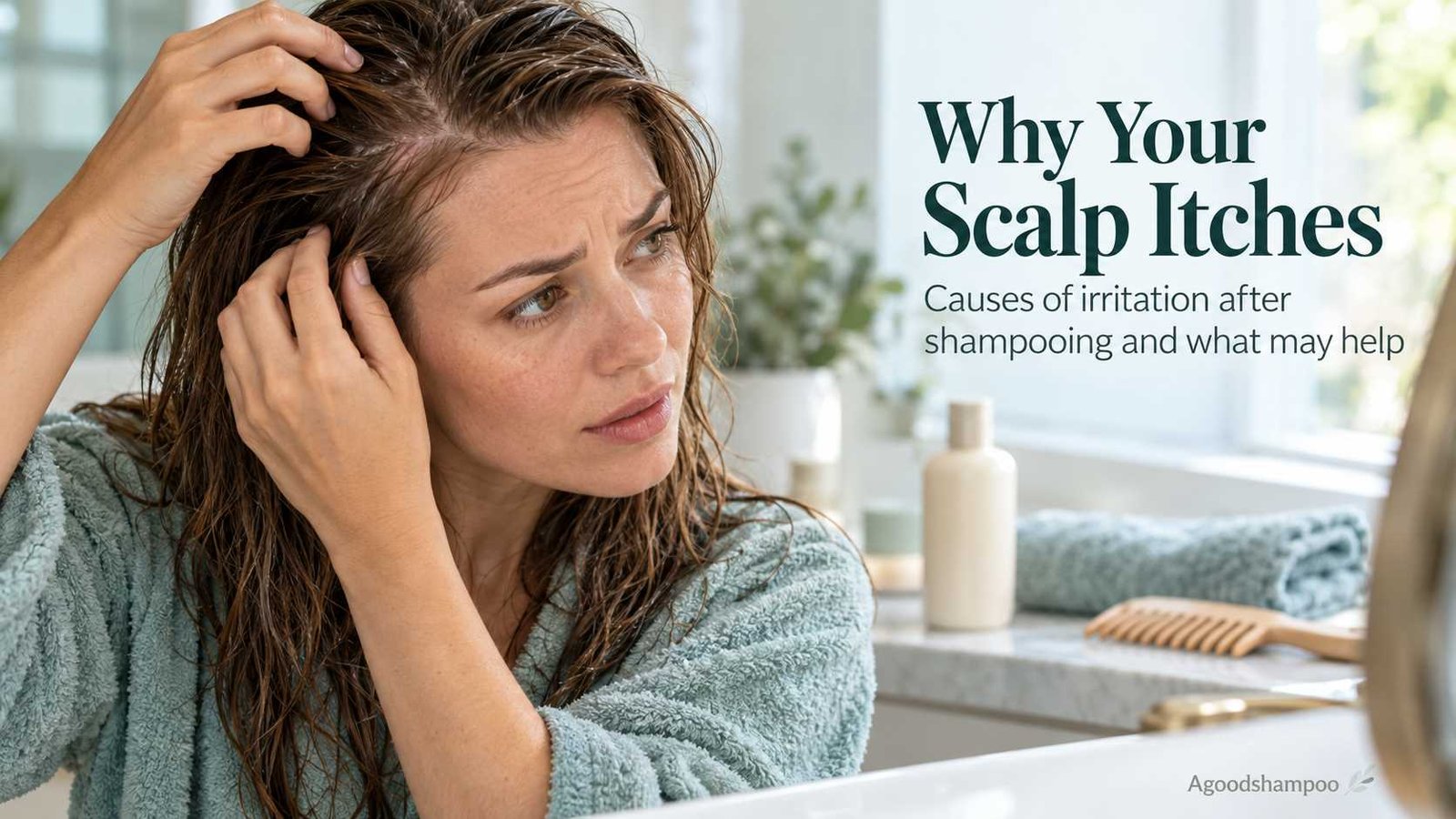
 An itchy scalp immediately after shampooing doesn’t necessarily mean you’re allergic to your shampoo. The American Academy of Dermatology identifies several possible explanations, including shampoo left behind after rinsing, a reaction to hair-care products, dandruff, and inflammatory scalp conditions. The important question is whether washing is irritating otherwise comfortable skin or making an existing scalp problem more noticeable.
Sometimes the discomfort is a mild, temporary tightness or itch after a hot shower. Other times, it comes with burning, redness, visible flakes, or a rash that continues long after the hair has dried. These differences matter because a gentler routine might help ordinary irritation, while an allergy or scalp disorder may need a different approach.
Why Your Scalp May Itch Immediately After Shampooing
Cleansing irritation can leave the scalp feeling dry or tight
Shampoo contains surfactants, ingredients that help water remove oils, dirt, and other material from the scalp. They’re essential to effective cleansing, but a formula may not suit every person’s skin.
Some people notice itching or tightness after using a shampoo that cleanses more aggressively than their scalp tolerates. Frequent washing, hot water, or scrubbing can add to the discomfort.
DermNet advises using warm or cool water, massaging shampoo gently, and rinsing thoroughly. It also notes that hot water can contribute to dryness.
A stronger cleanser isn’t automatically a bad product. Someone with an oily scalp and substantial styling-product buildup may need different cleansing characteristics from someone with an easily irritated scalp.
The presence of sodium lauryl sulfate or another sulfate doesn’t, by itself, prove a shampoo is irritating. Neither does a sulfate-free label guarantee gentleness. The finished formulation, how it’s used, and individual sensitivity all matter.
If itching follows a particularly hot shower or vigorous massage, consider adjusting those habits before assuming an ingredient allergy.
Shampoo residue and incomplete rinsing may be responsible
The cause might be simpler than expected: some shampoo may still be on your scalp.
The American Academy of Dermatology specifically warns that leaving shampoo on the scalp can produce irritation and itching.
Thick hair, dense curls, and areas near the crown or nape can make thorough rinsing more difficult. Using a large amount of shampoo may also increase the amount that needs to be washed away.
Try concentrating on the scalp when cleansing, then use your fingertips to separate sections as water runs through the roots. Continue rinsing until the shampoo has been removed.
Don’t confuse a persistent slippery feeling with proof that harmful chemicals are accumulating. Conditioning ingredients can change how hair feels, and sensation alone cannot identify a particular residue.
Fragrance, preservatives, and other ingredients may trigger reactions
Shampoo ingredients can cause two different forms of contact dermatitis.
Irritant contact dermatitis develops when something directly irritates the skin. Allergic contact dermatitis involves an immune response to an allergen.
The American Academy of Dermatology explains that allergic contact dermatitis can take hours or days to develop. Therefore, itching that starts within minutes of washing doesn’t prove an allergy, although a previously sensitized person can experience symptoms during or after product exposure.
Fragrance compounds and certain preservatives are recognized causes of contact allergy. One shampoo surfactant, cocamidopropyl betaine, is also associated with documented allergic contact dermatitis in susceptible people. DermNet notes that related manufacturing impurities can be relevant when investigating these reactions.
This doesn’t mean everyone should avoid cocamidopropyl betaine, preservatives, or scented shampoo. Most ingredient decisions should be based on a person’s actual history and, where necessary, professional allergy assessment.
A shampoo described as natural can still contain fragrance allergens or other sensitizing substances. Botanical ingredients aren’t automatically less irritating than synthetic ones.
Is It Shampoo Irritation, an Allergy, or Dandruff?
The pattern of symptoms can provide useful clues, but several conditions overlap.
| What you notice | Possible explanation | Useful next step |
|---|---|---|
| Mild tightness or itching immediately after a hot shower | Cleansing-related dryness or irritation | Try cooler water and gentler handling |
| Itching after washing, especially where shampoo is difficult to rinse | Remaining cleanser | Improve rinsing |
| Itchy rash affecting the scalp, ears, neck, or eyelids | Possible contact dermatitis | Stop the suspected product and seek assessment if persistent |
| Repeated itching with visible flakes | Dandruff or another scalp condition | Evaluate whether targeted treatment is needed |
| Thick scales, painful patches, sores, or hair loss | A condition requiring professional evaluation | Arrange dermatology assessment |
These observations are not diagnostic. For example, dandruff and dry scalp can both cause itching and flaking, making the difference difficult to establish without examining the skin.
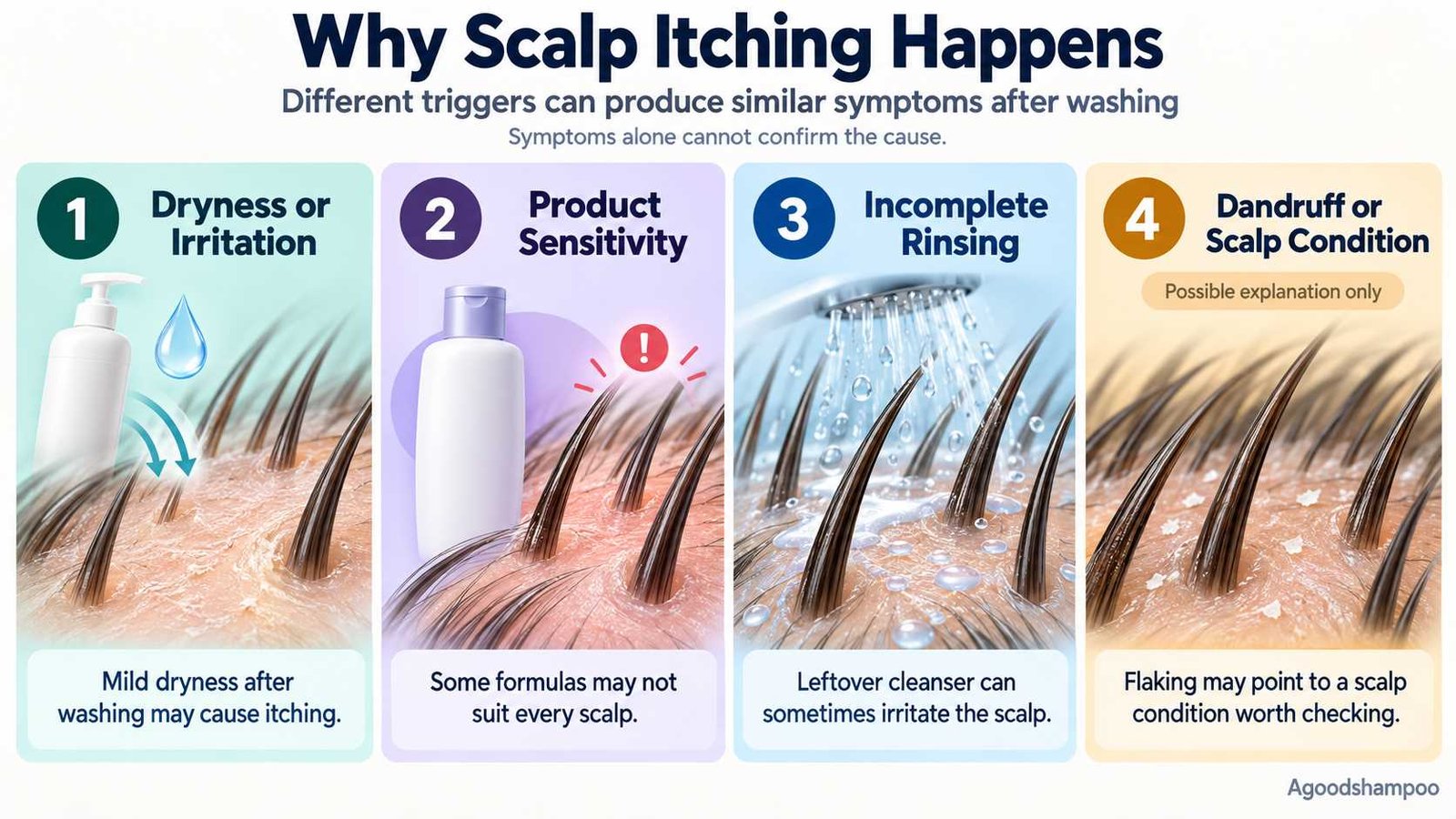
Dandruff is often associated with scalp oiliness and seborrheic dermatitis. It isn’t simply evidence that someone hasn’t washed their hair properly.
If you consistently see flakes, a dedicated dandruff treatment may be more appropriate than repeatedly switching between ordinary moisturizing shampoos.
The AAD identifies ingredients such as ketoconazole, selenium sulfide, salicylic acid, sulfur, and zinc pyrithione among options used in dandruff shampoos, although product availability and regulatory status vary by region.
For readers comparing options, AGoodShampoo’s guide to choosing shampoo for an itchy scalp provides broader product-selection context. Keep in mind that no single shampoo is right for every cause of itching.
What to Do When Your Scalp Itches After Washing
Change your washing technique before adding more products
If symptoms are mild and there’s no concerning rash, a few adjustments may help you identify whether washing habits are contributing.
Lower the water temperature. Choose comfortably warm or lukewarm water instead of a very hot shower.
Use shampoo primarily on the scalp. Spread it gently through the roots rather than aggressively scrubbing the full hair length.
Massage with your fingertips. Avoid scratching with nails or using a stiff scalp brush on irritated skin.
Rinse carefully. Pay attention to the crown, behind the ears, and nape, where shampoo may remain.
Review other products. Conditioner, dry shampoo, fragrance sprays, styling gels, and hair dye can also contact the scalp.
If you regularly use dry shampoo, remember that it doesn’t replace washing with shampoo and water. The AAD notes that accumulated dry shampoo can contribute to scalp problems, including itching and irritation.
Avoid adding several scalp treatments at once. Changing multiple products makes it harder to identify what’s helping or causing discomfort.
Stop using a shampoo that appears to cause a reaction
A new rash, burning sensation, or recurring itch after introducing a product is a reason to stop using it rather than repeatedly exposing your scalp to see what happens.
Keep the ingredient label or a photograph of it. The information may be useful if a dermatologist needs to investigate a reaction.
If itching improves after avoiding the product, that is a meaningful clue, but it doesn’t identify the offending ingredient or prove an allergy.
Dermatologists can perform patch testing when allergic contact dermatitis is suspected. In this procedure, specific substances are applied under controlled conditions and checked for delayed skin reactions.
Don’t perform a homemade allergy test by applying concentrated shampoo to irritated or broken skin.
Choose the next shampoo for your actual scalp needs
If ordinary irritation seems likely, consider a simpler, appropriately cleansing formula without unnecessary fragrance. A fragrance-free option can be especially useful when fragrance sensitivity is suspected.
Be careful with labeling. Unscented products can sometimes contain fragrance ingredients intended to mask other odors, while hypoallergenic is not a promise that no reaction can occur.
Also consider whether your shampoo matches the problem. A clarifying shampoo designed to remove substantial buildup may not be the best first response to a dry, inflamed scalp.
Likewise, tea tree oil, peppermint oil, and strongly fragranced botanical products aren’t universal soothing treatments. Natural extracts can also provoke irritation or allergy in susceptible users.
If dandruff or seborrheic dermatitis is the underlying issue, appropriate medicated shampoo may help, but the active ingredient, contact time, and frequency should follow the specific product directions or medical advice.
When Post-Shampoo Itching Needs Medical Attention
Mild itching that settles after changing an irritating routine may not require extensive treatment. Persistent or worsening symptoms deserve more attention.
Arrange a medical evaluation if you develop a spreading rash, significant redness, painful inflammation, sores, oozing, thick scales, or unusual hair shedding. Itching that repeatedly interrupts sleep or continues despite reasonable changes also deserves assessment.
Some scalp infections and inflammatory disorders cannot be managed with ordinary cosmetic shampoos. The AAD notes that scalp ringworm, for example, requires prescription treatment.
Seek emergency medical care if a reaction involves difficulty breathing, throat or tongue swelling, faintness, or other signs of a severe allergic reaction.
For recurring suspected contact allergy, a dermatologist can help distinguish irritation from allergy and determine whether patch testing is appropriate.
Should You Change Your Shampoo or Investigate Your Scalp?
If itching begins immediately after washing and you otherwise have a comfortable, clear scalp, start by examining water temperature, how thoroughly you rinse, and whether you’ve introduced a new product.
If the problem began with a specific shampoo, discontinue that product and consider an appropriately gentle alternative. If itching comes with recurring flakes, a targeted dandruff approach may be worth discussing. A persistent rash or significant discomfort calls for professional assessment rather than endless shampoo changes.
The right solution depends on the cause. A more expensive, more natural, or more aggressively cleansing shampoo isn’t necessarily a better shampoo for an itchy scalp.

Carolina Herrera writes about color-treated, damaged, and chemically processed hair. She focuses on understanding breakage, choosing suitable shampoos, and making sense of repair claims. Her goal is to help readers care for their hair with realistic expectations and informed product choices.