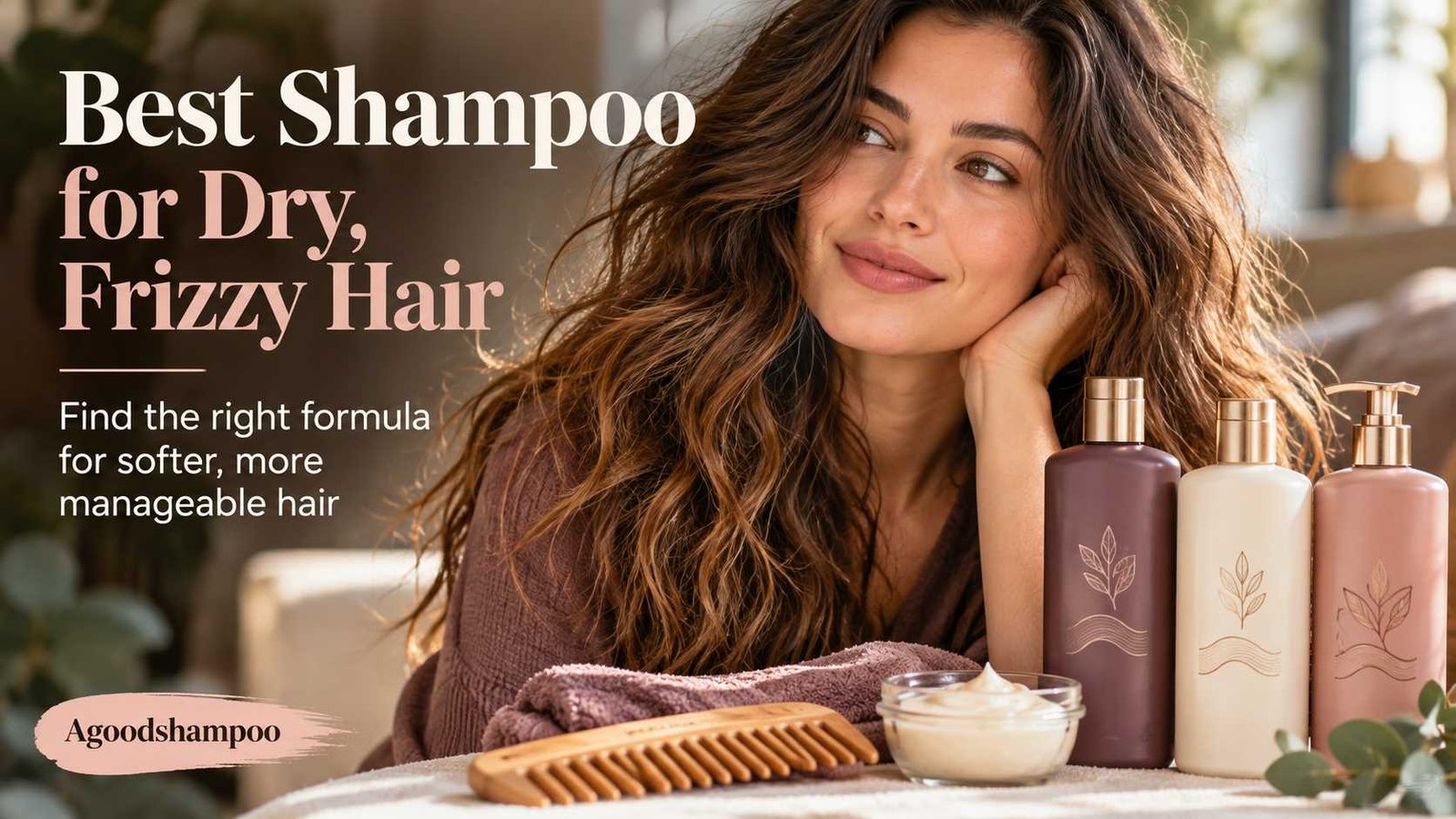
 Dry, frizzy hair doesn’t always need a stronger repair shampoo. Often, it needs a cleanser that removes scalp oil without leaving the lengths rough, followed by enough conditioning to reduce tangles and flyaways. L’Oréal Paris Hyaluron Moisture, Dove Dryness Care, and Biotique Soya Protein Intense Repair are three options worth considering, but they suit somewhat different needs.
L’Oréal Paris, for example, advertises up to 72 hours of hydration for its Hyaluron Moisture range. That figure comes from manufacturer instrumental testing after using shampoo and conditioner together, not independent evidence that shampoo alone eliminates dryness for three days.
The better question isn’t simply which shampoo is good for dry and frizzy hair. It’s whether your hair needs lightweight hydration, more smoothing and conditioning, or special care because of chemical damage.
Which Shampoo Is Good for Dry and Frizzy Hair?
For everyday dry hair, a moisturizing shampoo containing a well-balanced cleansing system and conditioning ingredients is a sensible choice. If frizz is your main concern, look for a formula that helps the hair feel smoother and easier to comb rather than one that promises dramatic permanent repair.
These three shampoos offer different starting points.
| Shampoo | Most suitable for | Main consideration |
|---|---|---|
| L’Oréal Paris Hyaluron Moisture | Dry, dehydrated hair needing lightweight conditioning | Contains sodium hyaluronate and silicones |
| Dove Dryness Care | Everyday roughness and difficult-to-manage hair | Uses conditioning agents alongside sulfate-based cleansing |
| Biotique Soya Protein Intense Repair | Dry hair and shoppers interested in a botanical-positioned formula | Botanical and protein claims do not establish superior repair |
These are product-selection judgments based on current manufacturer information, not the results of a comparative clinical trial.
Dryness and frizz also aren’t identical. Hair may feel dry because it lacks sufficient surface lubrication and conditioning. Frizz can become more noticeable with humidity, friction, natural texture, chemical damage, or rough handling. Moisture-focused shampoo may improve the hair’s feel, but it won’t permanently change its natural structure.
L’Oréal, Dove, and Biotique: Which One Should You Choose?
L’Oréal Paris Hyaluron Moisture for Dehydrated Hair
L’Oréal Paris Hyaluron Moisture Shampoo is a logical option for hair that feels dull, dry, and difficult to manage but doesn’t necessarily need an intensive damage-repair treatment.
The current Indian ingredient list includes sodium hyaluronate, the salt form of hyaluronic acid, along with sodium laureth sulfate, cocamidopropyl betaine, dimethicone, and amodimethicone. The cleansing ingredients remove oil and residue, while the silicones can help provide smoothing and easier combing.
The presence of hyaluronic acid doesn’t mean this shampoo works like a leave-on facial serum. A rinse-off shampoo has a different formulation and contact time.
The product is particularly worth considering if you prefer softer, smoother hair without choosing a deliberately heavy treatment. People with very fine hair may appreciate the intended lightweight approach, although actual results depend on how their hair responds to the whole formula.
The manufacturer recommends using its matching conditioner after shampooing. Its headline hydration claims are tied to the combined routine, so evaluating the shampoo by itself would be misleading.
Dove Dryness Care for Everyday Frizz and Roughness
Dove Dryness Care Shampoo is another practical choice, especially if your hair feels rough after washing or becomes tangled during ordinary daily grooming.
Dove’s published Pakistan-market formula contains sodium laureth sulfate, cocamidopropyl betaine, glycerin, dimethiconol, and a conditioning guar polymer. This combination provides cleansing alongside ingredients intended to improve the feel of hair fibers.
Dimethiconol is a silicone conditioning ingredient. It can improve surface smoothness and reduce friction, but that isn’t the same as permanently repairing the internal structure of damaged hair.
Dove advertises up to five times smoother hair compared with a non-conditioning shampoo when its Dryness Care shampoo and conditioner are used regularly together. That is a manufacturer comparison, not a guarantee for every hair type.
This option may be useful when you want everyday manageability and don’t particularly need a specialized treatment shampoo. Keep in mind that Dove sells different formulations and product names across countries, so the ingredient list on an Indian bottle may not match the Pakistan-market version discussed here.
For additional context, AGoodShampoo’s guide to choosing the right Dove shampoo explains how the brand’s ranges differ.
Biotique Soya Protein Intense Repair for Dry Hair
Biotique Soya Protein Intense Repair Shampoo & Conditioner is marketed in India for dry and damaged hair. Its official product description highlights soya protein, almond oil, amla oil, and wild turmeric.
The formula may appeal to someone specifically interested in botanical-positioned hair care, but the presence of plant extracts or protein doesn’t prove that a shampoo repairs every type of damage.
Proteins can be included in cosmetic products for hair-conditioning purposes. Their actual effect depends on their form, concentration, interaction with the other ingredients, and whether useful amounts remain on the hair after rinsing.
Biotique’s published product information does not provide enough independently verified finished-formula evidence to conclude that this shampoo outperforms L’Oréal or Dove in frizz reduction.
For someone deciding between these three products, Biotique is a reasonable option to consider for its stated dry-hair purpose, but not a proven superior repair treatment.
What Makes a Shampoo Suitable for Dry, Frizzy Hair?
A shampoo’s performance depends on the complete formulation, not one fashionable ingredient on the front of the bottle.
Cleansing agents, also called surfactants, remove excess sebum, dirt, and product residue. Some formulas cleanse more strongly than others, but the presence of a sulfate doesn’t automatically make a shampoo unsuitable for dry hair.
Conditioning ingredients can be especially important for reducing roughness and friction. Silicones such as dimethicone and amodimethicone are used to help hair feel smoother. Conditioning polymers can improve manageability, while ingredients such as glycerin and sodium hyaluronate are used for moisture-related functions.
There is a difference between temporarily improving a strand’s surface and reversing structural damage. A shampoo can make hair easier to detangle without restoring a permanently split end.
For frizzy hair, pay attention to how a product behaves after several washes. Does your scalp feel clean without irritation? Are the lengths manageable after conditioning? Does the hair feel weighed down or coated?
These practical observations tell you more about suitability than a sulfate-free or natural label alone.
If dryness follows bleaching, coloring, or repeated heat styling, you may need a more damage-focused routine. AGoodShampoo’s guide to shampoo for dry and damaged hair in India explains how that situation differs from ordinary frizz.
The Best Shampoo Choice Depends on Your Hair Type
Fine hair with dry ends can become flat when heavily conditioned. A lighter moisturizing shampoo, followed by conditioner concentrated on the ends, may provide a better balance than a rich formula applied from roots to tips.
Thick, coarse, curly, or tightly coiled hair often needs more conditioning through the lengths. A creamy conditioner and appropriate leave-in product may make a bigger visible difference than switching between several moisturizing shampoos.
If you have oily roots and dry ends, don’t choose a strong cleanser for the entire hair length simply because your scalp becomes greasy. Cleanse the roots effectively and condition the dry portions separately.
For curly hair, a smoothing shampoo may reduce friction and tangling, but curl definition also depends on conditioning and styling. The site’s discussion of Dove anti-frizz shampoo for curly hair explores this particular concern.
Hair that’s severely rough, brittle, or breaking after coloring and heat treatment needs more than a different cleansing product. Reducing further damage and using an appropriate conditioner or treatment are important parts of the routine.
How to Wash Dry Hair Without Making Frizz Worse
Even a suitable shampoo can leave hair difficult to manage when washing and drying are unnecessarily rough.
The American Academy of Dermatology recommends applying shampoo mainly to the scalp rather than rubbing it along the entire hair length. It also recommends conditioner after washing, gentle detangling, and reducing excessive heat exposure.
A simple routine works well as a starting point:
Wet the hair thoroughly. Apply shampoo to the scalp and massage gently with your fingertips rather than scratching with your nails.
Rinse without scrubbing the ends. Let the shampoo and water flow through the lengths.
Condition after every shampoo. Concentrate on the parts that feel dry. Curly or very dry hair may benefit from conditioning through the full length.
Detangle carefully. Use a wide-tooth comb when appropriate for your hair type, beginning at the ends and moving upward.
Dry gently. Use a soft towel or T-shirt to absorb excess water without vigorously rubbing the hair.
Limit unnecessary heat. If using a blow-dryer or straightener, choose lower temperatures and use suitable heat protection.
Wash frequency should follow your scalp’s oil production and the amount of buildup you experience. Dry hair doesn’t automatically mean you must wash only once a week, and an oily scalp doesn’t mean the lengths need repeated strong cleansing.
A leave-in conditioner may help persistent roughness and tangling between washes, particularly on longer or curly hair.
Is Dry Shampoo Good for Dry or Frizzy Hair?
Dry shampoo is useful for absorbing oil between ordinary washes, not for adding moisture to dry hair.
The American Academy of Dermatology explains that dry shampoo doesn’t replace cleansing with regular shampoo and water. Excessive use without washing can leave buildup on the scalp and hair.
If your roots become oily while your ends remain dry, occasional dry shampoo may help the roots look fresher. It should not be applied as a treatment for brittle lengths or used in place of moisturizing conditioner.
For most people whose main problem is dry, frizzy hair, the better investment is a suitable regular shampoo and conditioner rather than a dry shampoo.
Which Shampoo Should You Actually Buy for Dry and Frizzy Hair?
If your hair is mainly dehydrated and needs a moisturizing everyday formula, L’Oréal Paris Hyaluron Moisture is a sensible first option. Its current Indian formulation combines cleansing and conditioning ingredients, although its strongest advertised hydration results refer to the shampoo-and-conditioner routine.
For everyday roughness and manageability, Dove Dryness Care is worth considering, provided you check the formulation sold in your country. If you prefer a botanical-positioned product, Biotique Soya Protein Intense Repair is another option, but botanical ingredients alone aren’t evidence of stronger repair.
People with very fine hair should be cautious about formulas that leave them feeling coated, while those with coarse or curly hair may need richer conditioning beyond shampoo. Anyone experiencing persistent scalp irritation or unusual hair loss should seek professional advice rather than repeatedly changing cosmetic products.
Choose the product that cleans your scalp comfortably and leaves your hair easier to manage after conditioning. That combination is more useful than expecting any shampoo to permanently remove frizz or reverse accumulated damage.

Marlena Stell makes everyday hair care easier to understand. From choosing a shampoo to managing common hair concerns, she breaks down confusing product claims and practical routines into straightforward advice that helps readers find what works for their needs.