What Shampoos Are Good for Hair? A Simple Guide That Works
 By Michael Chen, Hair Science Researcher & Product Analyst
You walk into the shampoo aisle and suddenly every bottle seems to know exactly what is wrong with your hair.
One promises repair. Another says hydration. Then there is strengthening, detoxing, thickening, clarifying, smoothing, bonding, volumizing and something called scalp renewal.
After a while, you start wondering a much simpler thing.
What shampoos are good for hair in the first place?
Here is the answer I wish more shampoo labels would admit.
There is no single healthiest shampoo for everyone.
Your scalp makes oil differently from mine. Your hair may be straight, curly, bleached, fine, thick, oily, dry or somewhere annoyingly in the middle. One person may need strong cleansing because their scalp gets greasy by lunchtime. Another may use that same shampoo and end up with hair that feels like straw.
A good shampoo does two basic jobs well. It cleans the scalp enough, and it does that without creating more problems than it solves.
That sounds almost too simple, but the science backs it up. Dermatologists from the American Academy of Dermatology recommend putting shampoo mainly on the scalp rather than scrubbing it through the full length of the hair. This removes oil, dead skin and product buildup while reducing unnecessary drying of the lengths.
So before you spend $40 on a pretty bottle because someone on TikTok has shiny hair, figure out what your own scalp is asking for.
That changes everything.
What shampoos are good for hair really depends on your scalp
Hair itself is dead keratin fiber. Your scalp underneath it is living skin.
That difference matters.
Shampoo mainly cleans your scalp and the surface of your hair. Conditioner, masks, oils and leave-in treatments do much of the work when it comes to softness, lubrication and reducing friction between strands.
Think about shampoo like washing a good sweater. You want the dirt out. You do not want to scrub it so aggressively that the fibers become rough.
Shampoo formulas use surfactants to grab oil and dirt so water can rinse them away. Some formulas clean aggressively. Others clean gently. Neither type is automatically good or bad.
If you have a very oily scalp, stronger cleansing can feel fantastic.
If your hair is bleached, tightly curled or naturally dry, the same cleansing system may leave it rough.
That is why I get suspicious whenever someone calls one shampoo the best shampoo for every hair type. Hair simply does not work that way.
What is the healthiest shampoo for your hair?
The healthiest shampoo is usually one that matches three things.
Your scalp condition.
Your hair condition.
How often you wash.
That matters more than whether the front of the bottle says natural, clean, botanical or salon quality.
A healthy scalp with fine, oily hair may do well with a normal cleansing shampoo.
Dry or curly hair usually needs gentler cleansing and stronger conditioning afterward.
Color-treated or bleached hair often benefits from mild cleansing because chemically processed hair already has more cuticle damage.
Someone with dandruff needs something different again. A beautiful moisturizing shampoo may smell wonderful but do very little for a scalp covered in flakes.
And a person with fragrance sensitivity may need a boring fragrance-free bottle that looks like it belongs in a pharmacy.
Boring is sometimes excellent.
Good shampoos for different hair needs
Here is the easiest way I know to narrow things down.
| Your hair or scalp | Shampoo type that usually makes sense | What to look for |
|---|---|---|
| Normal hair | Balanced everyday shampoo | Moderate cleansing, easy rinse, no heavy residue |
| Oily scalp | Regular or deeper-cleansing shampoo | Effective surfactants, lightweight formula |
| Dry hair | Moisturizing shampoo | Gentler cleansing, conditioning ingredients |
| Curly or coily hair | Mild moisturizing shampoo | Gentle surfactants, less aggressive degreasing |
| Fine hair | Lightweight or volumizing shampoo | Good cleansing without heavy oils |
| Color-treated hair | Mild color-care shampoo | Sulfate-free can be useful, especially if dryness is a problem |
| Bleached or damaged hair | Gentle repair-focused shampoo | Mild cleansing followed by strong conditioning |
| Sensitive scalp | Simple fragrance-free shampoo | Fewer potential irritants |
| Dandruff | Medicated anti-dandruff shampoo | Ketoconazole, zinc pyrithione, selenium sulfide or another proven active |
| Heavy product buildup | Clarifying shampoo | Stronger cleansing used when needed rather than automatically every wash |
This is a better starting point than shopping by brand.
Because brands make both great formulas and formulas that may be totally wrong for you.
Sulfate-free does not automatically mean healthier
This one causes a lot of confusion.
Sulfates have become the villains of the shampoo world. Put sulfate-free on the label and suddenly the product sounds healthier.
The chemistry is not that simple.
Sodium lauryl sulfate and sodium laureth sulfate are surfactants. Their job is to clean.
Sodium lauryl sulfate can irritate skin under certain conditions and is commonly used in research as an irritant challenge. Research on surfactants also shows that irritation and allergic reactions are not limited to sulfates. Ingredients used in sulfate-free products, including cocamidopropyl betaine and some glucosides, can cause contact reactions in susceptible people too.
So I would never tell you that sulfate-free equals healthy and sulfate equals unhealthy.
That is marketing shorthand.
A better question is whether the shampoo cleans your scalp without persistent itching, burning, tightness or excessive dryness.
For someone with an oily scalp and lots of styling buildup, a sulfate cleanser may work beautifully.
For dry curls that already feel thirsty, a gentler sulfate-free formula may feel much better.
Your hair gets the final vote.
What research says about shampoo pH
Here is a detail most shoppers never think about.
Hair responds differently to acidic and alkaline conditions.
A review of commercial shampoos found that more alkaline formulas may increase negative electrical charge on the hair surface. That can increase friction between fibers and may contribute to frizz and cuticle damage. In the study, only 38 percent of popular-brand shampoos tested had a pH of 5 or below, compared with 75 percent of salon shampoos.
That does not mean you need to carry pH strips into Walmart.
Please don’t.
It simply means mildly acidic formulas can make sense, especially for rough, damaged or frizz-prone hair.
Unfortunately, many shampoo brands do not print the finished product pH on the bottle.
I would treat pH as one useful clue, not the only thing that matters.
My practical shampoo picks
I care more about matching the product to the problem than building some dramatic top-ten ranking.
Still, a few formulas make useful examples.
Vanicream Shampoo for sensitive scalps
If your scalp seems angry at everything, Vanicream Shampoo is one of the simpler options worth looking at.
The company describes it as a non-medicated shampoo designed for sensitive skin. The current formula is fragrance-free and excludes dyes, masking fragrance, parabens and formaldehyde releasers.
What I like here is not some miracle ingredient.
It is what the formula is trying not to do.
People with sensitive skin sometimes keep buying more complicated products when what they really need is fewer potential triggers.
Vanicream will not treat a true dandruff condition unless you choose its medicated dandruff version. But as an everyday cleanser for someone who reacts to heavily fragranced hair products, it makes sense.
L’Oréal Paris EverPure Moisture for dry, color-treated hair
Color-treated hair gives you two problems at once.
You still need to wash your scalp, but the lengths may already feel drier because of chemical processing.
L’Oréal’s current EverPure Moisture Shampoo uses a sulfate-free cleansing system and is marketed specifically toward dry and color-treated hair. The brand says the formula is designed to cleanse without stripping color.
I would choose something like this when softness and color care matter more than extremely deep cleansing.
Just remember that color preservation does not depend on shampoo alone. Water exposure itself contributes to color loss, and frequent heat styling can make damaged hair feel worse regardless of how expensive your shampoo is.
L’Oréal EverPure Bond Repair+ for heavily processed hair
Bond repair is one of those phrases that can get out of control very quickly.
A shampoo sits on your hair for a short time and gets rinsed away. I do not expect it to reverse years of bleaching in three minutes.
Still, mild cleansing makes sense when the hair is already fragile.
L’Oréal currently positions EverPure Bond Repair+ Shampoo for damaged, bleached and color-treated hair and uses a sulfate-free formula with its Bond + Amino Acid Complex.
I would view the shampoo as one piece of a damage-care routine rather than the hero.
Conditioner, reduced heat, careful detangling and fewer chemical processes often matter just as much.
Maybe more.
What shampoo is good for dandruff?
Now we move from cosmetic shampoo into treatment territory.
Dandruff is not simply dry hair.
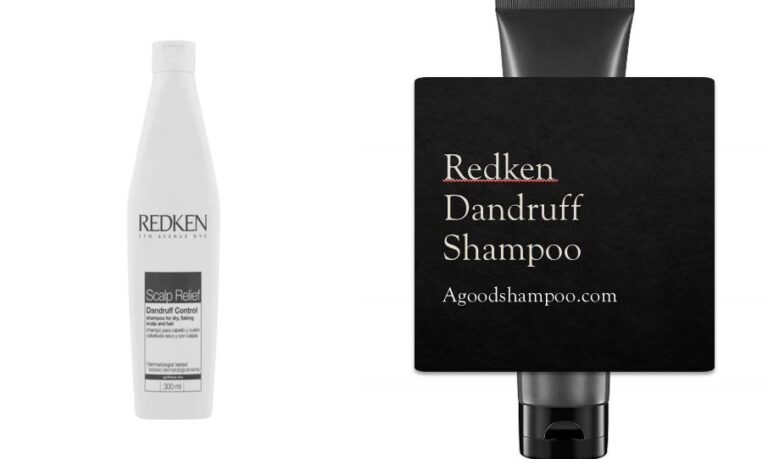
The American Academy of Dermatology recommends looking for anti-dandruff shampoos containing active ingredients such as zinc pyrithione, salicylic acid, sulfur, selenium sulfide, ketoconazole or coal tar.
That is a very different strategy from buying whichever bottle says moisture on the front.
Head & Shoulders for regular dandruff control
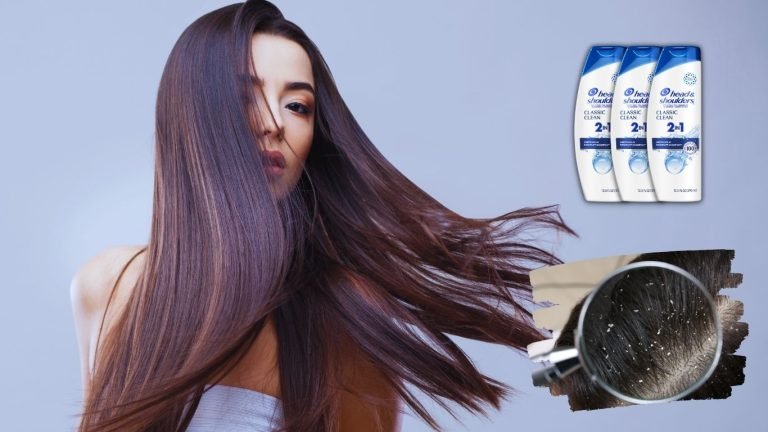
Head & Shoulders Classic Clean currently uses zinc pyrithione as its anti-dandruff active ingredient in the United States. The company markets it for regular dandruff protection and identifies Head & Shoulders as America’s number one dandruff shampoo brand based on volume sales.
That does not mean it is America’s number one shampoo overall.
Important difference.
But for ordinary dandruff, zinc pyrithione has a long history of use and is a reasonable place to start.
Nizoral A-D for stubborn dandruff
Nizoral A-D is another product I would put in a different category from normal cosmetic shampoo.
Its active ingredient is 1 percent ketoconazole in the U.S. formula. Ketoconazole is an antifungal ingredient used to control dandruff associated with Malassezia.
The manufacturer recommends following the label directions rather than using it like an ordinary daily shampoo and currently advises use every three to four days during treatment.
If your scalp remains very red, painful, crusty or intensely itchy despite appropriate dandruff shampoo, stop treating it like a shampoo-shopping problem.
See a dermatologist.
Psoriasis, eczema, allergic contact dermatitis and other scalp conditions can look surprisingly similar when you are staring at flakes in your bathroom mirror.
What about shampoos for oily hair?
People with oily scalps sometimes get scared into washing less because they hear that shampooing often makes the scalp produce more oil.
That rule is far too broad.
The American Academy of Dermatology says people with straight hair and an oily scalp may need to shampoo every day.
A 2021 study involving Asian participants also found better hair and scalp outcomes with higher washing frequency. In the observational part of the research, overall satisfaction was highest around five to six washes each week. A controlled comparison found daily cleansing better than washing once weekly across the measured scalp and hair outcomes, with no objective hair damage detected from daily washing in that study. The research was funded by Procter & Gamble, which is worth knowing when weighing the evidence.
So no, washing every day is not automatically bad.
If you have oily, straight hair and your scalp feels dirty after 24 hours, you are allowed to wash it.
The trick is choosing a shampoo that cleans well without leaving the hair rough.
Dry and curly hair plays by different rules
Now picture someone with thick curls washing every day with a strong clarifying shampoo.
Different story.
Sebum has a harder time traveling down bends and curls than it does down straight hair. Curly and coily lengths often feel dry even while the scalp is doing perfectly fine.
That person may prefer a milder cleanser and fewer wash days.
And this is where conditioner becomes essential.
The American Academy of Dermatology recommends applying conditioner through the length of dry or curly hair, while people with fine or straight hair may mainly need it on the ends.
Sometimes people keep changing shampoos trying to fix dry lengths when their real problem is that they barely condition.
Shampoo cannot do every job.
It cleans.
Let conditioner condition.
Damaged hair needs less drama
Bleach, permanent color, relaxers, repeated straightening and high heat can damage the hair cuticle.
Once the fiber becomes rough and porous, your goal is mostly damage management.
That means gentle washing, good lubrication and less mechanical abuse.
There is also interesting research around coconut oil. A classic study comparing coconut, sunflower and mineral oils found coconut oil reduced protein loss from both damaged and undamaged hair when used before or after washing. Researchers linked this to the structure of coconut oil and its ability to penetrate the hair fiber.
Notice what that study does not say.
It does not say coconut shampoo will magically repair broken hair.
Most rinse-off shampoos do not leave coconut oil on the fiber long enough to behave like a proper pre-wash oil treatment.
This is why ingredient lists need context.
Seeing one trendy ingredient near the bottom of a shampoo label tells me much less than marketing would like you to believe.
What ingredients should you actually look for?
I do not shop from a blacklist.
I shop by function.
For cleansing, you will see surfactants. Sodium laureth sulfate is common in stronger cleansing systems. Sodium cocoyl isethionate, glucosides, betaines and other surfactants often appear in gentler products, though gentler does not mean allergy-proof.
For conditioning feel, formulas may include silicones, cationic polymers and other deposition agents that help reduce roughness and improve combing.
For dandruff, I care about the drug active rather than botanical decoration.
For sensitivity, fragrance-free can be more useful than having fifteen plant extracts.
For damaged hair, I want mild cleansing followed by a good conditioner much more than I want a shampoo screaming repair in giant gold letters.
Simple, right?
Hair care becomes much easier when you stop expecting every ingredient to be either a miracle or a poison.
Which type of shampoo is best for hair?
If your hair is healthy and your scalp is normal, a normal everyday shampoo is perfectly fine.
You do not need medicated shampoo.
You do not need bond repair.
You do not need a scalp detox.
You definitely do not need a twelve-step wash routine.
Use enough cleansing to keep your scalp comfortable.
If your roots become greasy quickly, use a stronger or more frequent wash.
If your lengths become dry, move toward gentler cleansing and better conditioning.
If your scalp flakes, use an evidence-based dandruff active.
If your scalp burns or itches after shampoo, consider fragrance and other potential allergens instead of assuming your scalp needs even more cleansing.
That is basically the whole game.
Which is the No. 1 shampoo in the USA?
This question sounds easy until you try to define number one.
Number one by Amazon sales today?
Number one dandruff shampoo?
Number one shampoo brand by revenue?
Number one salon shampoo?
Number one dermatologist recommendation?
Those can all give different answers.
As of August 2026, Head & Shoulders states that it is America’s number one dandruff shampoo brand based on sales volume. That claim applies specifically to the dandruff category.
Amazon’s shampoo bestseller ranking currently shows Nizoral Anti-Dandruff Shampoo at number one, but Amazon rankings change and represent only one retailer.
Statista identifies Head & Shoulders, Pantene, Herbal Essences and Garnier among popular hair-care brands used in the United States rather than naming one permanent best shampoo for everyone.
And the market itself is huge. In the year ending October 2, 2025, roughly 651.7 million units of shampoo were sold in the United States.
Quick Fact
There is no scientifically meaningful single number-one shampoo for every American. Sales rankings tell you what people buy. They do not tell you what will work best for your scalp.
That distinction matters.
Popularity is interesting.
Compatibility is useful.
What is the best brand of shampoo for hair?
I would not give one brand the crown.
Vanicream makes sense for sensitive users.
Head & Shoulders has strong dandruff options.
Nizoral makes a useful ketoconazole treatment.
L’Oréal EverPure has practical options for color-treated and damaged hair.
Pantene, Garnier, Dove, Herbal Essences and dozens of other mainstream brands can also make perfectly usable shampoos when the formula matches your hair.
At the premium end, spending more may buy you a different fragrance, texture, conditioning system, packaging or salon experience.
It does not automatically buy healthier hair.
A $10 shampoo that leaves your scalp clean and calm is better for you than a $45 shampoo that makes you itch.
Your scalp cannot read the price tag.
A quick way to know whether your shampoo is working
Forget the marketing claims for a moment.
Pay attention to what happens after three or four weeks of normal use.
Your scalp should feel clean without staying tight, sore or itchy.
Your roots should not feel coated immediately after drying.
Your hair should not become dramatically rougher every time you wash.
Flaking should not suddenly increase.
Your scalp should not develop redness or burning.
And you should not need half a bottle of conditioner just to undo what the shampoo did.
If everything feels good, you probably do not need to change products because someone online discovered a new miracle ingredient.
I see people ruin perfectly good routines because they get bored.
Hair likes consistency more than social media does.
Do expensive shampoos make hair healthier?
Sometimes they feel better.
That is not exactly the same thing.
Premium shampoos may contain sophisticated conditioning polymers, fragrance systems, specialty surfactants or expensive cosmetic ingredients. Some are beautifully formulated.
But basic shampoo chemistry does not suddenly stop working when the bottle costs $8.
In fact, the U.S. hair-care market continues to show strong demand for value products. Circana reported double-digit growth in shampoo and conditioner combo packs in mass retail during the first quarter of 2026, suggesting plenty of consumers are choosing practical value rather than automatically moving toward luxury formulas.
Buy premium shampoo because you enjoy it or because its formula works unusually well for you.
Do not buy it because you think inexpensive shampoo is automatically unhealthy.
It isn’t.
What about natural shampoo?
Natural is one of my least favorite words on a beauty label because it tells me almost nothing about performance.
A plant ingredient can be wonderful.
It can also irritate your skin.
Synthetic ingredients can irritate your skin too.
And they can also be extremely useful.
Your scalp does not judge ingredients based on whether they grew in a field.
It reacts to chemistry.
Fragrances, essential oils and botanical extracts can be troublesome for some sensitive users. Even alternative surfactants used in sulfate-free formulas can trigger allergic contact dermatitis in susceptible people.
So if natural shampoo works for you, great.
If a conventional shampoo works better, use that.
No guilt required.
One mistake that makes almost any shampoo worse
People often pile shampoo onto the full length of their hair and aggressively rub everything together.
That is usually unnecessary.
Put shampoo where the oil and buildup actually live.
Your scalp.
Massage gently with your fingertips. Let the foam and rinse water travel down the lengths rather than scrubbing the ends like laundry.
The American Academy of Dermatology specifically recommends concentrating shampoo on the scalp to remove excess oil, dead skin and buildup while avoiding unnecessary drying of the hair.
Then condition appropriately.
That little change can make a mediocre routine feel much better.
And dry shampoo is not a replacement forever
I like dry shampoo for what it is.
A convenience product.
It absorbs oil and buys you another day.
It does not truly wash your scalp.
Dermatologists note that regular shampoo and water physically remove oil, microorganisms, dead skin cells and accumulated dry shampoo from the scalp. Excessive dry shampoo buildup can contribute to dryness and breakage.
So use dry shampoo between washes if you like it.
Just do not let it become your scalp’s permanent roommate.
So, what shampoos are good for hair?
The good ones are less exciting than the advertising makes them sound.
For most people, start with a shampoo that fits your scalp’s oil level.
Choose gentler cleansing when your hair is dry, curly, bleached or heavily processed.
Consider fragrance-free formulas when your scalp is sensitive.
Use proper medicated shampoo when you actually have dandruff.
Do not fear sulfates automatically.
Do not assume sulfate-free means gentle.
Do not expect shampoo to repair every damaged bond, stop genetic hair loss, grow new follicles, moisturize like a mask and somehow deep-clean your scalp at the same time.
That is too much to ask from something you rinse down the drain after a couple of minutes.
If I had to reduce everything to one rule, it would be this.
Choose shampoo for your scalp first, then protect your hair with the rest of your routine.
That is how I answer what shampoos are good for hair without getting trapped by hype.
Clean scalp.
Comfortable skin.
Manageable hair.
No drama.
That is a pretty good shampoo.

Carolina Herrera: Cosmetics specialist & Hair Analyst. Specializing in hair treatments, Carolina provides thorough reviews and advice on choosing the best products for damaged or treated hair.