What Is a Good Base for a Natural Shampoo That Works
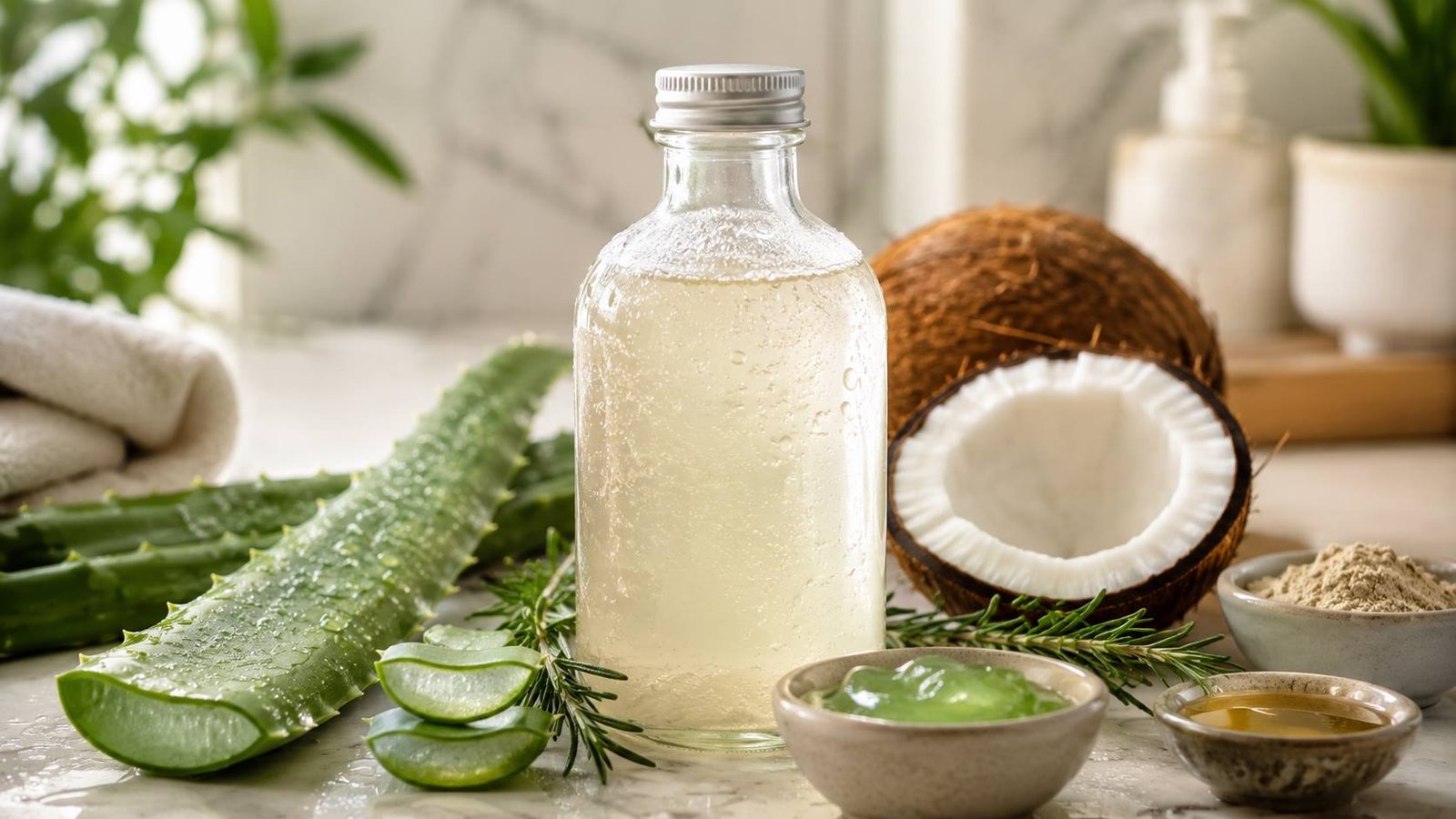 A good base for a natural shampoo is not just water mixed with herbs.
I wish it were that easy. Really. Life would be cheaper, our bathrooms would smell like a garden, and nobody would be standing over the kitchen sink wondering why their homemade shampoo feels like boiled spinach water.
But hair is picky.
Your scalp makes oil. Your hair holds dust, sweat, styling cream, sunscreen, pollution, and that mysterious greasy feeling that appears two days after wash day. A shampoo base has to remove all that without turning your hair into straw.
So here’s what matters.
A good natural shampoo base should have gentle cleansers, enough water, a scalp-friendly pH, light conditioning support, and safe preservation. That is the boring answer, yes. But it is also the answer that saves your hair from homemade shampoo disasters.
And if you came here asking, “What is a good base for a natural shampoo?” the honest answer is this:
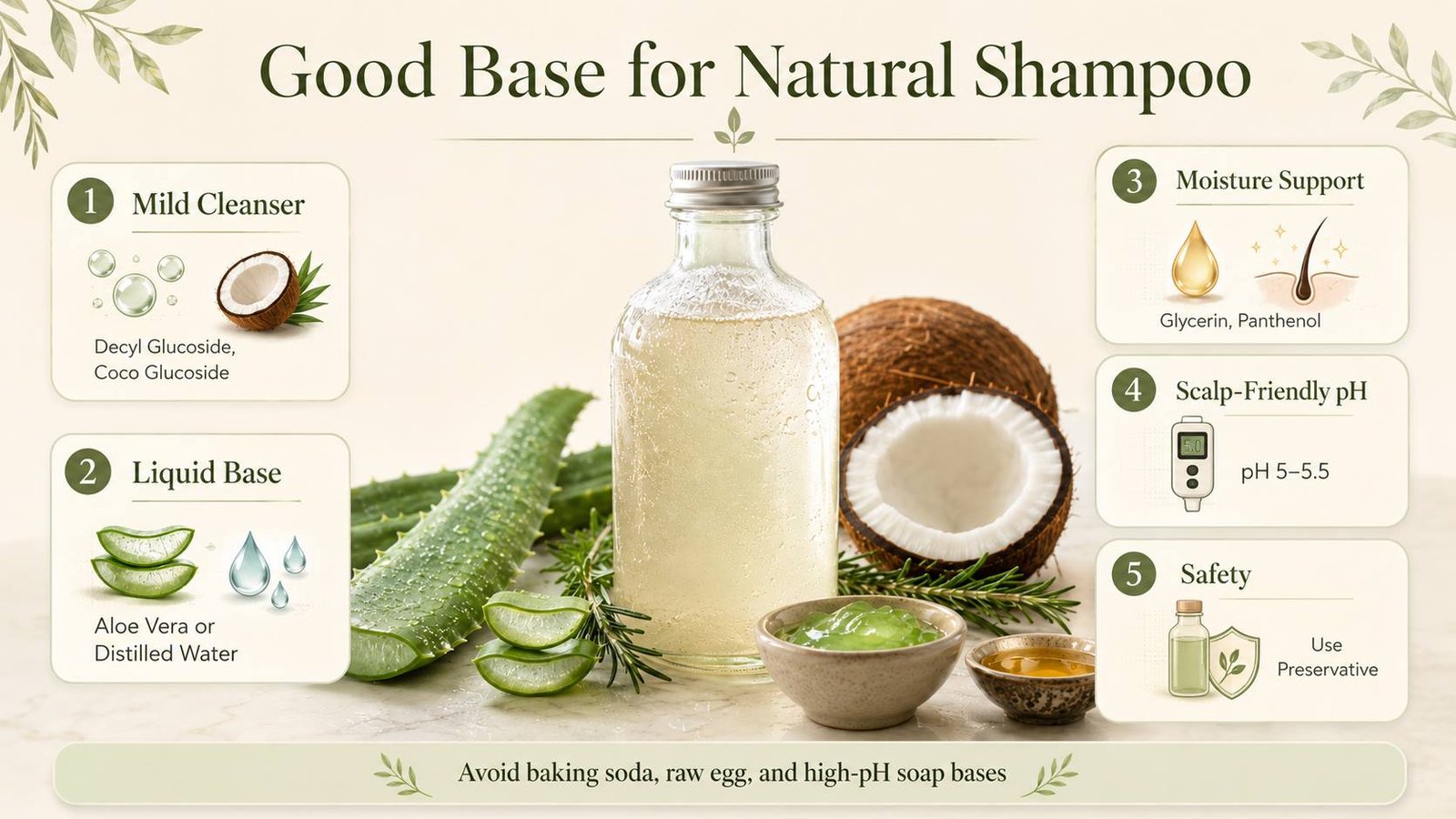
The best natural shampoo base is a mild, pH-balanced blend made with plant-derived surfactants like decyl glucoside, coco glucoside, or sodium cocoyl isethionate, plus aloe vera or hydrosol, glycerin, a natural thickener, and a proper preservative.
Not castile soap alone.
Not baking soda.
Not raw egg.
Please, not raw egg.
First, what does shampoo base even mean?
A shampoo base is the main formula that does the cleaning job.
Think of it like the dough of a pizza. You can add herbs, oils, extracts, fragrance, or fancy ingredients later, but the base decides whether the shampoo actually works.
A basic shampoo base usually has these parts.
Cleanser
Water or liquid phase
Humectant
Conditioning helper
Thickener
Preservative
pH adjuster
That sounds a bit lab-like, but stay with me. You do not need a chemistry degree. You just need to understand what each part does.
The cleanser removes oil and dirt. The water helps spread everything. The humectant adds slip and moisture. The conditioning helper keeps the hair from feeling too rough. The thickener gives that shampoo feel. The preservative stops bacteria and mold. The pH adjuster keeps the formula closer to your scalp and hair needs.
And this is where many homemade shampoo recipes go wrong.
They use nice ingredients, but they forget the base.
Aloe vera is nice. Rosemary water is nice. Coconut milk is nice. But none of those clean hair well by themselves. You still need a cleanser that can lift oil from the scalp.
The best base for natural shampoo
If I were building a natural shampoo from scratch, I would start with this kind of base.
Aloe vera juice or distilled water as the liquid
Decyl glucoside or coco glucoside as the mild cleanser
Cocamidopropyl betaine as a foam booster and mildness helper
Vegetable glycerin for softness
Xanthan gum or hydroxyethylcellulose for texture
Panthenol or hydrolyzed plant protein for hair feel
A broad-spectrum preservative
Citric acid or lactic acid to adjust pH
That is the kind of base that behaves more like a real shampoo.
Not perfect. Not magic. But real.
Studies and formulation reviews show that surfactants are the heart of shampoo performance because they handle cleansing, foam, texture, mildness, and how ingredients deposit on hair.
So when someone asks, “Which shampoo base is best for homemade shampoo?” my answer is simple.
A mild surfactant base is best.
Not a soap base.
A soap base can feel natural and old-school, but hair does not always love it. Soap usually has a high pH. Hair prefers a more acidic environment. Research on shampoo pH notes that scalp pH is around 5.5, and lower-pH shampoos may cause less frizz because they create less negative static electricity on the hair surface.
That matters.
Because frizz is not just your hair being dramatic. It often comes from raised cuticles, dryness, friction, and static. If your shampoo base is too alkaline, your hair may feel rough, dull, swollen, or tangled.
Nobody wants that after trying to be natural.
Quick Fact
Hair and scalp do not need a harsh wash to feel clean. A shampoo around pH 4.5 to 5.5 usually feels better for many people than very alkaline soap-style cleansers. Research on shampoo pH supports the idea that lower-pH shampoos can help reduce frizz and static on hair fibers.
Why castile soap is not my first choice
I know castile soap is everywhere in natural beauty recipes.
People love it because it sounds clean, simple, and honest. Olive oil soap. Coconut oil soap. Water. Done.
But hair is not your kitchen counter.
Castile soap can clean, yes. But it often leaves hair feeling waxy or squeaky. If you have hard water, it can also form residue. That residue can sit on your hair like a dull little coat and make you think your hair suddenly hates you.
It does not hate you.
It hates the wrong base.
Soap-based shampoo can work for some short hair, oily scalp, or people who rinse with acidic water after washing. But for dry, curly, color-treated, bleached, frizzy, menopausal, or high-porosity hair, soap bases can be a mess.
A better natural base uses gentle surfactants.
Surfactants are not automatically bad. That word scares people because it sounds chemical. But water is chemical too. So is honey. So is olive oil.
The real question is not, “Is this chemical?”
The real question is, “Is this ingredient gentle, useful, safe, and suitable for hair?”
The best natural shampoo base ingredients
Let’s make this less confusing.
Here are the ingredients I would look for in a good natural shampoo base.
Decyl glucoside
Decyl glucoside is a plant-derived, sugar-based cleanser. It is often made from glucose and fatty alcohols from plant oils.
It gives gentle cleansing and soft foam. It is common in natural and baby-style products because it tends to feel mild.
It can sometimes feel too cleansing if used alone at high amounts, so I like it better when blended with another surfactant.
Coco glucoside
Coco glucoside is another sugar-based cleanser. It gives a creamy feel and works well in natural shampoo bases.
It is mild, biodegradable in many formulas, and friendly for people who want a greener shampoo direction. Recent research on alkyl polyglucosides describes them as plant-origin nonionic surfactants with good skin compatibility and a useful profile for cosmetic products, including shampoos.
Cocamidopropyl betaine
This one gets misunderstood.
It is not always considered fully natural by strict natural beauty standards, but it is widely used in mild shampoo formulas because it helps reduce harshness and improve foam.
It works well with glucosides. It makes the shampoo feel less flat. It also helps the formula spread better.
Some people can react to it, especially if they have a sensitive scalp, so patch testing still matters.
Sodium cocoyl isethionate
This is often called SCI.
It gives rich, creamy foam and works beautifully in solid shampoo bars. It is usually coconut-derived, though still processed. If you want a solid natural shampoo bar that does not feel like soap, SCI is one of the better base cleansers.
This is the ingredient I would choose for many shampoo bars instead of lye-based soap.
Aloe vera juice
Aloe does not clean hair by itself. But it makes a nice liquid phase.
It gives a soft feel, helps the shampoo spread, and sounds less sad than plain water. Still, aloe-based shampoo must be preserved. Once you add water, aloe, herbs, or botanical extracts, microbes can grow.
That tiny bottle sitting in a warm bathroom? Yes, that is basically a spa for bacteria if the formula has no preservative.
Glycerin
Glycerin is a humectant. It helps pull water into the formula and gives slip.
Use it lightly. Too much glycerin can make hair sticky, especially in humid weather.
A good amount in homemade shampoo is often around 1 to 3 percent.
Panthenol
Panthenol is also called provitamin B5. It helps hair feel smoother and softer. It can improve the cosmetic feel of the formula.
I like it in natural-leaning formulas because it gives that “my hair feels better” finish without needing heavy oils.
Hydrolyzed protein
Hydrolyzed rice protein, wheat protein, quinoa protein, or silk protein can help hair feel stronger and fuller.
But do not overdo it.
Protein is like seasoning. A little can help. Too much can make hair stiff, rough, or crunchy, especially if your hair is low porosity.
Essential oils
Essential oils are not the base. They are extras.
Rosemary, lavender, peppermint, tea tree, and cedarwood get used often in natural shampoo recipes. They can smell lovely, but they can also irritate the scalp when used too strongly.
For most rinse-off hair products, keep essential oils very low. A gentle range is often around 0.2 to 1 percent total, depending on the oil and user safety.
More is not better. More is how your scalp starts yelling.
Ingredient Breakdown
A strong natural shampoo base should look something like this.
Distilled water or aloe vera juice
This makes up the biggest part of the formula.
Mild surfactants
These do the real cleaning.
Glycerin or another humectant
This helps the formula feel less drying.
A thickener
This gives the shampoo body.
Conditioning support
This helps reduce roughness after rinsing.
Preservative
This keeps the formula safer.
pH adjuster
This keeps the shampoo closer to hair and scalp comfort.
That is the base. Everything else is personality.
How to make a natural shampoo base at home
Here is a beginner-friendly liquid shampoo base idea.
This is not a “throw random kitchen things in a jar” recipe. It is closer to a real formula.
Natural shampoo base formula
Distilled water or aloe vera juice, 55 percent
Decyl glucoside, 15 percent
Coco glucoside, 10 percent
Cocamidopropyl betaine, 10 percent
Vegetable glycerin, 3 percent
Xanthan gum, 0.5 percent
Panthenol, 1 percent
Preservative, as directed by supplier
Citric acid solution, enough to adjust pH to about 5 to 5.5
Optional essential oil, 0.3 to 0.5 percent
Now, I know percentages scare people. But they are better than spoon measurements because shampoo needs balance.
If you use too much surfactant, your hair feels dry.
If you use too little, your scalp stays greasy.
If you skip preservative, the product can spoil.
If you ignore pH, your hair may feel rough.
A kitchen recipe can forgive you. A shampoo formula is less forgiving.
Simple method
Mix glycerin and xanthan gum first to make a smooth slurry.
Add distilled water or aloe slowly and stir until the gel forms.
Add your surfactants slowly. Stir gently. Do not whip like cake batter unless you want foam everywhere.
Add panthenol.
Add preservative according to the supplier’s use rate.
Check the pH.
Adjust with a diluted citric acid solution until the shampoo sits around pH 5 to 5.5.
Let it rest overnight so bubbles settle.
That is the calm version.
The messy real-life version is that it may look cloudy, too thin, too thick, or weird the first time. That is normal. Formulation has attitude.
How to make 100% natural shampoo at home
This question needs an honest answer.
A true 100% natural shampoo is hard to make if you expect it to act like a normal shampoo.
You can make herbal hair washes with natural cleansing plants. But they will not feel like store shampoo. They may not foam much. They may smell earthy. They may need fresh preparation. And they may not remove heavy oil well.
Some natural cleansing options include soapnuts, shikakai, amla, rye flour, clay, and herbal infusions.
But each has problems.
Soapnuts can sting eyes and feel drying.
Shikakai can tangle some hair.
Clay can pull too much oil and make hair rough.
Rye flour can leave bits behind if you do not strain it well.
Amla is better as a supporting herb than a full cleanser.
So yes, you can make a 100% natural shampoo-style wash. But if you want consistent cleansing, good foam, safe storage, and happy hair, a naturally derived surfactant base usually works better.
Here is a simple fresh herbal wash.
Use 1 tablespoon shikakai powder
Use 1 teaspoon amla powder
Use 1 cup warm water
Mix and steep for 20 minutes
Strain well
Apply to wet scalp
Massage gently
Rinse very well
Make it fresh. Do not store it for weeks.
That is important.
Fresh herbal washes spoil fast. If it smells strange, changes texture, grows fuzz, or looks suspicious, throw it out. Your scalp is not a science experiment.
Which shampoo base is best for homemade shampoo?
For most people, the best homemade shampoo base is a gentle surfactant base with glucosides and betaine.
Here is my simple ranking.
Best for beginners
A pre-made natural shampoo base from a trusted supplier
Best for sensitive scalps
Decyl glucoside plus coco glucoside, used gently, with fragrance kept low
Best for oily scalps
Decyl glucoside plus cocamidopropyl betaine
Best for dry hair
Coco glucoside plus betaine, with panthenol and a light conditioning ingredient
Best for solid shampoo bars
Sodium cocoyl isethionate with gentle co-surfactants and conditioning powders
Best for strict natural routines
Fresh herbal wash with shikakai and soapnut, used carefully
Best to avoid for most hair
Baking soda shampoo and high-pH soap shampoo
Baking soda has become one of those internet hair ideas that refuses to die. It can make hair feel clean at first because it is alkaline and aggressive. But over time, it can rough up the hair feel badly.
Your hair is not a greasy oven tray.
Please do not scrub it like one.
What is the best shampoo to use during menopause?
This LSI keyword may look unrelated, but it makes sense.
During menopause, many people notice hair thinning, dryness, scalp sensitivity, frizz, or texture changes. Cleveland Clinic lists hair loss or thinning among possible menopause-related symptoms, and it explains that hormone changes happen as estrogen declines during the menopause transition.
A 2023 review also discusses how menopause can affect the hair follicle life cycle through hormonal and metabolic changes.
So what shampoo base helps?
During menopause, the best shampoo is usually gentle, low-irritation, pH-balanced, and not overly stripping.
Look for:
Sulfate-free or mild surfactant base
pH around 5 to 5.5
Panthenol
Aloe vera
Niacinamide if your scalp likes it
Lightweight conditioning agents
Low fragrance
No heavy waxy buildup
Avoid:
Strong clarifying shampoos every wash
High-pH soap shampoo
Heavy oils on the scalp if you shed easily
Strong peppermint or tea tree overload
Very perfumed shampoo if your scalp feels sensitive
Menopause hair often needs kindness, not punishment.
If your scalp feels oily but your ends feel dry, wash the scalp only and let the rinse water clean the lengths. Then use conditioner from mid-length to ends.
That one tiny change helps more than people expect.
What Research Says
Lower-pH shampoos may help reduce frizz and static on the hair surface. Scalp pH sits around 5.5, and research has treated pH 5.5 or lower as low-pH in shampoo testing.
Surfactants are the core of shampoo function. They affect cleansing, foam, mildness, thickness, and how ingredients behave on hair.
Plant-origin alkyl polyglucosides, such as glucoside surfactants, have been studied as sustainable and mild cosmetic surfactants with good skin compatibility.
Menopause can bring hair thinning or hair loss for some people because hormone levels change during this life stage. Cleveland Clinic lists hair loss or thinning as a possible symptom.
What not to use as a natural shampoo base
Now for the part that may annoy half the internet.
Some popular natural shampoo bases are not great.
Baking soda
Baking soda is too alkaline for regular hair washing. It can leave hair rough, frizzy, and dry.
Maybe your cousin used it once and loved it. Fine. Once is different from every week.
Apple cider vinegar alone
Apple cider vinegar is not shampoo. It does not clean oil like a surfactant.
It can work as a rinse after some washes, but even then, dilute it well. Too much can irritate the scalp.
Coconut oil
Coconut oil is not shampoo. It is oil.
Putting coconut oil on greasy hair and calling it cleansing is like mopping a floor with butter. I know that sounds rude, but it is true.
Raw eggs
Eggs can leave smell, mess, and protein overload. Warm water can also make things weird fast.
I am begging gently. Skip it.
Clay as daily shampoo
Clay can absorb oil, but it can also make hair dry and rough if used too often.
Clay is better as an occasional scalp mask for oily roots, not as your everyday shampoo base.
Should a natural shampoo base foam?
Yes, but it does not need giant foam.
Foam does not equal cleaning power. It just makes the product feel satisfying.
Some gentle natural bases make soft foam. Some make creamy foam. Some barely foam but still clean.
But let’s be real. Most people like foam. I do too.
A blend of decyl glucoside, coco glucoside, and cocamidopropyl betaine usually gives a better foam than one mild surfactant alone.
That is why good formulators blend cleansers. One ingredient rarely does everything.
How much oil should go in a natural shampoo base?
Very little.
This surprises people.
Shampoo is a rinse-off cleanser. If you add too much oil, you can kill foam, reduce cleansing, and leave residue.
For dry hair, add conditioning ingredients instead of pouring in lots of oil.
Better options include:
Panthenol
Hydrolyzed protein
Polyquaternium-style conditioning agents, if your natural standard allows them
Small amount of argan oil or jojoba oil
Aloe vera
Glycerin, used lightly
If you insist on oil, keep it around 0.5 to 2 percent. More than that can make the shampoo feel heavy.
Hair oils are better before shampoo or after washing, not always inside the shampoo base.
Natural shampoo base for different hair types
Here is where it gets personal.
Because your “good base” depends on your hair.
For oily hair
Use a slightly stronger but still gentle base.
Decyl glucoside
Cocamidopropyl betaine
Rosemary hydrosol
Low glycerin
No heavy oils
Oily hair usually needs better cleansing, not harsher cleansing.
There is a difference.
For dry hair
Use a softer base.
Coco glucoside
Betaine
Aloe vera
Panthenol
Light protein
Very low essential oil
Dry hair needs less stripping and more slip.
For curly hair
Curly hair often hates harsh shampoo.
Use a mild, low-foam or creamy base with conditioning support.
Coco glucoside
Decyl glucoside in a lower amount
Betaine
Panthenol
Hydrolyzed protein if curls feel limp
No high-pH soap
Curly hair also gets dry because scalp oil has a harder time traveling down bends and curls.
So the base should clean the scalp without roughing up the lengths.
For fine hair
Fine hair gets weighed down easily.
Use a light base.
Decyl glucoside
Betaine
Very little oil
Low gum thickener
No heavy butters
No too much protein
Fine hair wants clean roots and body. Heavy “moisturizing” shampoo can make it look flat by lunch.
For color-treated hair
Use a low-pH, gentle base.
Avoid high-pH soap. Avoid strong clarifying formulas unless needed.
Look for mild surfactants, conditioning support, and less fragrance.
Water itself can fade color over time, but harsh shampoo makes the problem worse because it roughs up the hair feel.
For sensitive scalp
Keep it boring.
And I mean that in the best way.
No strong essential oils.
No heavy fragrance.
No harsh cleansing.
No random herbs just because TikTok said so.
Use a simple base with mild surfactants, pH control, and minimal extras.
Sensitive scalps do not want a 27-ingredient forest potion. They want peace.
Is sulfate-free always better?
Not always.
Sulfate-free does not automatically mean gentle. Some sulfate-free formulas can still feel drying.
And some sulfate shampoos can be balanced well with conditioning ingredients.
Still, for natural shampoo bases, most people prefer sulfate-free surfactants because they feel milder and fit the “natural beauty” idea better.
But do not judge shampoo only by what it does not contain.
Judge it by how it performs.
Does your scalp feel clean?
Does your hair feel rough?
Does it itch after washing?
Does your hair get oily too fast?
Does your color fade quickly?
Does your curl pattern fall flat?
Your hair gives feedback. Listen to it.
A better homemade shampoo recipe for beginners
Here is a gentler beginner recipe using a pre-made natural shampoo base.
This is safer than building everything from scratch.
Take 90 grams pre-made natural shampoo base
Add 5 grams aloe vera juice, only if the base allows dilution
Add 2 grams glycerin
Add 1 gram panthenol
Add 0.5 gram essential oil or natural fragrance
Mix slowly
Check pH if possible
Bottle it cleanly
But here is the catch.
Only customize a pre-made base if the supplier says you can. Some bases already have a preservative system designed for the original formula. Adding too much aloe, tea, hydrosol, or water can weaken preservation.
That is the part many DIY recipes never mention.
A shampoo can smell great and still be unsafe.
Do you need a preservative?
Yes, if your shampoo contains water and you plan to store it.
Water-based natural products need preservation.
Distilled water, aloe juice, herbal tea, rose water, hydrosol, coconut milk, and plant extracts all create a place where microbes can grow.
Vitamin E is not a preservative. Essential oils are not enough. Grapefruit seed extract is not a reliable full preservative for a water-based shampoo.
I know preservatives feel “less natural” to some people. But mold is also natural.
And we do not want mold shampoo.
A good preservative is not the enemy. It is the seatbelt.
What pH should a natural shampoo base have?
Aim for about pH 5 to 5.5.
That range works well for many scalps and hair types. It is close to the scalp’s natural acidic range and helps hair feel smoother.
The shampoo pH study I mentioned earlier notes scalp pH around 5.5 and links lower pH with less static and frizz on the hair fiber surface.
You can test pH with pH strips, but a pH meter gives better accuracy.
Do not guess.
Citric acid can lower pH. Sodium hydroxide or arginine solutions can raise pH, but beginners should be careful.
If that sounds too much, buy a pre-made shampoo base.
No shame in that. Smart people use shortcuts when the shortcut is safer.
Can you make shampoo without surfactants?
Yes, but it becomes more of a hair wash than a shampoo.
Herbal powders can clean lightly. Clay can absorb oil. Soapnuts can cleanse. But if you want repeatable performance, surfactants are better.
Here is my honest line:
For “natural lifestyle” people, herbal washes are fine.
For “I need my hair clean before work” people, use a mild surfactant base.
There. Saved you six months of weird hair experiments.
My favorite natural shampoo base style
For most readers, I like this style best:
Aloe vera and distilled water base
Decyl glucoside plus coco glucoside
Small amount of betaine
Glycerin under 3 percent
Panthenol
Low essential oil
Preserved properly
pH adjusted to 5 to 5.5
That is gentle, practical, and realistic.
It does not pretend that “natural” means rubbing mashed avocado into your scalp and hoping for the best.
Common mistakes people make
They add too much oil.
They skip preservative.
They use tap water.
They use baking soda.
They use castile soap and wonder why their hair feels waxy.
They add every herb they own.
They never check pH.
They copy a recipe made for someone else’s hair.
That last one is sneaky.
Your hair has its own mood. Your scalp has its own needs. A shampoo base that works for thick oily hair may destroy fine dry hair. A base that helps curls may flatten straight hair.
Good hair care is not about finding the one perfect recipe for everyone.
It is about finding the right base for your scalp, hair type, climate, and wash routine.
So, what is a good base for a natural shampoo?
A good base for a natural shampoo is mild, slightly acidic, water-based, properly preserved, and built around gentle cleansers.
The best option for most homemade shampoo is not castile soap. It is not baking soda. It is not a random herbal tea.
It is a natural-leaning surfactant base.
Use glucosides if you want a greener formula. Add betaine if you want better foam and a softer feel. Keep the pH around 5 to 5.5. Use aloe or distilled water as your liquid. Add a little glycerin or panthenol for comfort. Preserve it properly.
That gives you a shampoo that feels natural but still behaves like shampoo.
And honestly, that is the sweet spot.
Because natural hair care should not mean suffering through sticky roots, dry ends, and a bathroom full of failed jars.
It should make your hair feel clean, soft, and normal.
Normal is underrated.
Final answer in one line
The best base for a natural shampoo is a pH-balanced blend of distilled water or aloe vera, mild plant-derived surfactants like decyl glucoside and coco glucoside, a small humectant, light conditioning support, and a safe preservative.

Michael Chen combines scientific expertise with hair care industry insights to offer well-researched product evaluations and tips for optimal hair health.