 Why Is My Hair Greasy After Washing?
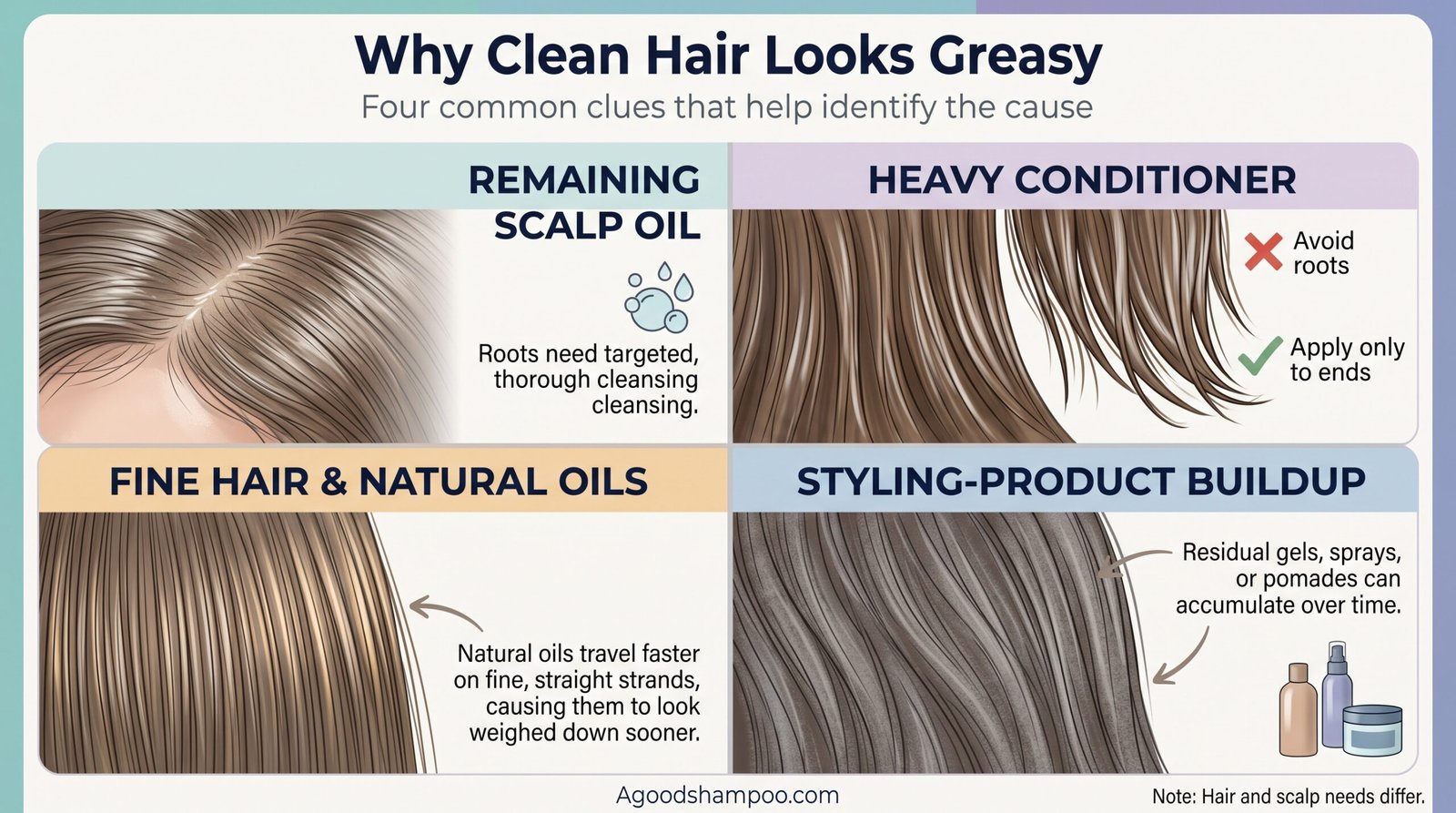
Hair that looks greasy immediately after washing usually has one of two problems: the scalp oil wasn’t removed adequately, or products left on the hair are making it look oily. But when hair feels clean after shampooing and becomes greasy again a few hours later, natural sebum production and hair characteristics may be more important.
The American Academy of Dermatology explains that people with straight hair and oily scalps may need to shampoo daily. This matters because delaying washing isn’t automatically the answer to excessive oiliness. Your scalp’s needs, cleansing technique, and product choices should determine your routine.
Sebum is the oily substance produced by sebaceous glands in the scalp. It helps lubricate skin and hair, but excess oil can make roots appear shiny, separated, and flat. Fine or straight strands may show this more noticeably than coarse or tightly curled hair.
Before changing your shampoo, identify whether your roots never feel clean or become oily again after initially feeling fresh. That difference is the most useful starting point.
Why Hair Can Still Feel Greasy Immediately After Shampooing
Your shampoo may not be removing enough scalp oil
Shampoo uses cleansing agents called surfactants to help water remove sebum, dirt, and product residue. Different formulas vary in their cleansing properties, so a shampoo that leaves dry hair feeling comfortable may not remove enough oil for someone with a particularly greasy scalp.
Technique also matters. If you apply shampoo mainly to the lengths while barely cleansing the roots, the hair closest to your scalp may remain oily.
The crown, nape, and areas behind the ears are particularly easy to overlook when shampooing thick or dense hair.
Using too little shampoo for the amount of oil or styling product present can also reduce cleansing effectiveness. This doesn’t mean more shampoo is always better. The goal is sufficient product coverage followed by thorough rinsing.
A shampoo doesn’t need to leave your scalp feeling squeaky or tight to be effective. Excessively aggressive cleansing may create dryness and discomfort without offering a meaningful advantage.
Heavy conditioners and styling products can weigh hair down
Sometimes the shampoo has done its job, but the products used afterward make hair look greasy.
Rich conditioners, leave-in creams, hair oils, and smoothing serums can reduce volume when applied too heavily, especially near the roots.
For example, someone with fine hair might use a moisturizing conditioner designed for coarse or very dry hair. The conditioner may improve softness, yet leave the crown flat and strands separated.
The same problem can occur when several products are layered together.
Silicones are sometimes blamed for greasy-looking hair, but this explanation is incomplete. Silicone ingredients differ in their properties, and many formulations use them to improve smoothness and manageability without necessarily producing a greasy finish.
What matters is the finished formula, the amount applied, and how well the products suit your hair.
Why Your Hair Gets Greasy Again Within Hours
Hair that looks fresh after washing but becomes oily by lunchtime presents a different situation.
Your scalp continuously produces sebum, and the amount varies among individuals. Genetics, age, and hormonal activity can influence sebaceous gland function. However, the speed at which oil becomes visible also depends on hair texture, density, and styling.
Fine, straight hair may lose volume quickly as sebum spreads from the roots and causes individual strands to group together.
Curly or coily hair may have an oily scalp while the lengths remain comparatively dry because natural oils don’t spread along the hair in quite the same way.
This explains why two people using the same shampoo can have very different results.
You may have heard that shampooing frequently trains your scalp to produce more oil. There’s insufficient evidence to treat that as a universal rule. Washing too aggressively can irritate or dry the scalp, but that doesn’t prove the sebaceous glands automatically compensate by increasing oil production.
If your scalp naturally becomes oily quickly, more frequent gentle washing may be more appropriate than forcing yourself to wait several days.
Our guide to choosing shampoo for fine, oily hair explores how product selection changes when hair strands are easily weighed down.
How to Tell What’s Making Your Hair Look Oily
The location and timing of greasiness can help narrow down the possibilities.
| What you notice | Possible explanation | What to check |
|---|---|---|
| Roots are greasy immediately after drying | Incomplete removal of scalp oil | Shampoo coverage and rinsing |
| Roots feel clean but become oily within hours | Natural sebum production | Washing frequency and hair characteristics |
| Hair looks flat after conditioning | Heavy conditioner or product placement | Amount applied near roots |
| Hair feels coated after several styling days | Accumulated styling products | Routine cleansing effectiveness |
| Greasy scalp with flakes and itching | Dandruff or another scalp condition | Persistent symptoms and need for targeted care |
These clues aren’t diagnostic. Hair can also have more than one contributing factor.
A useful experiment is to wash your hair using your usual shampoo but change only your application technique. If the roots become cleaner, inadequate coverage may have contributed.
If the hair looks fresh until you apply conditioner or styling products, investigate those products next.
Making one change at a time produces more meaningful information than replacing your entire routine.
How to Wash Greasy Hair So It Feels Clean
Concentrate shampoo where the oil actually accumulates
The American Academy of Dermatology recommends applying shampoo primarily to the scalp rather than scrubbing the entire hair length. This targets accumulated oil and residue while limiting unnecessary friction.
A practical washing routine is:
Wet the hair and scalp thoroughly with comfortably warm water.
Apply an appropriate amount of shampoo to the scalp, distributing it across the hairline, crown, sides, and nape.
Massage gently using your fingertips, allowing the cleansing formula to contact oily areas.
Rinse thoroughly, separating dense sections of hair when necessary.
Apply conditioner according to your hair’s needs, usually focusing on the lengths and ends when roots become greasy easily.
A second shampoo application may sometimes be useful after heavy styling-product use or when the first wash hasn’t adequately removed oil. It isn’t necessary for everyone, and repeated cleansing should not leave the scalp irritated.
If your hair remains persistently coated despite appropriate washing, occasional clarifying may help remove accumulated products. AGoodShampoo’s article about using clarifying shampoo for oily hair explores when this approach may make sense.
Clarifying shouldn’t automatically become a daily treatment. The appropriate frequency depends on the formula, product accumulation, and your scalp and hair condition.
Keep conditioner where your hair needs it
Conditioner serves an important purpose. It reduces friction, improves detangling, and helps hair feel smoother.
The solution to greasy roots isn’t necessarily abandoning conditioner, especially if the ends are dry, fragile, or chemically treated.
Instead, adjust how you apply it.
For fine, straight hair, using a lightweight conditioner mainly on the mid-lengths and ends may provide softness without adding excessive weight near the scalp.
Coarse, curly, or very dry hair may need richer conditioning or different placement.
Our guide to shampoo and conditioner for fine hair explains considerations when volume and softness need to be balanced.
Also review your leave-in routine. You may not need a cream, serum, and oil on the same wash day. Try reducing product amounts before concluding that your shampoo has stopped working.
Wash according to your scalp, not a fixed rule
Some people can comfortably wash their hair several times a week. Others need daily cleansing to manage oil.
Neither routine is inherently better.
The AAD advises adjusting washing frequency according to how quickly the hair becomes dirty or oily. People with straight hair and oily scalps may find daily shampooing appropriate, while dry, thick, or tightly curled hair often has different requirements.
Consider your activity level, sweating, styling-product use, and hair texture. If you exercise frequently or work in a dusty environment, your cleansing needs may differ from someone with a less active routine.
Dry shampoo can temporarily absorb visible oil, but it doesn’t remove sebum and residue in the same way as washing with shampoo and water.
If your hair needs cleansing, repeatedly adding dry shampoo may leave more material to remove during your next wash.
When Greasy Hair May Signal a Scalp Problem
An oily scalp isn’t automatically unhealthy. Sebum production is normal, and visible greasiness alone does not establish a medical condition.
However, persistent oiliness accompanied by itching, redness, greasy-looking flakes, inflammation, or soreness may indicate dandruff, seborrheic dermatitis, or another scalp disorder.
Seborrheic dermatitis can affect oil-rich areas of skin and produce flaking and inflammation. Ordinary cosmetic shampoo may not adequately address the condition.
If symptoms persist, become painful, or occur alongside unusual hair shedding, seek advice from a dermatologist rather than repeatedly switching to stronger cleansers.
Treatment depends on the actual diagnosis, not simply how oily the roots appear.
What Should You Change First If Your Hair Stays Greasy?
If your hair feels greasy immediately after washing, start by improving how thoroughly you cleanse and rinse your scalp. You may not need a new shampoo at all.
If hair becomes oily only after conditioning, reduce the amount of conditioner near the roots or try a lighter formula. If the roots become greasy several hours after an otherwise successful wash, consider whether washing more frequently suits your natural oil production.
For recurring product residue, a suitable clarifying shampoo may help occasionally. For greasiness accompanied by continuing flakes, irritation, or soreness, investigate scalp health instead of relying on stronger cleansing alone.
The aim isn’t to eliminate every trace of natural oil. It’s to maintain a comfortable scalp and hair that feels clean, manageable, and appropriate for your individual needs.

Marlena Stell makes everyday hair care easier to understand. From choosing a shampoo to managing common hair concerns, she breaks down confusing product claims and practical routines into straightforward advice that helps readers find what works for their needs.