 A lot of people secretly do this.
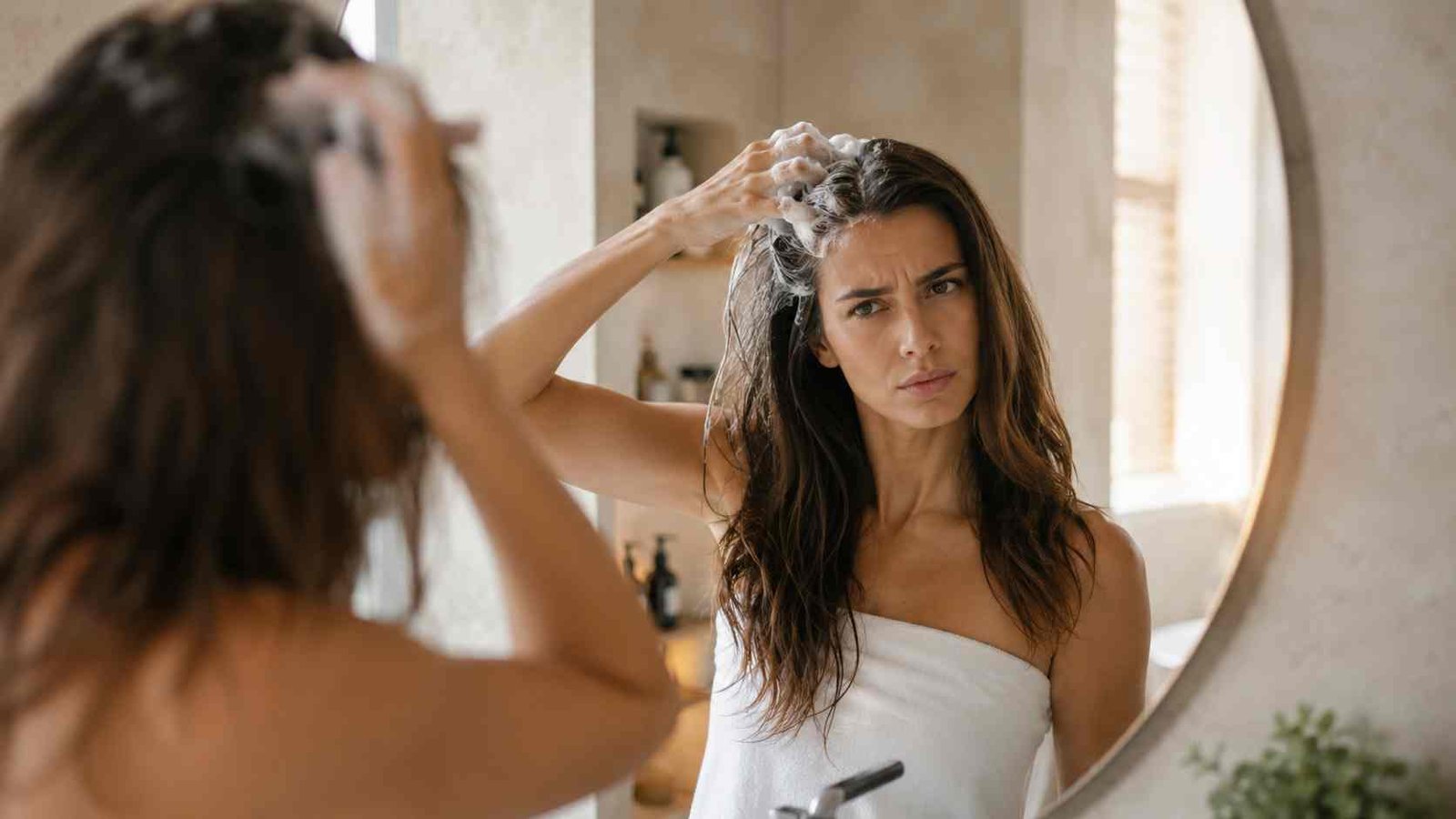
They stand in the shower, look at greasy roots, and think, “Maybe shampoo would work better if I put it on dry hair first.”
And honestly? It sounds logical.
Dry hair has more oil sitting on it. So maybe shampoo can grab onto that oil faster before water gets involved. Some people even swear their scalp feels cleaner this way. Others try it because of dandruff, seborrheic dermatitis, lupus hair loss, or thick product buildup that just refuses to wash out.
But here’s the thing nobody explains properly online: shampoo was designed to work with water. That matters more than most people realize.
I tested this method myself years ago after using heavy styling creams during winter. My scalp felt waxy no matter how much I washed it. Putting shampoo on dry hair actually made my roots feel sticky and weird. It cleaned better only after I added water and rewashed everything properly.
That’s usually the missing part people don’t talk about.
Dry shampooing can help in very specific situations. But doing it the wrong way can irritate your scalp, strip your barrier, and leave your hair feeling rough like straw.
Especially if you already deal with scalp inflammation, hair thinning, seborrheic dermatitis, or medical hair loss.
So let’s untangle this whole thing properly.
What Actually Happens When You Put Shampoo on Dry Hair?
Shampoo works because of surfactants.
That sounds scientific and scary, but it’s simple. Surfactants are cleansing ingredients that grab oil, sweat, dirt, and product buildup so water can rinse them away.
Without water, most shampoos cannot spread evenly.
Instead, they sit in concentrated patches on your scalp. That can cause:
- Dryness
- Irritation
- Tight scalp feeling
- Tangled hair
- Uneven cleansing
Think about dish soap. If you pour concentrated dish soap on a dry greasy plate without water, it smears around awkwardly. Add warm water and suddenly everything breaks down properly.
Hair works the same way.
So… Can I Use Shampoo on Dry Hair?
Yes. But only sometimes.
This method can help in a few situations:
Heavy Oil Buildup
If your scalp gets extremely oily, applying a tiny amount of shampoo to dry roots before wetting may help loosen thick oil.
Salon stylists sometimes do this before clarifying washes.
But they usually follow it immediately with water.
Not leaving it sitting there forever.
Thick Hair Oils or Hair Masks
Coconut oil. Castor oil. Rosemary oil. Silicone-heavy serums.
These can sometimes repel water during washing.
A small amount of shampoo massaged into dry oily areas first can help break the layer apart before rinsing.
Seborrheic Dermatitis
Some people with seborrheic dermatitis use medicated shampoos on dry scalp for a few minutes before adding water because antifungal ingredients need time to contact the skin.
But this depends entirely on the product instructions.
Ketoconazole shampoos are one example.
And even then, dermatologists usually recommend damp scalp, not bone-dry hair.
When Putting Shampoo on Dry Hair Becomes a Bad Idea
Here’s where people accidentally damage their hair.
If Your Hair Is Bleached or Color-Treated
Dry shampooing with regular liquid shampoo can rough up already fragile cuticles.
That means more:
- Frizz
- Breakage
- Split ends
- Color fading
Studies on hair fiber damage show wet friction already weakens treated hair significantly. Concentrated detergents without dilution can make it worse.
If You Have Curly or Coily Hair
Textured hair naturally struggles to retain moisture.
Putting cleansing agents directly on dry curls may leave hair brittle afterward.
Especially sulfate shampoos.
That squeaky-clean feeling some people love? Curly hair usually hates it.
If Your Scalp Is Sensitive
This matters a lot for people with:
- Lupus-related scalp issues
- Eczema
- Psoriasis
- Seborrheic dermatitis
- Contact dermatitis
A concentrated shampoo formula on dry skin may trigger redness and itching faster.
Quick Fact
Research published through the National Center for Biotechnology Information shows that harsh surfactants can disrupt the scalp barrier and increase irritation in sensitive skin conditions.
That’s why many medicated or dermatologist-approved shampoos now include gentler surfactants and hydrating ingredients.
Does Dry Hair Shampooing Help With Seborrheic Dermatitis?
Sometimes. But people misunderstand why.
Seborrheic dermatitis is linked to:
- Excess oil
- Skin inflammation
- Overgrowth of Malassezia yeast
That’s why antifungal shampoos like ketoconazole exist.
The active ingredients need contact time to work properly.
Some dermatologists recommend applying medicated shampoo onto affected scalp areas before fully rinsing. Usually around 3 to 5 minutes.
But here’s the important part.
That does NOT mean coating your entire dry hair length in shampoo.
Only the scalp needs treatment.
And using medicated shampoos too often can backfire.
I’ve seen people aggressively wash daily trying to “kill dandruff,” only to end up with a flaky irritated scalp that gets oilier afterward.
Your scalp barrier matters.
Should You Shampoo Every Day With Seborrheic Dermatitis?
Usually no.
For most people, dermatologists suggest:
- Medicated shampoo 2 to 3 times weekly
- Gentle non-medicated shampoo between treatments if needed
Overwashing can worsen irritation.
But skipping washes for too long may increase oil buildup and yeast growth.
That’s why balance matters more than extreme routines.
What Research Says
A review in the Journal of Clinical and Investigative Dermatology found ketoconazole shampoos significantly improved seborrheic dermatitis symptoms when used consistently but not excessively.
The keyword there is consistently.
Not aggressively.
Can I Use Normal Shampoo After Ketoconazole Shampoo?
Yes. And many people should.
Ketoconazole shampoos treat the scalp. They are not always great for cosmetic softness.
After rinsing the medicated shampoo, many people use:
- A gentle moisturizing shampoo
- Lightweight conditioner on mid-lengths and ends
- Hydrating scalp serum if dryness appears
This helps prevent the rough, stripped feeling medicated shampoos sometimes cause.
Just avoid layering multiple harsh shampoos together.
That’s where trouble starts.
What Shampoo Is Good for Lupus Hair Loss?
This is a really emotional topic.
Hair loss connected to lupus is not just cosmetic. It can deeply affect confidence and mental health.
And the wrong shampoo absolutely can make symptoms feel worse.
People with lupus-related hair loss usually need shampoos that are:
- Sulfate-free
- Fragrance-light
- Anti-inflammatory
- Gentle on scalp barrier
- Moisturizing but not heavy
Ingredients often recommended include:
| Helpful Ingredients | Why They Matter |
|---|---|
| Niacinamide | Helps calm scalp irritation |
| Aloe vera | Soothes dryness |
| Panthenol | Supports moisture retention |
| Zinc pyrithione | Helps reduce flaking |
| Ketoconazole | Helps fungal scalp issues |
| Oat extract | Calms sensitive skin |
Ingredients that often trigger problems:
- Strong sulfates
- Heavy fragrance
- Alcohol-heavy formulas
- Harsh essential oils
- Excess menthol
A lot of lupus patients think “strong cleansing” equals healthier scalp.
Usually it’s the opposite.
Gentle routines tend to protect fragile follicles better.
The Big Mistake People Make With Oily Hair
People panic when their scalp gets greasy fast.
So they shampoo harder.
More product. Hotter water. Double washing. Daily scrubbing.
That often creates a cycle where the scalp overproduces oil because its protective barrier keeps getting stripped.
I used to think oily scalp meant dirty scalp.
Turns out many oily scalps are actually irritated scalps.
Huge difference.
Is Dry Shampoo the Same Thing?
Nope. Completely different.
Dry shampoo usually contains powders like:
- Rice starch
- Aluminum starch
- Silica
These absorb oil temporarily.
Liquid shampoo contains cleansing surfactants that require water activation.
People confuse the two because of the name.
Dry shampoo is not actually washing your hair.
It’s more like blotting oil from your face with powder.
Useful sometimes. Not a replacement for real washing.
The Best Way to Wash Hair Properly
Honestly, the basics still work best.
Step One
Wet your scalp thoroughly first.
And I mean thoroughly.
Most people rinse for like eight seconds and call it done.
Hair should be fully saturated.
Step Two
Use a small amount of shampoo mainly on the scalp.
Not the ends.
The foam running downward cleans the lengths enough already.
Step Three
Massage gently with fingertips.
Not nails.
Aggressive scratching can inflame follicles.
Step Four
Rinse completely.
Leftover shampoo residue causes itching for many people.
Step Five
Condition only mid-lengths and ends unless your scalp is extremely dry.
Simple. Boring. Effective.
But Wait… Some People Swear Dry Hair Shampooing Works
They’re not imagining it.
Sometimes applying shampoo before water helps dissolve heavy oils or silicones faster.
Especially with:
- Thick pomades
- Hair waxes
- Coconut oil masks
- Greasy scalp buildup
But notice something important.
Those situations are about removing buildup.
Not everyday washing.
There’s a difference between a targeted technique and a daily routine.
Ingredient Breakdown
Sulfates
Strong cleansers that remove oil quickly.
Good for:
- Heavy buildup
- Very oily scalp
- Clarifying
Not always good for:
- Dry hair
- Curly hair
- Lupus-related irritation
- Sensitive scalp
Ketoconazole
Antifungal ingredient often used for dandruff and seborrheic dermatitis.
Effective but can feel drying.
Zinc Pyrithione
Helps control flakes and scalp microbes.
Often gentler than stronger medicated options.
Salicylic Acid
Helps loosen flakes and dead skin.
Can be helpful for scalp buildup but drying if overused.
One Weird Thing I Noticed During Product Testing
The people most obsessed with “deep cleaning” their scalp were often the ones with the angriest scalps.
Redness. Tightness. Oil rebound. Flaking.
Meanwhile people using gentler routines usually had calmer skin overall.
Hair care marketing teaches us to chase extreme cleanliness.
Real scalp health is usually quieter than that.
Balanced. Comfortable. Boring, honestly.
Should You Ever Leave Shampoo Sitting on Dry Hair?
Usually no.
Unless it’s specifically instructed by the manufacturer or dermatologist.
Leaving regular shampoo sitting too long can:
- Dehydrate strands
- Cause scalp irritation
- Increase tangling
- Fade color faster
Medicated shampoos are different because active ingredients sometimes need contact time.
But regular cosmetic shampoos are designed for wash-and-rinse use.
Signs Your Shampoo Routine Is Too Harsh
Watch for these clues:
- Hair feels squeaky every wash
- Scalp feels tight afterward
- More flakes appear
- Hair tangles easily
- Increased breakage
- Oil returns extremely fast
- Burning sensation during washing
Your scalp is skin.
People forget that.
You wouldn’t scrub your face aggressively three times a day with harsh soap and expect healthy skin afterward.
What About Double Shampooing?
Double shampooing can help if you use:
- Heavy styling products
- Thick oils
- Dry shampoo often
- Silicone-rich serums
First wash removes buildup.
Second wash cleans the scalp better.
But daily double shampooing? Usually unnecessary.
My Honest Experience With Medicated Shampoos
The first time I tried ketoconazole shampoo, my scalp flakes improved fast.
But my hair felt horrible.
Dry. Flat. Weirdly crunchy.
I almost quit using it.
What fixed it was changing how I used it:
- Only on scalp
- Letting it sit briefly
- Using gentle conditioner afterward
- Not overusing it
That’s the thing with scalp care.
Technique matters almost as much as the product itself.
So Is It Good to Put Shampoo on Dry Hair?
Most of the time, no.
For regular washing, shampoo works best on wet hair because water activates the cleansing ingredients properly and spreads them evenly.
But there are exceptions.
Putting shampoo on dry hair can sometimes help remove:
- Heavy oils
- Thick buildup
- Certain scalp treatments
And medicated shampoos may occasionally need short contact time before rinsing.
Still, it should be an occasional technique. Not your everyday habit.
If your scalp is irritated, flaky, painful, or causing hair loss, the solution usually isn’t “more shampoo.”
It’s understanding what your scalp actually needs.
Sometimes less aggression gives better hair.
Funny how that works.

Michael Chen focuses on the science behind shampoos and hair-care ingredients. He explains how cleansing agents, silicones, proteins, and other formula components work, separating useful evidence from marketing claims to help readers better understand the products they use.