Is Dry Shampoo Good for Cats? Safe or Risky Truth
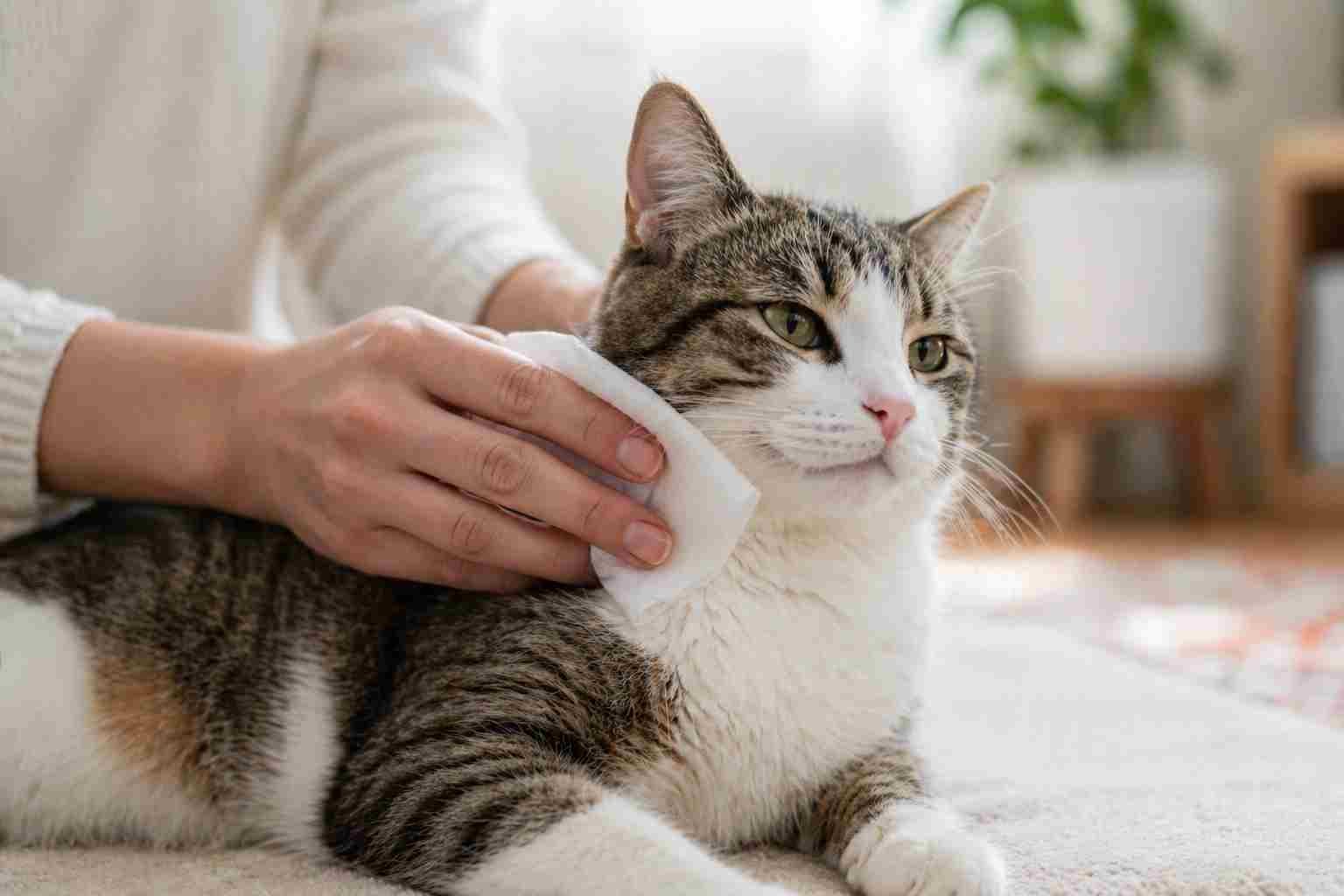 You know that moment when your cat smells… off?
Not terrible. Just not fresh. Maybe they rolled in something weird. Maybe they’re older now and not grooming like before. Or maybe you just had one of those thoughts like, “Can I just use dry shampoo and fix this in 2 minutes?”
I get it. It sounds easy.
No water. No scratching. No chaos.
But here’s what matters more than convenience. Your cat’s safety.
And once you understand how cats actually clean themselves, the whole idea of using dry shampoo starts to feel… a bit risky.
So… is dry shampoo good for cats?
Let’s not sugarcoat it.
Most of the time, no.
Not because cleaning your cat is wrong. But because dry shampoo, especially the kind made for humans, doesn’t belong on a cat’s body.
Cats don’t just wear products. They eat them.
Every time they groom, they lick their fur. That means anything sitting on their coat ends up inside their body. Skin care becomes internal exposure. That’s the big difference.
So when people ask if dry shampoo is “good,” the real question is:
Would you want your cat licking this product over and over again?
That’s where things change.
Quick fact
Studies in veterinary toxicology show that cats have limited ability to break down certain chemicals, especially fragrances and essential oils. What seems mild to us can build up in their system over time.
Can you clean cats with dry shampoo?
Yes… but only in a very specific way.
And honestly, most people don’t do it the right way.
There are pet-safe dry shampoos made just for cats. These are usually:
- Alcohol-free
- Low fragrance or fragrance-free
- Made with mild ingredients like oatmeal
But even those are not meant for regular use.
Think of them like a backup option. Not your go-to routine.
Good use cases look like this:
Your cat got into something sticky.
You need a quick clean before a vet visit.
Your cat is too sick or old for a full bath.
That’s it.
If you’re using dry shampoo every week, something’s off.
Does dry shampoo help cats?
It can help… but only on the surface.
It removes light dirt. Reduces odor a bit. Makes fur feel cleaner for a short time.
But it doesn’t do a deep clean.
It doesn’t wash away bacteria properly.
It doesn’t fully remove oils.
It doesn’t fix underlying hygiene issues.
And here’s something people don’t think about enough.
Cats rely on natural oils in their fur. Those oils protect their skin and keep their coat healthy.
When you keep adding products, even gentle ones, you can disturb that balance.
What research says
Animal dermatology research shows that over-cleaning or using unsuitable products can lead to dry skin, irritation, and even changes in coat texture.
In simple words. Too much cleaning can make your cat worse, not better.
Is dry shampoo safe for cats to lick?
This is the deal-breaker.
Human dry shampoo? Not safe.
Pet dry shampoo? Safer, but still not something you want your cat licking in large amounts.
Even the good ones come with instructions like:
Use a small amount
Avoid the face
Brush thoroughly after use
Why? Because ingestion is expected. Just controlled.
Ingredient breakdown (this part really matters)
If you ever pick up a bottle and read the label, watch for these:
Alcohol
This dries the skin and can irritate your cat’s coat.
Artificial fragrance
Common cause of allergies and sensitivity.
Talc or fine powders
These can be inhaled and irritate the lungs.
Essential oils like tea tree
This one is serious. Cats cannot process it well.
Quick fact
Veterinary studies have shown that tea tree oil toxicity in cats can happen even at low doses, leading to symptoms like weakness, tremors, and vomiting.
Can cats hear you speak?
This sounds random, but it actually matters here.
Yes, cats hear you. Very well.
Not just the words. The tone.
When you try to clean them, your voice can either calm them or make them panic.
Soft tone helps. Slow movement helps.
If your cat feels safe, even simple cleaning becomes easier.
If they feel stressed, even the best product won’t work.
What actually works better than dry shampoo
Here’s the part most people skip.
You don’t always need products.
A slightly damp cloth can do more than you think.
Warm water. Gentle wipe. Focus on dirty spots.
No chemicals. No risk.
For regular care, this is often enough.
And if you want to go one step further, these are better options:
Pet grooming wipes
They’re made for cats and safer for occasional use.
Oatmeal-based foam cleansers
Gentle, low irritation, but still use sparingly.
Regular brushing
Removes dirt, spreads natural oils, keeps coat clean.
Sometimes brushing alone fixes the problem.
Real-life situation
I’ve seen people use human dry shampoo on cats just to avoid bathing them.
It feels like a smart shortcut.
But then the cat starts licking more. Gets irritated. Fur looks dull after a while.
Then they wonder why.
Because what goes on the fur doesn’t stay there.
What about cats that hate water?
Most of them do.
And yeah, bathing a cat can feel like a battle you didn’t sign up for.
But here’s the thing.
You don’t need to bathe them often.
Healthy cats clean themselves well.
Only step in when:
They’re visibly dirty
They can’t groom properly
They have a medical issue
Otherwise, let them handle it.
They’ve been doing it long before dry shampoo existed.
Signs your cat actually needs cleaning
Instead of guessing, look for this:
Sticky or matted fur
Strong, unusual odor
Visible dirt or substances on coat
Reduced grooming (common in older cats)
If none of this is happening, you probably don’t need to do anything.
When to talk to a vet
If your cat smells bad all the time, that’s not normal.
It could be:
Skin infection
Dental issues
Digestive problems
Obesity preventing grooming
Dry shampoo won’t fix these.
A proper check will.
A small reminder
Cats are not small humans.
Their bodies react differently. Their habits are different. Their needs are simpler than we think.
Most of the time, they don’t need extra products. They need space to do what they already know how to do.
Final thoughts (not the neat kind)
Dry shampoo feels like a quick win. I get why people try it.
But with cats, quick fixes can turn into quiet problems.
If it’s made for humans, don’t use it.
If it’s made for pets, use it rarely.
If your cat is fine, don’t use it at all.
Sometimes the smartest care is just stepping back and letting your cat be a cat..

Carolina Herrera: Cosmetics specialist & Hair Analyst. Specializing in hair treatments, Carolina provides thorough reviews and advice on choosing the best products for damaged or treated hair.