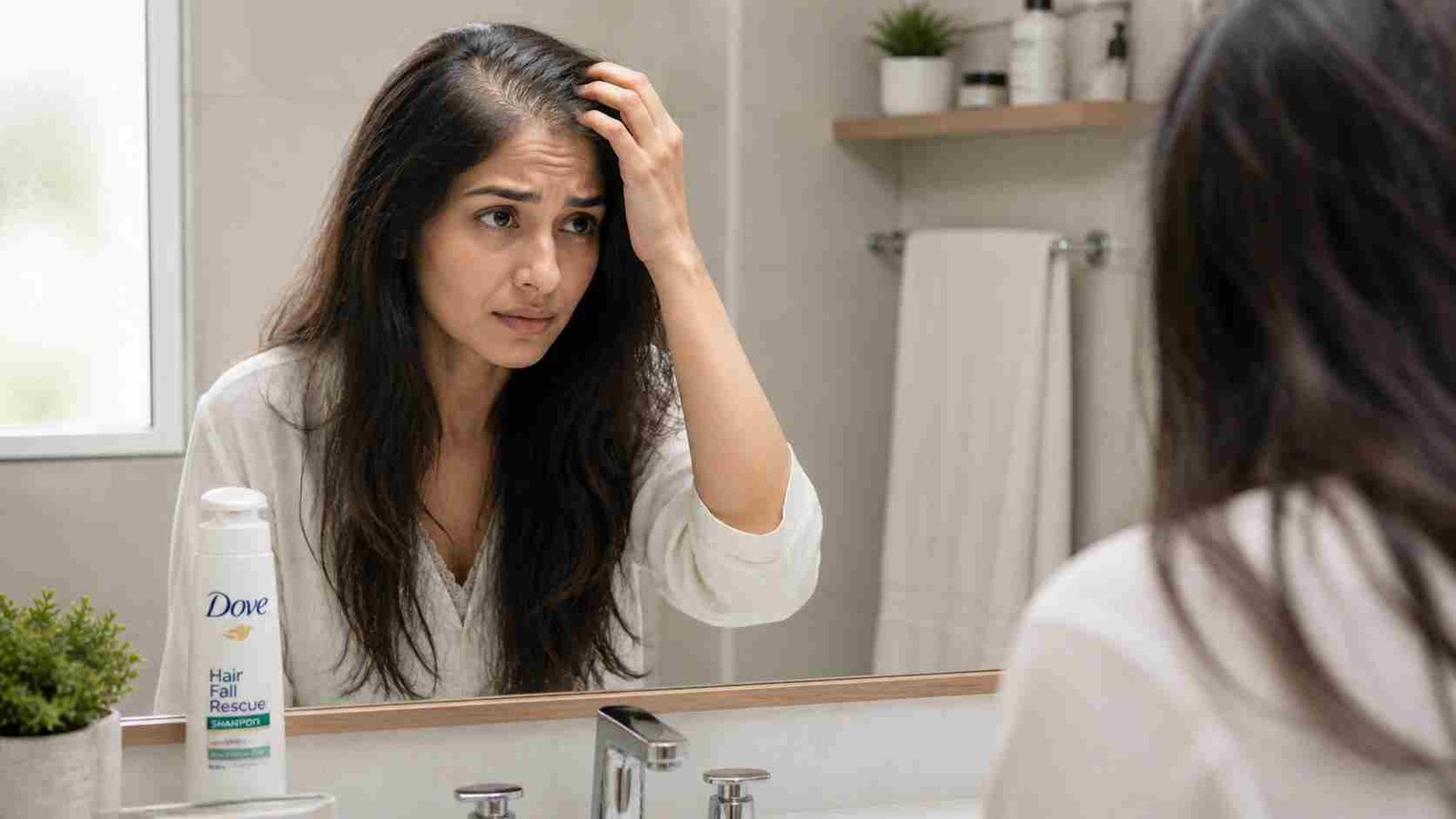
Is Dove Shampoo Good for Hair Loss? Honest Review
You ever stand in the shower, look down, and see more hair than usual?
Yeah… that moment hits hard.
Most people don’t panic right away. They start small. Maybe it’s the shampoo. Maybe Dove. Maybe something is off.
So let’s get real about this question: Is Dove shampoo good for hair loss?
Not the marketing version. Not the “it depends” fluff. I’ll walk you through what actually happens on your scalp, what Dove really does, and where it fits… or doesn’t.
First, let’s clear something up
Dove shampoo is not a hair loss treatment.
That’s the truth nobody likes to hear.
It’s made for:
- cleaning your scalp
- making hair feel soft
- reducing dryness
- improving shine and smoothness
That’s it.
Hair loss? That’s a different problem completely.
Hair fall can come from:
- stress
- hormones
- genetics
- illness (like lupus, thyroid issues)
- poor scalp health
- tight hairstyles
- nutritional gaps
A shampoo alone rarely fixes that.
But here’s where it gets interesting…
So why do people still ask about Dove?
Because sometimes hair fall gets worse after using a shampoo, and people start connecting dots.
You switch products → hair fall increases → you blame the shampoo.
Makes sense emotionally. But scientifically… not always.
What Dove shampoo actually does to your hair
Dove formulas usually include:
- mild cleansing agents (surfactants)
- silicones (for smooth feel)
- moisturizing ingredients like glycerin
- conditioning agents
That combination makes hair:
- softer
- easier to manage
- less tangled
Now here’s the twist.
When your hair is smoother and detangled, you actually lose less hair from breakage.
So technically… Dove can help reduce hair breakage, not true hair loss.
That’s a big difference.

Quick Fact
Studies show that up to 80% of “hair loss complaints” are actually hair breakage, not root-level hair fall.
That means your hair is snapping… not falling out from the follicle.
And shampoos like Dove are designed exactly for that kind of issue.
But wait… is Dove shampoo linked to hair loss?
Short answer: No solid scientific evidence says Dove causes hair loss.
Let me explain what really happens when people think it does.
What Research Says
- Dermatology reviews show that standard cosmetic shampoos do not cause permanent hair loss
- Temporary shedding can happen when:
- your scalp reacts to a new product
- buildup clogs follicles
- underlying conditions already exist
So if someone says “Dove made my hair fall out,” it’s usually one of these:
- they already had a scalp issue
- they changed routine suddenly
- they’re noticing natural shedding more
Hair sheds daily anyway. Around 50 to 100 strands per day is normal.
But once you notice it… you can’t unsee it.
The real issue most people miss
Dove is a cosmetic shampoo, not a treatment shampoo.
That means:
- it makes hair feel better
- it doesn’t fix root problems
If your hair loss is coming from:
- hormonal imbalance
- autoimmune conditions (like lupus)
- scalp inflammation
- severe dandruff
Then Dove alone won’t help much.
Which Dove shampoo is best for hair loss?
Alright, if you still want to use Dove, some variants are better than others depending on your situation.
Let me break it down like I would in a salon.
Dove Hair Fall Rescue Shampoo
This one is marketed directly for hair fall.
What it does:
- reduces breakage
- strengthens weak strands
- improves softness
What it doesn’t do:
- regrow hair
- stop genetic hair loss
- treat scalp disorders
It’s good if your hair fall comes from:
- dryness
- heat damage
- rough handling
Dove Intense Repair Shampoo
This is stronger on conditioning.
Best for:
- damaged hair
- chemically treated hair
- brittle strands
It helps hair feel thicker and stronger, which can reduce breakage-related hair fall.
Dove Daily Moisture Shampoo
Simple, gentle, everyday option.
Best for:
- dry scalp
- normal hair
- mild hair shedding
But again… not a treatment.
Ingredient Breakdown (simple, no science headache)
Let me keep this human.
Most Dove shampoos contain:
- Sodium Laureth Sulfate (SLES) → cleans oil and dirt
- Silicones → smooth hair instantly
- Conditioning agents → reduce friction
Now here’s the thing.
SLES is not evil. Despite what social media says.
Research shows it is:
- safe for most people
- effective for cleansing
- only harsh if overused or if your scalp is sensitive
So if your scalp is already irritated, it might feel worse.
But for most people, it’s fine.
Let’s talk about lupus hair loss (important)
You asked this too, and it matters.
If someone has lupus-related hair loss, the situation changes completely.
What lupus does to hair
Lupus can cause:
- inflammation around hair follicles
- fragile hair strands
- patchy hair loss
No regular shampoo, including Dove, can fix that.
What shampoo is good for lupus hair loss?
Doctors usually recommend:
- very gentle, sulfate-free shampoos
- products with soothing ingredients like:
- aloe vera
- chamomile
- oat extract
Sometimes even medicated shampoos.
Quick Fact
Studies show that autoimmune-related hair loss needs medical management first, not cosmetic products.
Shampoo is supportive… not the solution.
So… will Dove stop hair fall?
No. And I won’t sugarcoat that.
But it can help in one very specific way:
It can reduce breakage-based hair fall.
That’s it.
Here’s a real-life scenario
Let’s say someone has:
- dry, frizzy hair
- tangling issues
- rough brushing habits
They switch to Dove.
What happens?
- hair becomes smoother
- less friction
- fewer strands break
They think: “Wow, my hair fall stopped.”
But what actually stopped was breakage, not root-level shedding.
When Dove is a good choice
Use Dove if:
- your hair feels dry and rough
- you deal with breakage
- your scalp is normal (not inflamed or sensitive)
- you want affordable, basic care
When Dove is NOT enough
Skip relying on it if:
- you have heavy hair loss
- your scalp itches or burns
- you see patchy thinning
- you have dandruff or flakes
- you suspect hormonal issues
In these cases, you need:
- medicated shampoos
- doctor consultation
- lifestyle changes
What actually helps stop hair fall
Here’s where things get real.
Hair loss is usually fixed by:
- improving scalp health
- balancing hormones
- fixing nutrition
- reducing stress
Not just switching shampoo.
Small reality check
No shampoo can:
- regrow hair on bald spots
- reverse genetic hair loss
- fix medical conditions
If a product claims that… be careful.
A better routine if you’re losing hair
If you want something practical, try this:
- use a gentle shampoo (Dove can work here)
- don’t wash too aggressively
- avoid tight hairstyles
- reduce heat styling
- massage scalp gently
- check your diet (iron, protein, vitamins matter a lot)
What about “Which shampoo will stop hair fall?”
This is the question everyone wants a simple answer for.
But here’s the truth:
There is no one shampoo.
The right shampoo depends on the cause.
If your issue is breakage
Use moisturizing shampoos like Dove.
If your issue is dandruff
Use anti-dandruff shampoos (zinc or ketoconazole).
If your issue is medical
See a doctor first.
One thing people don’t talk about enough
Stress.
It sounds boring, but it’s real.
A survey by the American Academy of Dermatology found that over 60% of people experience increased hair shedding during stress periods.
So sometimes it’s not your shampoo.
It’s your life.
What to expect from it?
Dove shampoo isn’t the villain. But it’s not the hero either.
It’s… somewhere in the middle.
Good for softness.
Good for breakage control.
Not made for serious hair loss.
If your hair fall is mild and caused by damage, Dove can actually help a bit.
If your hair is thinning from the roots… you need a deeper fix.
And honestly? That’s where most people go wrong. They keep changing shampoos when the real problem is happening under the skin.
Bottom line
Use Dove if your hair needs moisture and smoothness.
Don’t expect it to cure hair loss.
And if you’re losing more hair than usual… don’t guess.
Figure out the reason first.
That’s the only way anything actually works.

Carolina Herrera: Cosmetics specialist & Hair Analyst. Specializing in hair treatments, Carolina provides thorough reviews and advice on choosing the best products for damaged or treated hair.