 You know that tiny panic when your hair looks oily, flat, and kind of sad, but you do not have time to wash it?
Yeah. That moment.
Maybe your dry shampoo can is empty. Maybe you forgot it while traveling. Maybe you never liked how it made your scalp feel gritty. Or maybe your hair has been acting strange lately because of stress, weather, hormones, menopause, workouts, or just life being annoying.
So, what is a good substitute for dry shampoo?
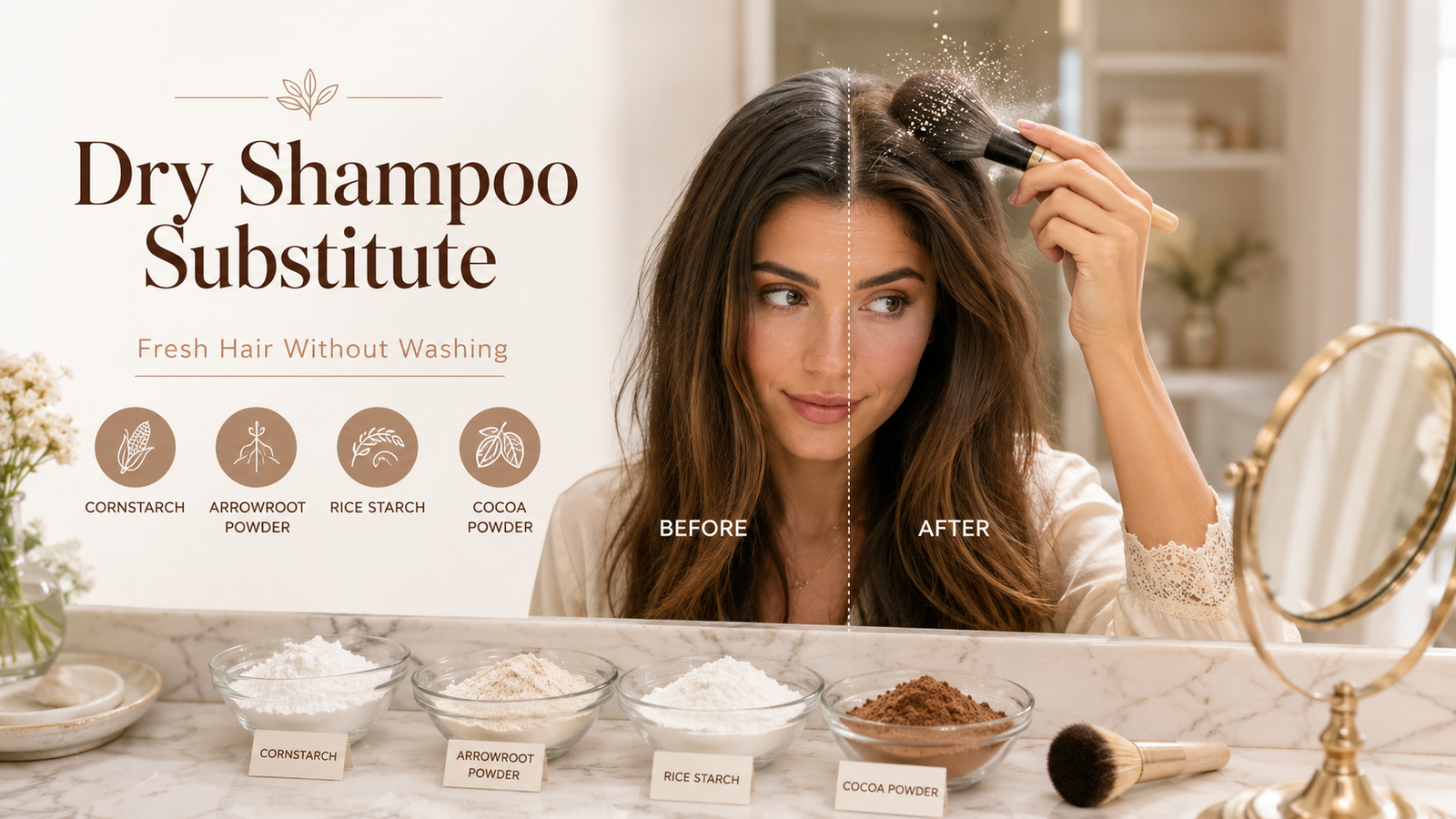
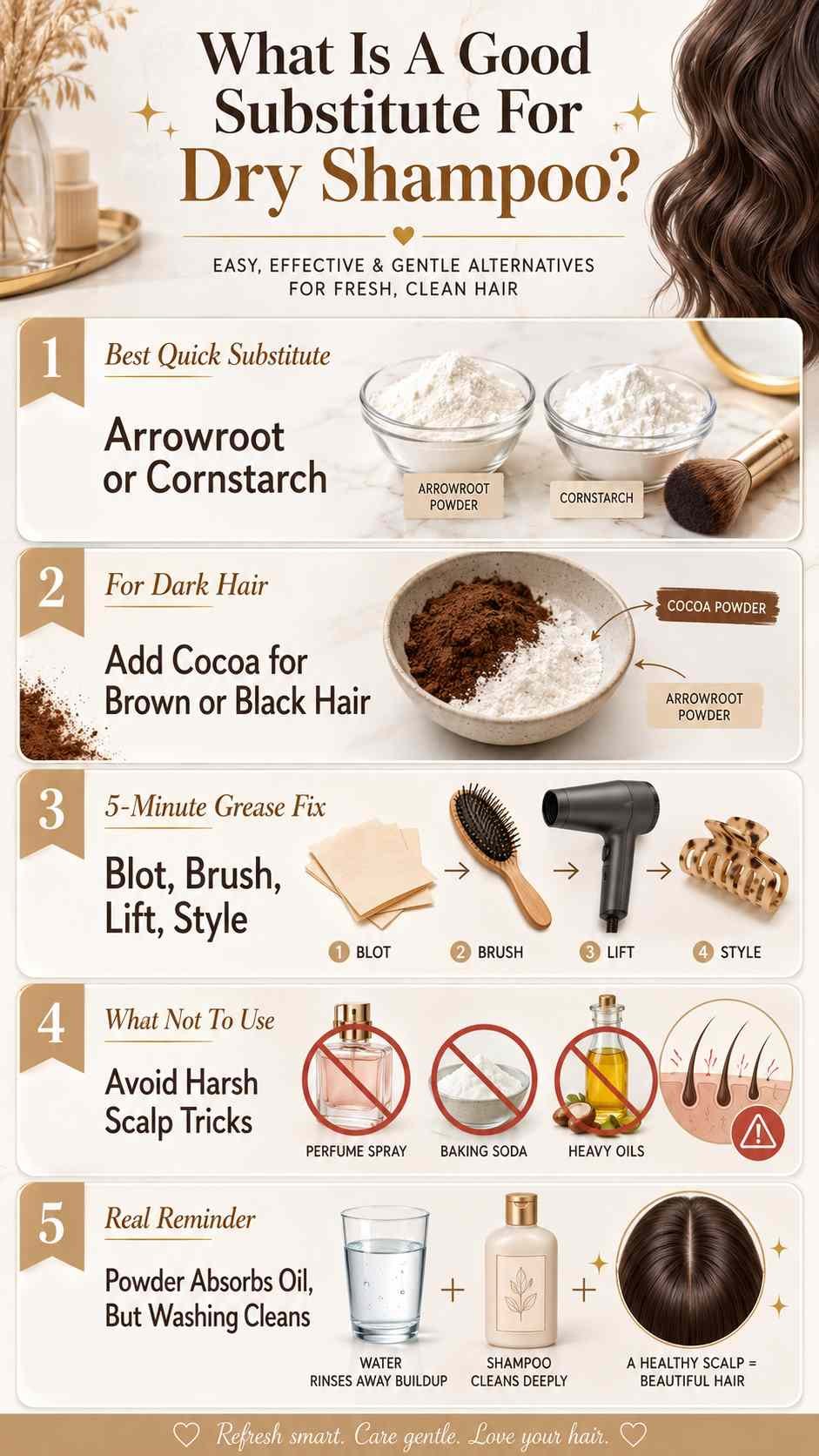
The best quick substitute for dry shampoo is a small amount of cornstarch, arrowroot powder, rice starch, or unsweetened cocoa mixed with starch for dark hair. These powders absorb oil at the roots and help hair look fresher fast. But use them lightly, keep them away from your lungs, and do not treat them like a real wash.
That last part matters. Dry shampoo and its substitutes can hide grease. They cannot truly clean your scalp. The American Academy of Dermatology says dry shampoo absorbs excess oil, but using too much can make hair dry, stiff, gritty, and may irritate the scalp.
Still, on a busy morning? A smart little powder trick can save your whole mood.
The best dry shampoo substitutes at home
Here’s the honest list. Some work beautifully. Some work only if you use them carefully. And some belong in the “please don’t rub random stuff into your scalp” category.
Cornstarch
Cornstarch is one of the easiest dry shampoo swaps because it absorbs oil well and has a soft texture. It works best for light, blonde, grey, and medium brown hair.
Use it like this.
Put a tiny amount on a makeup brush. Tap off the extra. Press it into the greasy roots, mostly around your part, crown, and hairline. Wait one or two minutes. Then brush or shake it out with your fingers.
Please do not dump it straight from the box. That is how you go from “fresh roots” to “I wrestled a bag of flour.”
Quick Fact
Dry shampoo works because powders soak up scalp oil. Dermatologists explain that dry shampoo contains powders that absorb oils, and those oils move away from the hair when you brush through it.
Arrowroot powder
Arrowroot powder feels lighter than cornstarch for many people. It blends nicely and does not feel as heavy on the scalp.
This is my favorite choice for people who hate that chalky dry shampoo feeling.
For dark hair, mix arrowroot powder with a little cocoa powder. Not hot chocolate mix. Not sweetened cocoa. Plain cocoa powder only.
A simple mix:
1 teaspoon arrowroot powder
Half teaspoon cocoa powder for brown hair
A tiny pinch of cinnamon only if your scalp tolerates it well
Skip cinnamon if your scalp gets itchy easily. It can bother sensitive skin.
Rice starch
Rice starch is another good oil absorber. It feels fine and silky, so it can make roots look less greasy without making the hair feel too heavy.
It is also used in some commercial dry shampoo formulas because starches absorb oil well. A dry shampoo composition patent notes that starch is used in dry shampoo because it offers oil absorbency and is easy to obtain.
That does not mean every rice powder from your kitchen is perfect for your scalp. Use clean cosmetic-grade powder when possible. Food powders can clump if they get damp.
Oat flour
Oat flour can help absorb oil, but it is not as invisible as cornstarch or arrowroot. It works better on thicker hair because fine hair may look dusty.
Use only a tiny amount. Blend well. If your scalp is itchy or sensitive, oat-based powders may feel calmer than fragranced spray products, but do not use them on broken or inflamed skin.
Baby powder
Can you use baby powder as dry shampoo?
Yes, but I would not make it your first choice.
If you use baby powder, choose a talc-free cornstarch baby powder. Talc has had long-running safety concerns, especially around inhalation and possible contamination risks. Healthline notes that studies since the 1970s have linked long-term genital use of talc-based powder with a slightly increased ovarian cancer risk, though this is not the same as occasional root use on hair.
Still, breathing in fine powder is not great. Apply it with a brush, not by shaking a cloud around your face.
Blotting papers or paper towel
This one feels too simple, but it works when the oil is mostly at the hairline.
Press a blotting paper, napkin, or clean paper towel onto greasy roots. Do not rub hard. Just press and lift.
This will not give volume like dry shampoo, but it can remove surface oil fast. Great for bangs. Great for the “my forehead made my hair greasy again” problem.
A clean makeup brush with no powder
This sounds weird, but try it.
Use a clean, fluffy makeup brush and buff your roots gently. It can spread oil away from one shiny spot so your hair looks less clumped.
No, it will not absorb much oil. But it can soften the greasy look when you have nothing else.
A quick cool blow-dry
If your roots are oily but not dirty-dirty, flip your hair over and blow-dry the roots on cool or low heat for one minute.
Use your fingers to lift the roots. Do not add oil. Do not add serum. Do not panic-spray perfume into your scalp.
A quick airflow reset can bring back volume, especially if your hair is flat from sweat or humidity.
What absorbs hair oil like dry shampoo?
The best oil-absorbing powders are cornstarch, arrowroot powder, rice starch, tapioca starch, kaolin clay, and a tiny amount of cocoa powder for darker hair.
But here’s the part people skip.
Oil absorption is not the only goal. You also want the powder to blend, not irritate your scalp, and not leave your hair looking grey.
That is why I like this simple guide.
| Hair color or type | Best substitute | What to avoid |
|---|---|---|
| Blonde or grey hair | Cornstarch, arrowroot, rice starch | Too much cocoa |
| Brown hair | Arrowroot plus cocoa | Plain white powder overload |
| Black hair | Cocoa plus arrowroot, very tiny amount | Baby powder, white cornstarch alone |
| Fine hair | Rice starch, arrowroot | Heavy oat flour |
| Curly or coily hair | Blotting first, then light powder | Heavy brushing that breaks curl shape |
| Sensitive scalp | Fragrance-free powder, minimal use | Perfume, baking soda, cinnamon |
And please, no baking soda as a regular dry shampoo replacement. It can feel harsh, gritty, and too alkaline for many scalps.
How to hide greasy hair without dry shampoo
Some days powder is not the move. Maybe your roots are greasy, but your ends are dry. Maybe your scalp feels itchy. Maybe your hair is dark and every powder looks like dandruff.
Fine. We style around it.
Change your part
Move your part to the other side or make a soft zigzag part. Grease looks worse when hair sits in the same flat shape all day. A new part lifts the roots and hides the shiny line.
This takes ten seconds and costs nothing. Very underrated.
Try a low bun
A low bun makes oily roots look intentional. Add a little leave-in conditioner or water to smooth flyaways, then twist the hair back.
Suddenly it is not greasy. It is “sleek.”
We love a rebrand.
Use a claw clip
A claw clip gives the roots lift and hides flatness at the crown. Pull the front pieces back loosely. Do not make it too tight, because tight styles can tug on fragile hair.
Mayo Clinic advises being gentle with hair and avoiding styles that pull with rubber bands, tight barrettes, or braids, especially when dealing with hair loss or fragile hair.
Use a headband or scarf
A wide headband hides greasy hairline pieces in the cutest possible way. A scarf does the same with more personality.
This is especially helpful when your bangs are oily but the rest of your hair looks fine.
Rinse only the front pieces
This is the lazy genius trick.
Wash only your bangs, hairline, or front two inches of hair in the sink. Use a pea-size amount of shampoo, rinse, then blow-dry. The rest of your hair stays dry.
It gives “fresh wash” energy without the full wash-day drama.
How can I make my hair less greasy in 5 minutes?
Here’s the five-minute rescue plan.
First, blot the roots with tissue or blotting paper. Then add a tiny amount of arrowroot or cornstarch with a brush. Wait one minute. Massage lightly with fingers. Flip your hair and blow-dry the roots on cool for 30 seconds. Change your part. Clip, bun, or leave it down.
That is it.
Do not keep adding more powder. Too much powder makes hair look dull and dirty in a different way. The AAD warns that too much dry shampoo can leave particles in the hair and may irritate the scalp.
Can I make my own dry shampoo?
Yes, you can make your own dry shampoo. Keep it simple.
For light hair:
2 tablespoons arrowroot powder
1 tablespoon cornstarch
For brown hair:
2 tablespoons arrowroot powder
1 tablespoon cocoa powder
Half tablespoon cornstarch
For very dark hair:
1 tablespoon arrowroot powder
1 tablespoon cocoa powder
Tiny pinch of activated charcoal, optional
Be careful with activated charcoal. It can stain pillows, fingers, white shirts, and your bathroom sink. Cute in theory. Messy in real life.
Store your DIY powder in a clean jar. Apply with a makeup brush. Keep water out of it. Toss it if it smells odd or clumps.
What Research Says
Powder-based dry shampoo can absorb oil, but it does not remove sweat, dead skin, pollution, or product buildup the same way washing does. Cleveland Clinic explains that dry shampoo should not replace traditional shampoo because it mainly absorbs oil, while washing removes buildup more fully.
How to freshen hair without washing
Greasy hair and smelly hair are not always the same problem.
Hair can smell less fresh because of sweat, smoke, food smells, pollution, oil buildup, pillowcases, hats, or scalp yeast issues. If your scalp often smells bad soon after washing, that is not a “hide it with fragrance” problem. That may need a better scalp routine or a dermatologist.
For a quick refresh, try this.
Brush your hair gently from mid-lengths to ends. Use cool air from a blow-dryer. Change your pillowcase often. Wipe your hairline after sweating. Use a tiny bit of leave-in conditioner on ends only. Use a hair mist on the lengths, not the scalp.
Please do not spray regular perfume into your roots. It can dry the hair, irritate the scalp, and mix badly with oil. Then you get greasy floral scalp. Nobody asked for that.
How to make hair smell good without dry shampoo
Use scent in the right place.
Mist your brush lightly with a hair fragrance or alcohol-free hair mist, then brush the ends. You can also use a tiny amount of leave-in conditioner with a clean scent on the mid-lengths.
For curly hair, mix water and a small amount of leave-in conditioner in your hands, smooth it over the canopy, then scrunch. Do not soak the roots unless you plan to restyle.
Also, check your tools. Dirty brushes hold oil, old product, lint, and smell. If your hair smells stale even after a wash, your brush may be the villain.
Wash brushes every one to two weeks with mild shampoo and warm water. Dry them fully.
How to stop greasy hair without shampoo
You can reduce the greasy look without shampoo, but you cannot fully clean the scalp without some form of cleansing.
For short-term oil control:
Use powder only on oily zones.
Blot the hairline after sweating.
Avoid conditioner on roots.
Keep oils and heavy serums away from the scalp.
Clean your brush.
Change pillowcases often.
Avoid touching your hair all day.
Cleveland Clinic recommends focusing conditioner on the ends instead of the roots, especially for longer hair, because roots can become oily faster when heavy products sit near the scalp.
If your scalp is oily every single day, you may simply need more frequent washing. The American Academy of Dermatology notes that people with fine, straight hair or oily scalps may need to shampoo daily or every other day, depending on their hair type and scalp needs.
No shame in that. Some people can wash once a week. Some people need daily washing. Hair care is not a moral test.
What if your hair is greasy at the roots but dry at the ends?
This is so common, especially with long hair, colored hair, heat-styled hair, and menopausal hair.
Your scalp makes oil. Your ends do not. So the top can look shiny while the bottom feels like straw.
The fix is not to coat everything in powder. That makes the ends feel worse.
Do this instead.
Use oil-absorbing powder only on the roots. Add a light leave-in conditioner only on the ends. Sleep on a satin pillowcase if your ends tangle. Use a gentle shampoo on wash day. Condition from mid-lengths down. Use a weekly mask if your hair feels rough.
Dry shampoo substitutes help the roots. Moisture helps the ends. They are two separate jobs.
How can I hydrate my dry hair?
Hydrating dry hair starts with water-friendly and conditioning ingredients, not just oils.
Look for conditioners or masks with glycerin, panthenol, aloe, fatty alcohols, behentrimonium chloride, amodimethicone, argan oil, jojoba oil, or shea butter.
Oils can soften hair, but they do not replace water. They mostly help seal, smooth, and reduce friction. If your hair feels crispy, rough, or frizzy, use conditioner first, then a tiny amount of oil or serum if needed.
For damaged hair, use less heat. Use a wide-tooth comb. Avoid harsh brushing when wet. Mayo Clinic also recommends limiting harsh treatments like hot rollers, curling irons, hot-oil treatments, and permanents when hair is fragile or shedding.
What is the best shampoo to use during menopause?
During menopause, many people notice hair that feels thinner, drier, flatter, or more breakable. Cleveland Clinic says changing hormone levels during menopause can make hair thinner, and follicles may shrink, which can make hair grow finer.
So the best shampoo during menopause depends on your scalp.
If your scalp is oily, use a gentle balancing shampoo often enough to keep buildup away. If your scalp is dry, use a moisturizing shampoo and wash less often. Cleveland Clinic also notes that during menopause, dry scalps may do better with gentle moisturizing shampoos and less frequent washing, while oily scalps may need daily shampooing.
Look for:
Gentle sulfate-free shampoo if your hair feels dry
Lightweight volumizing shampoo if your roots fall flat
Moisturizing shampoo if your scalp feels tight
Dandruff shampoo if you have flakes or itching
Protein or bond-care products if hair feels weak from color or bleach
If shedding is sudden, heavy, patchy, or scary, do not solve it with shampoo alone. See a dermatologist. The American Academy of Dermatology has a full hair loss resource center because hair loss has many causes and treatments.
How to soften menopausal hair
Menopausal hair often needs more softness and less aggression.
Use a creamy conditioner every wash. Add a mask once a week. Stop scrubbing the lengths with shampoo. Shampoo the scalp only and let the rinse clean the rest. Use heat protectant. Lower the hot tool temperature. Trim dry ends before they split higher.
And please be kind to yourself here. Hormonal hair changes can feel personal. They are not your fault.
A review on menopause and dermatology notes that menopause can affect hair and skin, including hair changes linked with hormonal shifts.
Your hair may need a new routine, not harsher treatment.
What do Japanese do for menopause?
This question comes up a lot, but we need to be careful. Japanese women are not all doing one magic hair or menopause routine.
Some cross-cultural research has found that menopause symptom reporting can vary across countries and cultures. One review notes that earlier research found many Japanese women were less familiar with hot flash vocabulary and reported fewer hot flashes than some Western groups, though symptom reporting has changed over time.
For hair care, many Japanese-inspired routines focus on scalp care, gentle washing, light conditioning, diet quality, and low-damage styling. But there is no single Japanese menopause secret that fixes thinning or greasy hair.
The real lesson is simpler.
Treat the scalp gently. Do not over-dry the hair. Keep the routine steady. Ask a doctor about major hormonal symptoms or hair loss.
What not to use instead of dry shampoo
Now the messy part. The internet has some wild ideas.
Please skip these.
Baking soda, because it can feel harsh and gritty.
Perfume on the scalp, because fragrance and alcohol can irritate.
Deodorant on the hairline, because scalp skin is not underarm skin.
Loose face powder with shimmer, unless you enjoy sparkly roots.
Flour, because it can clump and look awful in humidity.
Essential oils on greasy roots, because oil does not absorb oil in the way you want here.
Dirty makeup powder, because your scalp does not need old bacteria and brush buildup.
Also, avoid inhaling any powder. Even “natural” powder can irritate your lungs if you breathe it in.
Natural does not always mean harmless. Poison ivy is natural too. See? Annoying but true.
Best quick fixes by situation
If your hair is greasy before school or work, use arrowroot powder, change your part, and clip the front pieces back.
If your bangs are oily, wash only the bangs in the sink and blow-dry them.
If your scalp smells sweaty, use cool air, brush the ends, and cleanse properly that night.
If your hair is greasy but curly, blot first, powder lightly at the roots, and avoid brushing out your curl shape.
If your hair is dark, use cocoa mixed with arrowroot, not plain white powder.
If your scalp is itchy, skip DIY powders for now and wash with a gentle shampoo. If itching keeps coming back, check with a dermatologist.
If your ends are dry, powder the roots only and add leave-in conditioner to the ends.
So, what is the best substitute for dry shampoo?
For most people, arrowroot powder is the best dry shampoo substitute. It feels light, absorbs oil, and blends better than many kitchen powders.
Cornstarch is the best budget option. Rice starch is the smoothest option. Cocoa powder helps dark hair blend better. Blotting paper is the cleanest no-powder option.
But the real answer?
Use a substitute when you need a quick save. Then wash your scalp when it actually needs washing.
Greasy hair is normal. Flat roots are normal. Hormone changes are normal. Running out of dry shampoo on the worst possible morning is also, sadly, normal.
You are not failing at hair care. You just need a few tricks.
And now you have them.
FAQs
Is there something I can use instead of dry shampoo?
Yes. Use arrowroot powder, cornstarch, rice starch, blotting paper, or a quick cool blow-dry. Apply powder lightly with a brush and only on greasy roots.
What can I use if I don’t have any dry shampoo left?
Use cornstarch or arrowroot powder. Wait one minute after applying, then brush or massage it through. For dark hair, mix in a little plain cocoa powder.
Can I use baby powder as dry shampoo?
You can use talc-free cornstarch baby powder, but use very little and avoid breathing it in. I would choose arrowroot or cornstarch first.
How can I hide greasy hair without dry shampoo?
Change your part, use a claw clip, wear a headband, make a low bun, or wash only the front hairline pieces in the sink.
How can I make my hair smell fresh?
Use cool air from a blow-dryer, clean your brush, change your pillowcase, and mist the hair lengths with a hair-safe fragrance. Do not spray perfume directly on the scalp.
How to freshen hair without washing?
Blot the roots, add a tiny amount of powder if needed, lift roots with cool air, and restyle with a clip, bun, or new part.
How can I hydrate my dry hair?
Use conditioner on the mid-lengths and ends, add a weekly mask, reduce heat styling, and use leave-in conditioner. Keep oil-absorbing powders only on the roots.

Marlena Stell makes everyday hair care easier to understand. From choosing a shampoo to managing common hair concerns, she breaks down confusing product claims and practical routines into straightforward advice that helps readers find what works for their needs.