Is Clear Shampoo Good for Color Treated Hair?
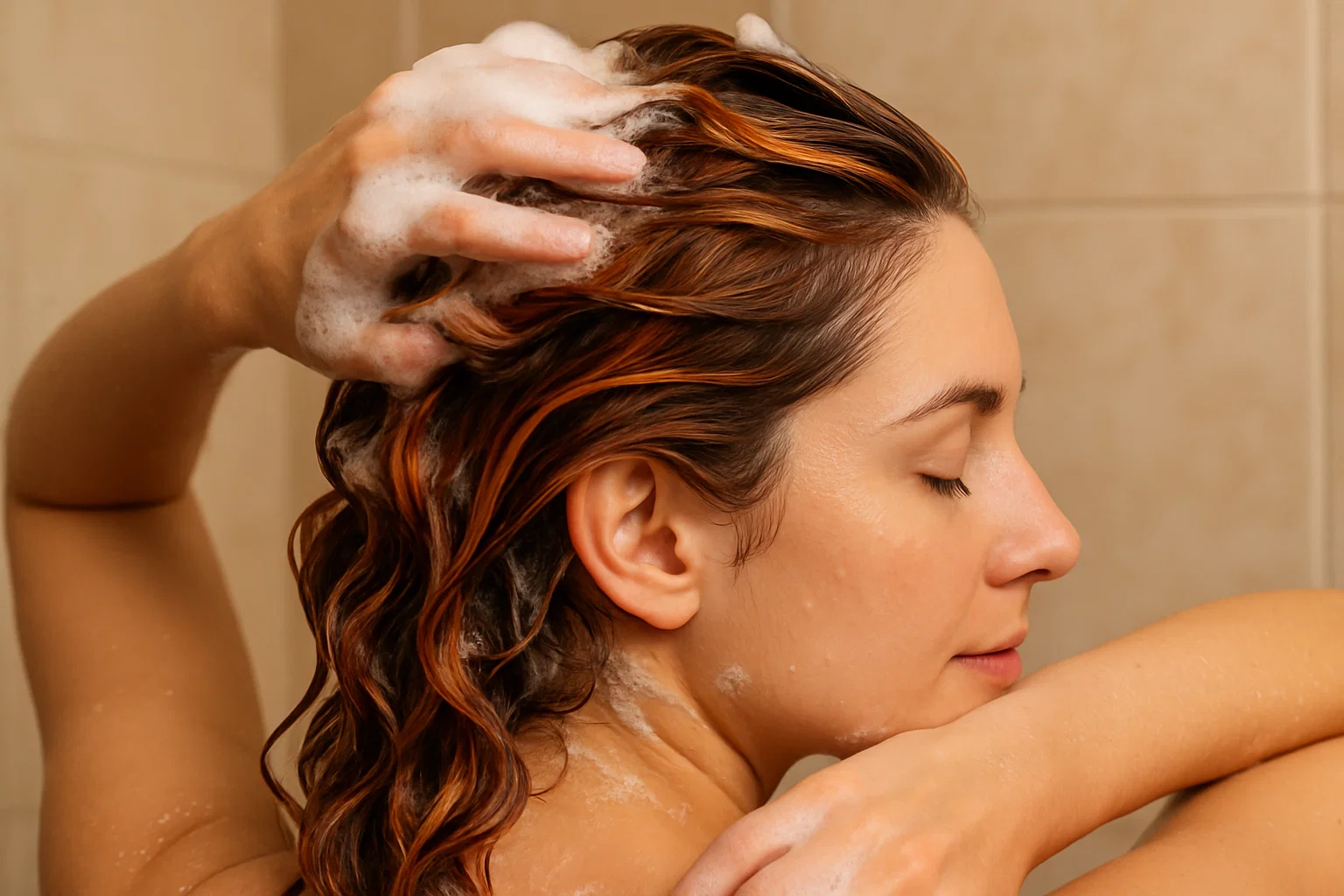 When you color your hair, you want that tone to last the gloss, the depth, the richness. Then one day you reach for a bottle labeled “Clear Shampoo” and wonder if it’s safe. Let’s clear that up, pun intended.
Color-treated hair needs gentle care. The wrong shampoo can undo hours in the salon and fade expensive pigment in just a few washes. Clear shampoos, known for deep cleansing and residue removal, often raise red flags among color lovers. Are they always bad? Not quite. The answer depends on why you’re using one and what’s inside that bottle.
Here’s what actually matters.
What “Clear Shampoo” Really Means
People assume “clear” equals “gentle” because of its see-through look, but transparency is cosmetic it tells you nothing about the formula. A shampoo’s clarity comes from the absence of pearling agents (those creamy, milky additives), not from its gentleness.
Most clear shampoos are clarifying formulas. Their main job is to strip buildup: oil, silicones, styling residue, hard-water minerals. To do this, they often rely on strong surfactants such as sodium lauryl sulfate (SLS) or ammonium lauryl sulfate (ALS). These are powerful cleansers, but on color-treated hair, that power can be a problem.
Why Clarifying Shampoos Fade Color
Hair color sits inside the cuticle layer of the strand. When that layer is forced open through harsh cleansing or alkaline pH the pigment leaks out. Every wash removes a bit of color; clarifying shampoos accelerate the process.
Studies show that sulfate-based shampoos remove up to 80% more artificial dye molecules in just five washes compared with sulfate-free formulas (Journal of Cosmetic Science, 2019).
If you’ve ever noticed your red tones turning copper or your brunette gloss going dull, that’s the surfactants at work.
Quick Fact
Sulfates = Suds + Fading.
The foam may feel satisfying, but each bubble lifts lipids from your hair’s surface along with your expensive color.
Is Clear Shampoo Good for Colored Hair?
Here’s the short version: for everyday washing, no.
Clear shampoos are too aggressive for freshly dyed or lightened hair. They can:
- Fade pigments prematurely
- Increase dryness and frizz
- Leave porous ends brittle
- Strip protective toners or gloss treatments
However, that doesn’t make them evil. Used occasionally and strategically, a clarifying shampoo can rescue your hair from product overload, making treatments absorb better afterward. The key is moderation.
When a Clear Shampoo Can Be Helpful
You can use it once every two to four weeks if:
- You use heavy leave-ins or dry shampoos daily.
- Your hair feels coated, dull, or resistant to masks.
- You live in a hard-water area where minerals dull your color.
- You’re preparing for a fresh color appointment (clarifying before dyeing helps pigments adhere evenly).
Think of it like a detox. But right after, your hair is exposed its cuticle open. That’s when you need to follow up with a rich conditioner or deep-repair mask to reseal the strand.
Ingredient Breakdown
| Ingredient Type | Often Found in Clear Shampoo | Effect on Colored Hair |
|---|---|---|
| Sodium Lauryl/Laureth Sulfate (SLS/SLES) | Common | Strips dye molecules quickly |
| Ammonium Lauryl Sulfate | Common | Harsh, raises cuticle |
| Cocamidopropyl Betaine | Milder surfactant | Better tolerated |
| Aloe Vera, Panthenol, Glycerin | Added moisturizers | Help offset dryness |
| Citric Acid | pH balancer | Keeps color safer if formula is acidic (pH 4.5–5.5) |
What Research Says
Hair maintains color best in a slightly acidic environment (around pH 5). A 2020 International Journal of Trichology study found that shampoos above pH 7 cause up to 45% more cuticle lifting making low-pH formulas critical for colored hair.
What Type of Shampoo Is Best for Color-Treated Hair?
Choose a sulfate-free, color-safe, pH-balanced shampoo. These use gentle cleansers like:
- Sodium cocoyl isethionate
- Disodium laureth sulfosuccinate
- Decyl glucoside or coco-glucoside
Such cleansers clean without raising the cuticle or removing pigment. Look for labels reading “color safe,” “acidic pH,” or “sulfate-free.”
Ingredient Heroes for Dyed Hair
- Keratin or Hydrolyzed Proteins: Rebuild surface strength after coloring.
- Argan or Jojoba Oil: Replace lost sebum and gloss.
- Vitamin E and Antioxidants: Protect pigments from UV oxidation.
- UV filters (benzophenone-4, octyl methoxycinnamate): Shield from sunlight fading.
These are what make “color-safe” shampoos worth the extra money.
Shampoos You Should Not Use on Colored Hair
- High-Sulfate Formulas: Found in many clarifying shampoos (including older Clear Shampoo versions).
- Volumizing Shampoos with Alcohols: They lift the cuticle to create “lift,” which can leak pigment.
- Anti-Dandruff with Zinc Pyrithione: Strong medicated ingredients may lighten semi-permanent tones.
- Detox or Deep-Cleansing Treatments: Too frequent use equals color fade.
If you absolutely must clarify, limit it to once monthly and follow with an intensive repair treatment.
How Clear Shampoo Formulas Have Changed
Not every “Clear” product is harsh anymore. Many modern formulas now claim to be color-safe and sulfate-free. Always check the label.
- Clear Scalp & Hair Therapy (older version): Contained SLS and SLES excellent for oily scalp, but not ideal for colored hair.
- Clear Hydration or Damage-Rescue variants: Added moisturizers like sunflower seed oil and glycerin better, but still not true color-protective.
Brands constantly reformulate, so ingredients matter more than the brand name.
What Happens If You Already Used It?
If your tone has faded or feels rough:
- Rinse with cool water it helps reseal the cuticle.
- Apply a color-depositing conditioner or gloss to revive hue.
- Deep condition weekly for the next two weeks.
- Switch immediately to a sulfate-free, low-pH shampoo.
Within a few washes, your hair’s shine should rebound.
Quick Routine Reset
Here’s a simple routine Carolina recommends after any clarifying wash on colored hair:
- Clarify once with a small amount of Clear shampoo, focusing only on scalp.
- Rinse quickly don’t let lather sit longer than 30 seconds.
- Follow with a protein-rich mask (hydrolyzed silk or keratin).
- Finish with a leave-in oil to lock moisture and smooth cuticle edges.
Do this only when hair feels coated or flat.
Science Snapshot: How Pigments Stick
Permanent dye molecules embed within the cortex, but semi-permanent and toner pigments cling to the cuticle layer. Strong cleansers remove that layer first, explaining why vibrant shades fade faster.
Fun fact: each time you shampoo, microscopic cuticle scales lift about 5 microns; clarifying surfactants lift twice as much. That tiny movement is enough to leak pigment.
What Experts Recommend
1. For freshly dyed hair: wait at least 72 hours before your first shampoo any shampoo. That window allows cuticles to close.
2. Use lukewarm water: hot water lifts color molecules faster.
3. Alternate shampoos: keep one gentle daily cleanser and one clarifier for monthly use.
4. Always condition: color loss correlates strongly with lipid depletion. Conditioning replaces those lipids.
5. Seal it in: a finishing oil or serum reduces water absorption by 30%, meaning less color bleed.
Common Myths About Clear Shampoo
Myth 1: Clear shampoos are sulfate-free.
No clarity has nothing to do with ingredient gentleness.
Myth 2: You can’t use clarifying shampoo if you color your hair.
You can, but rarely and carefully. It’s about balance, not fear.
Myth 3: Natural shampoos don’t fade color.
Even plant-based cleansers can be too alkaline. Always check pH and surfactant strength.
The Best Way to Cleanse Without Stripping
If your scalp tends to get oily but you color your hair, use a dual-wash method:
- Apply a pea-size of clarifying shampoo only to roots.
- Massage briefly and rinse through the ends.
- Follow immediately with a color-safe conditioner from mid-length to ends.
This way, you lift scalp oil but spare your colored mid-lengths.
Product Alternatives (Color-Safe “Clear” Options)
- Pureology Hydrate Sheer Shampoo – sulfate-free, pH 5.3, silicone-free.
- Redken Color Extend Magnetics – uses amino acids to lock color.
- L’Oréal EverPure Clarify & Hydrate – clear gel texture, but low-sulfate.
- Olaplex No. 4 Bond Maintenance – rebuilds bonds after color.
- Aveda Color Conserve Shampoo – botanical, mildly clarifying yet safe.
These balance the detox you crave without losing tone.
What Dermatologists and Colorists Say
A 2023 consumer survey (Allure Beauty Lab) found that 74% of color-treated individuals who switched to sulfate-free shampoos noticed longer-lasting vibrancy within one month.
Colorists echo the same: gentle cleansers equal better retention.
Trichologists also emphasize that the scalp needs periodic detox, but with restraint. Over-cleansing upsets microbiome balance and triggers dryness or irritation.
The Emotional Side of Color Care
Many clients tell me they feel frustrated “I did everything right, why is my color fading?” The culprit is often invisible chemistry, not neglect. A few ingredients can undo professional work. Once you know what to watch for, you regain control.
That’s the empowering part of good hair science: you don’t need a lab coat to protect your color. Just awareness.
Real-World Example
Sara, a 27-year-old graphic designer, switched to Clear shampoo after gym sessions left her scalp sweaty. Within two weeks her rose-gold balayage dulled. She alternated it with a color-safe formula and used a weekly hydrating mask. Her color lasted twice as long afterward.
That’s how you find the balance: cleanse smart, not hard.
Final Thoughts
So, is Clear shampoo good for color-treated hair?
Not for daily use. Its cleansing strength can strip pigments, oils, and protective coatings that dyed hair desperately needs. But used sparingly, it has its place as an occasional reset.
If you color your hair, prioritize sulfate-free, acidic, color-safe shampoos and condition religiously. Treat your color like silk: wash less, handle gently, protect always.
So, Clear shampoos clean brilliantly, but color care is about preservation, not purity. Your best hair day starts with understanding what’s in your bottle.

Carolina Herrera: Cosmetics specialist & Hair Analyst. Specializing in hair treatments, Carolina provides thorough reviews and advice on choosing the best products for damaged or treated hair.